Formula 1 engine noise affects commentator’s hearing

In an interview with BBC Radio 4, Formula 1 racing commentator Murray Walker described the impact that 50 years at the side of the race track has had on his hearing and how that’s affecting his life.

The commentator, who went deaf from the roar of the car engines, never wore ear protectors because he thought he would look like a wimp – even though noise in the Grand Prix pits reached 120 decibels.

Now Walker, 83, has powerful digital hearing aids in BOTH ears. The man dubbed ‘The voice of motor racing’ said: “Everyone is aware of health and safety now – but in my time no-one bothered.

“I was often in the pit-lane, near the cars, where the noise was indescribable and I’ve no doubt that is why my hearing was affected.

“But if I’d turned up wearing protectors I would have been considered a wimp. Anyway, I loved the noise.”

Hearing can be damaged by regular exposure to just 85 decibels, revealed the UK Noise Association.

Murray, who covered hundreds of GP races in a glittering 50-year career, is now trying to persuade people to protect their hearing.

He is fronting the David Ormerod Centres’ Hearing Clearer campaign, saying: “I do regret I didn’t look after my own ears. I was recently at a race where there was a young mechanic bent down by the engine.

“The noise was terrible. I shouted, ‘For God’s sake, put in some ear-plugs’. He looked at me and shrugged.

“I’ve learnt from the error of my ways and always wear ear-plugs now.

“Hearing deteriorates as people get older but mine is abnormally bad. The digital hearing aids have made everything sharper and clearer now.”

Listen to Murray Walker’s BBC interview here

From The Deaf Blog.

Love your Audiologist? Vote for them.

Rayovac batteries and Audio Infos are looking for the Audiologist Of The Year 2008.

From their site:

Good service, sound advice and excellent care are what you expect from your audiologist or dispenser. When they deliver, it can make a tremendous difference to your life – so why not help your audiologist or dispenser get the recognition they deserve?

Has your audiologist or dispenser gone beyond the call of duty? Have they helped in difficult or unusual circumstances? Whatever your personal story, you can nominate them for the title of Rayovac Audio Infos Audiologist of the Year 2008.

Everyone who casts a vote gets a chance of winning a €500 prize.

How much do you love your audiologist?

The S Series from Starkey.

I have a new pair of Starkey’s S Series hearing aids – I got them fitted at Banbury Hearing Centre.

Over the next few weeks I’m going to review their performance against my old aids and write about them on here. I’m very impressed already. In the office last week I managed to listen in to someone else’s conversation from another desk – that was a welcome surprise!

The noise reduction seems really good, I can listen to music in my car now – before the engine and road noise was so bad I just turned my aids off.

I’ll go into more details on the features of the S Series when I get a bit more used to them. I’m also going to take pictures of the aids, the packaging and everything else I got with them – just to give those of you who’ve never bought a hearing aid before some idea of what you get.

Audiogram creator updated to allow multiple diagrams

I’ve updated the Audiogram Creator so that you can now show your audiogram results on different backgrounds. the original background is still there but you can now also choose from having a background with no decoration at all, one with speech sounds shown or one with speech sounds and the speech banana on it.

The newly added background images use the UK classifications for hearing loss (normal, moderate, severe, etc) whereas the original background (the one that is shown when you first browse the Audiogram Creator) shows the USA classifications. You’ll notice that they are a bit different – for example, a mild hearing loss is 25 to 40dB on the US classification and it’s 20 to 40dB no the UK one.

A huge thank you to Vicki Kirwin from NDCS for supplying the new background images.

Vibe: ear candy from Siemens

Siemens Vibe hearing aid

The Latest in “Ear Candy,” Vibe Reflects Wearer’s Fashion and Moods with Interchangeable, Ready-to-Wear Casings

CHARLOTTE, N.C., April 2, 2008 – For the growing number of people with mild hearing loss, due in large part to the aging of 78 million baby boomers, hearing instrument options just leaped into a fashionable new realm where bold is “in.” Today, Siemens Hearing Instruments introduced the world’s first crest-fit hearing aid – Vibe®. Available in a wide variety of interchangeable colors and patterns, Vibewill make its debut at the American Academy of Audiology’s 20th Annual AudiologyNOW! Conference, from April 2 to 5, 2008, in Charlotte, N.C. (Booth #1825).

Vibe is the first ever hearing instrument that fits securely into the crest of the ear, leaving the ear canal comfortably open. Since it does not rest behind the ear, accessories like eyeglasses, sunglasses, and bicycle helmets can be worn simultaneously without interfering with the hearing device.

Vibe also offers an expanding selection of interchangeable snap-on covers, with colors like “Cheeky,” “Dynamo”and “Fearless,” and patterns like the checkered “Fast,” feminine “Flirt,” and leopard “Wild.” Wearers can choose up to five covers with their Vibe purchase and, just as fashion is continuously evolving, Siemens will be introducing new covers periodically to keep the looks fresh.

“People are bold and courageous in all sorts of ways, and Vibe is a reflection of those spirits,” said Dr. Thomas Powers, Vice President of Audiology and Professional Relations at Siemens Hearing Instruments, Inc. “While grappling with hearing loss is never easy, the look and feel of Vibe allows wearers to improve the quality of their life, without sacrificing their lifestyle.”

Vibe is ideal for people of any age with mild hearing loss of high-frequency sounds, such as soft speech or the pitter-patter of a baby’s footsteps, who want to regain the ability to hear these sounds without having to wear a conventional hearing aid.

Vibe Features

Vibe not only has a bold new fashionable appearance, but it also features industry-leading technology found only in Siemens Hearing Instruments. The new instrument includes exclusive SoundSmoothing® technology, the world’s most effective transient noise suppression technology. In a recent study conducted at the National Acoustic Laboratories, the noise-reduction algorithm used in SoundSmoothing to reduce non-speech transient sounds was shown to offer benefits to the hearing aid wearer in terms of comfort, with no negative effect on intelligibility or localization.

Vibe also features FeedbackBlocker® technology, which automatically reduces or eliminates annoying feedback without affecting sound quality. Also included is eight channel digital signal processing, and a unique microphone that takes advantage of the natural contours of the outer ear and the way it collects and funnels sound into the ear canal.

About Siemens Healthcare

Siemens Healthcare is one of the world’s largest suppliers to the healthcare industry. The company is a renowned medical solutions provider with core competence and innovative strength in diagnostic and therapeutic technologies as well as in knowledge engineering, including information technology and system integration. With its laboratory diagnostics acquisitions, Siemens Healthcare is the first fully integrated diagnostics company, bringing together imaging and lab diagnostics, therapy, and healthcare information technology solutions, supplemented by consulting and support services. Siemens Healthcare delivers solutions across the entire continuum of care – from prevention and early detection, to diagnosis, therapy and care. The company employs more than 48,000 people worldwide and operates in 130 countries. In the fiscal year 2007 (Sept. 30), Siemens Healthcare reported sales of €9.85 billion, orders of €10.27 billion, and group profit of €1.32 billion.
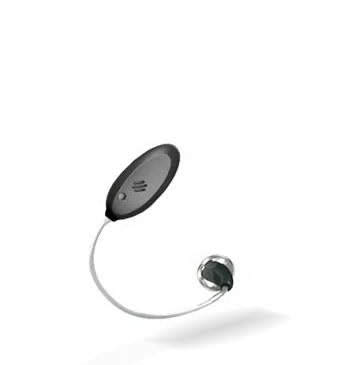
Hearing aid batteries at Microbattery.com

Microbattery.com offer a wide range of  hearing aid batteries at good prices.

Their front page has a handy little section that lets you pick the battery you need based on its colour or size code. They are stocking batteries from: Rayovac, Panasonic, Energizer, ZeniPower, Duracell, PowerOne, Renata, Sony and iCellTech.

Well worth a look if you need to stock up.

Do you have a particular battery brand that you swear by? Do you get better performance or longer life from a particular type of battery? Personally, I swear by Rayovac. I have been using Boots own brand batteries for a month or so because they had a by-one-get-one-free offer on but I have noticed that the Boots batteries have been running out quicker than the Rayovacs and I’m convinced there is a dip in volume on the day that they run out. Once I have used up the Boots batteries I am definitely going back to good old Rayovac – I think it’s worth spending that little bit more to get a better quality battery.

11 things about me, my hearing and my hearing aids

1. I take my hearing aids out when shaving because I can’t stand the scraping noise of the razor.

2. Wind noise is my biggest problem with my hearing aids.

3. I take my hearing aids out when driving to and from work for a bit of peace and quiet.

4. Hand-dryers always make my right hearing aid whistle with feedback.

5. I usually wait at least half-an-hour in the morning before putting my aids in.

6. I always have some spare batteries in the car and usually some in my pocket. Don’t think I’ve ever needed them though.

7. Motorbikes are way too loud.

8. I only listen to music on noise-reducing headphones.

9. The fast, bass-heavy dance music I liked when I was younger just gives me a headache these days.

10. I can hear remarkably well at the local swimming pool even though I’m not wearing my aids.

11. I don’t pick up accents, there’s an American guy in our office, I thought he was Australian.

HearAtLast at Wal-Mart

From a HearAtLast press release:

HearAtLast Holdings Inc. is pleased to announce that it has finalized the next phase of its expansion plans. Wal-Mart Canada will include HearAtLast operations in additional supercentre and discount store locations, as HearAtLast continues its national expansion program. HearAtLast along with Wal-Mart Canada’s management strategically identify locations that are best suited demographically for their unique hearing aid dispensing model. The 2008 calendar year will see HearAtLast maintain its growth model within select Canadian Wal-Mart locations.

During 2007, HearAtLast added 14 additional clinics for a total of 15 locations within Wal-Mart Canada. 2008 has seen the addition of 6 clinics already, including their first stand alone clinic in Florida.

HearAtLast Holdings Inc. will continue to identify new store opportunities in Wal-Mart Canada. This will allow the company to strengthen their position and brand, in the clinical audiological field and retail dispensing market.

“The partnership and support from Wal-Mart Canada has afforded us a rapid and successful expansion, in an otherwise dormant industry. The pairing of Walter Gretzky and Wal-Mart has created a true retail brand for the under serviced hearing aid market,” stated Robert Oswald, President of HearAtLast Holdings Inc.”

Any Canadian readers want to comment on this? Making hearing aids more easily available to the consumer is good news. Are HearAtLast a good vendor? Are Wal-Mart stores a good location? Will this help to make hearing aid sales a little more mainstream?

Moose’s hearing aid

They are some of the most extravagant headgear in the animal kingdom, but a moose’s antlers are not just for show. Scientists believe they act as elaborate hearing aids that help males to find calling females.

A study has found that the antlers’ sound-gathering qualities boost the hearing of the animals by 19%.

Moose, which are called elk in Europe, are well-known for their impressive hearing. Their ears are more than 60 times larger than those of a human, and their calls can travel nearly two miles.

Scientists had previously suspected the antlers helped with locating mates because males with them were found to be better able to locate females than those without.

George Bubenik, of the University of Guelph, Ontario, and his son Peter, of Cleveland State University in Ohio, decided to test the antler amplifier hypothesis by using a moose skull and a fake ear made by a TV special effects team.

The two scientists put a microphone inside the fake ear, placed between the sweeping Alaskan moose antlers. They measured how well the microphone picked up sounds made by a speaker 32ft (10 metres) away while it was either facing towards the sound, away from it, or sideways on into the bowl of the antlers.

The recorded volume was 21% lower when the ear was facing away from the sound compared with facing towards it. But when the ear was facing sideways the sound was boosted by 19%, suggesting that the antlers funnel and amplify the sound, rather like giant ear trumpets.

Read the full article on the Guardian.

I can’t do without my hearing aid for two weeks

When my car goes in for a service or repair I get given a courtesy car to use while mine is out of action. It’s a given that the courtesy car will be available, all garages are offering one these days.

So what about when my hearing aids need servicing? Can I get courtesy aids to use while mine’s away? Because there’s no way I can go two weeks without my hearing aids, I need to go to work, I need to hear.

My choices are: hear nothing for two weeks, don’t ever service my aids or find someone who offers a courtesy pair.

I’ve been wearing aids for the best part of thirty years now and I’ve never had a pair serviced, I just can’t do without them for two weeks.