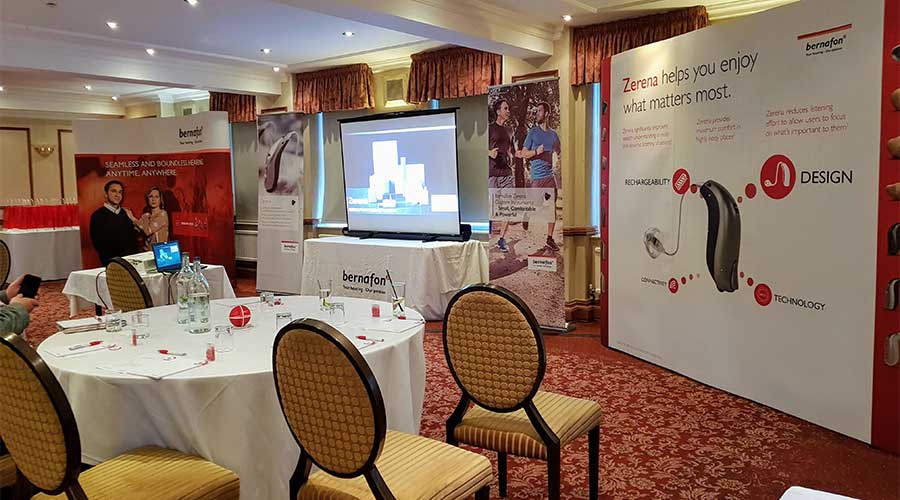
The new custom Made For iPhone hearing aids from Bernafon will be available from November 1st, and they look pretty good. Bernafon will be one of only three hearing aid brands to offer a direct connection to iPhones once the devices are launched. Both Oticon and Bernafon are renowned for their custom hearing aids, but because of the delayed introduction of the Zerena customs, they have fallen slightly out of favour. I think that the new launch of these devices will change things. That wasn’t the only news; they are also introducing two new technology levels at the value range. Let’s talk about what’s going on with Bernafon.
Two New Technology Levels
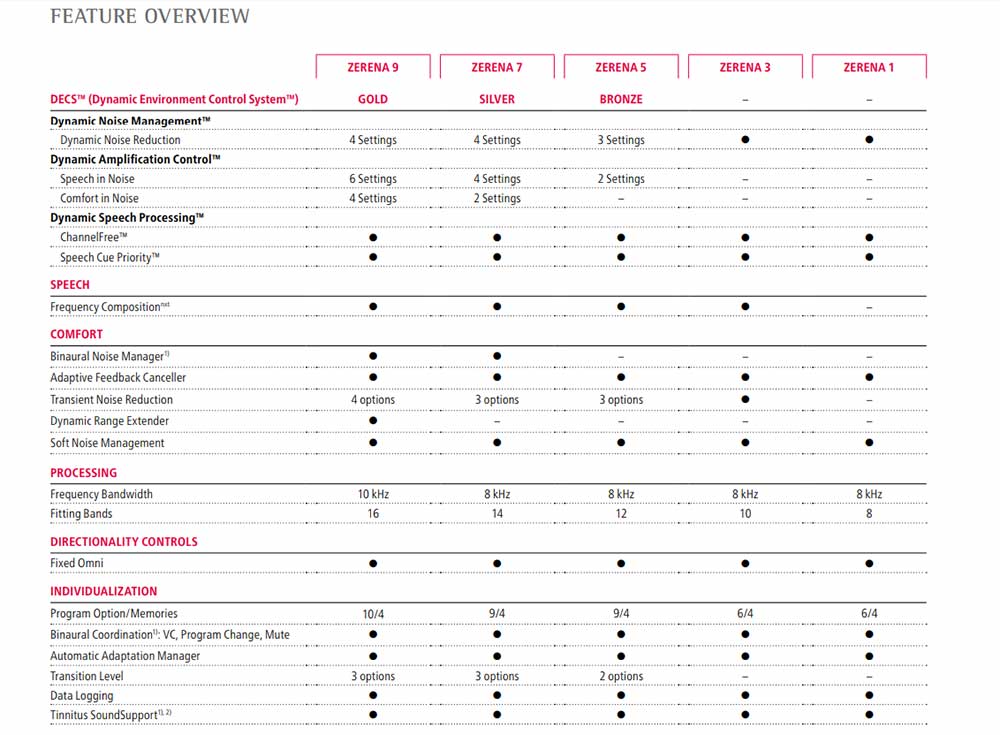
Bernafon is introducing two new levels to the Zerena that they say will fall within the value offering. The new technology levels are called the Zerena 1 and the Zerena 3 range. The new customs will be available in those new technology levels as well, which will mean custom Made For iPhone hearing aids in the value price proposition which is probably a bit of a first.
I can’t really think of anyone else who is offering any direct connection Made For iPhone hearing aids at the type of price I would expect these to be sold at. There certainly is no brand offering custom Made For iPhone hearing aids at this price point. The basic Zerena 1 is a basic device, but with the addition of the TV streamer or the Soundclip-A you will get a lot of hearing aid functionality quite cheaply.
Powerful Customs
We have spoken already about the custom devices that are being introduced but we found out a bit more about power levels and options. The IIC and CIC will have access to a 75 and an 85 receiver which basically means that they will cover moderate to severe hearing losses. The size of speaker will be dependent on the space in the ear canal. However, Bernafons says that the new components are smaller than ever and should allow the IIC and CIC to physically fit far more people than ever.
The rest of the custom range has access to four levels of receiver, the 75 and 85 as well as a 90 and a 100. This should allow these devices to be fit for people who have severe to profound hearing losses.
Upgraded Easy Control App
Bernafon has upgraded their app on both iOS (iPhone) and Android. The new app is a little more functional than it originally was. It still doesn’t match up to some of the other brand’s apps, but it does all of the basics.
Early November Launch
The devices and the new tech levels will be available to order from Bernafon in early November, so people should be able to give them a try pretty soon. If we hear any more, we will keep you updated.
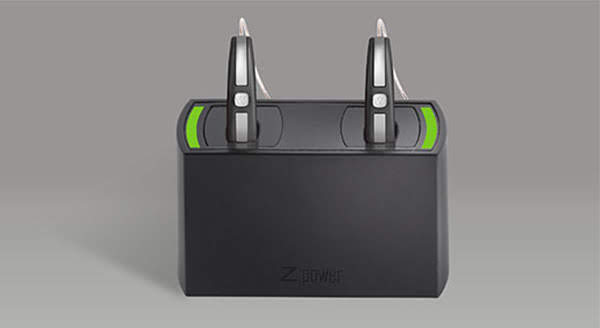
ZPower has announced a charger firmware upgrade tool that will bring the latest firmware to your ZPower charger. ZPower systems are used in many of the rechargeable hearing aids from the big brands such as Widex, Oticon, Starkey, Bernafon and Unitron. While the upgrade may not be compatible with all of the systems, Widex, Resound and Unitron are ensuring that all hearing health professionals upgrade their systems during follow up appointments.
If you have Widex, Resound or Unitron rechargeable hearing aids, you definitely need this done. Not sure about the other brands but it probably can’t hurt taking a look or asking your professional.
The survey reports that the average price paid for a single hearing aid was $2372. Purchasing hearing aids as a pair reduced the cost slightly from an average unit price of $2560 (purchased as a single unit) down to $2,336 (bought as a pair).
Hearing aids purchased Average price paid Single hearing aid $2,560 per device Pair of hearing aids $2,336 per device
Price by technology level purchased
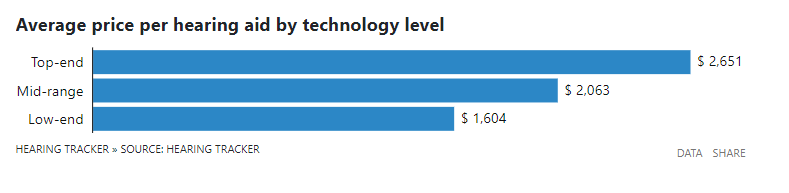
Higher-end hearing aids came in at an average price of $2,651 per device, and low-end hearing aids came in at about $1000 less, at $1,604 per device. Mid-range hearing aids came in at $2,063 per device.
Price by place of purchase
Interestingly enough, where people bought their hearing aids did not seem to affect hearing aid prices. Whether purchased from a name brand store (Miracle-Ear, Beltone, Etc), ENT office, or audiologist clinic, the average price paid was just over $2500. Prices at university and hospital clinics were slightly lower at $2432, and the average price paid at Costco was substantially lower, coming in at just over $1200. Interestingly, internet purchases came in only slightly lower than Costco at $1054 per hearing aid.
Hearing aids purchased on the internet either came with no in-person professional service or with limited in-person professional service. Internet purchases that included a professional fitting averaged $1533 while hearing aids bought without any professional fitting averaged $704 (Audicus, eBay, Amazon).
Over 2000 respondents
The survey results are based on pretty comprehensive data. Through their combined efforts, they were able to encourage over 2000 people to respond to the survey from people across every US state. There was also a pretty good spread of demographics as well.
They say that they received about 10% more of their responses from women, and over half of their answers from hearing aid users in the 55-74 age range. Those are ideal numbers if you are trying to understand anything about hearing aid use in the general population. The breakdown of age groups was as follows:
Age Group Percent
75 or older 24.5%
55 to 74 53.1%
35 to 54 13.7%%
18 to 34 4.0%
Under 18 3.0%
They also wanted to get a clear idea of the income and employment status of the group to ensure they were getting a decent cross sample of people. The reported pre-tax household income for their sample lined up well with US national averages. The employment status reflected the fact that the sample included an ageing cohort with many retired people in the group.
Pre-tax household income Percent
$150k+ 10.6%
$100 – $149k 13.4%
$50 – $99k 26%
$25k – $49k 15.5%
Under $25k 6.2%
Current employment status Percent
Retired 51.7%
Employed or homemaker 29.7%
Self-employed 8.0%
Student 3.4%
Out of work or looking 1.7%
Unable to work 2.1%
The sample also had a diverse hearing loss profile, running from mild at worst to profound at worst. The largest sample group classified themselves within the severe at worst category with the second largest group classing themselves at moderate at worst.
History of hearing aid use
Their sample had a lot of experienced hearing aid users. 67% of respondents having at least six years or more experience. We could reasonably extrapolate that perhaps 50% of the sample have probably purchased hearing aids twice.
Years of hearing aid use Percent
15+ years 40.6%
10-15 years 11.8%
6-10 years 14.4%
4-6 years 11.1%
2-4 years 8.1%
1-2 years 6.4%
Under 1 year 7.2%
Hearing aid purchase trends To understand the overall patterns within hearing aid purchases, they asked the respondents the following questions
How many hearing aids they purchased (one or two)
What brand and model of hearing aids they bought
What level of technology they purchased
What features their hearing aids came with
The answer to the questions was enlightening. The majority purchased a pair (84%) of hearing aids.
Number of hearing aids purchased Percent of respondents
Pair 84.0% Single 16.0%
The answers to the brand question showed some interesting results. Phonak was the most popular hearing aid brand followed by Oticon, ReSound, Widex, and Starkey. Interestingly enough, Kirkland Signature (Costco’s white-label brand) came in just below the major brands.
What brand of hearing aid(s) did you purchase? % of Responses
Phonak 25.00%
Oticon 18.60%
ReSound 14.10%
Widex 8.50%
Starkey 7.90%
Siemens 4.60%
KS (Costco) 3.40%
Rexton 2.80%
Signia 1.80%
Beltone 1.70%
Unitron 1.70%
Miracle-Ear 1.50%
Bernafon 0.80%
AGX 0.60%
When it came to the technology question, the majority (54%) reported buying top-end hearing aids, about a third reported purchasing mid-range, and less than four per cent said that they purchased low-end.
What level of technology did you buy? % of Responses
Top-end 54.10%
Mid-range 34.30%
Low-end 3.70%
Not sure 7.90%
That is an interesting spread of technology levels and I wonder myself is it representative of the wider purchases in the US. Abram has just started crunching all the data and you can expect even more interesting insights from him soon.
In my last article, I discussed my experience with the fitting of the Phonak Lyric hearing aids and my early observations of the devices. In this article, I would like to discuss my day to day experience of the sound of the hearing aids and how I got on with them. I would also like to talk a little about the Lyric devices, they really are unique in the hearing aid world and almost a contradiction. They are based on old technology that has been manipulated in a truly innovative way. In a world devoted to new tech and ever growing features, they are extraordinary because they are old tech and have no features. Yet, having said all of that, they damn well work, in fact, they damn well work pretty well. Let’s talk about the Phonak Lyric.
Old Technology
The Phonak Lyric is an analogue based hearing aid that delivers linear gain. The output of the devices is controlled by the programming and is based on output compression. The devices are basically featureless, no noise reduction, no feedback management, no impact noise management, nothing. Just amplification and output compression. You really can’t get more simple than that. In fact, if you told me that you were introducing a brand new hearing aid with that outline, I would happily tell you that you were quite mad and they weren’t going to work.
Not Only Do They Work, They Work Well
Hey, what do I know, not only do these things work, they work exceptionally well. Once placed and turned on, they deliver a sound that honestly feels or sounds like normal. I mean my first impression was woah, this is pretty cool. As I said in the last article, Dave, who is a master Jedi grade of the fitting of the device, sounded just like Dave, except clearer. When speaking to Dave he had said that many of the people who wear the device speak about hearing like normal, I now understood exactly what they meant.
Hey, all hearing aids sound good in the clinic room, the real test is when you are out and about in the real world. I honestly thought that with the lack of features, they probably wouldn’t stand up well in noisy environments and general day to day situations. Again, I was wrong, this being wrong business is getting a little irksome.
A Damned Stone Grinder
I and Dave were standing at the back of the clinic having a chat, basically allowing me to get a clearer idea of whether I was going to cope with the devices in my ear canals. As we spoke, it became obvious that I was going to be okay with the devices, I had no major bunged up feeling and I didn’t seem to be in any danger of trying to pull my ears off with frustration. As I said, even the sense of the devices being present had begun to fade already.
Then, someone in the car park began to cut granite coppice stones with a grinder. When they began, I was facing Dave and the grinder in the near distance, it got really hard to understand what Dave was saying. So I moved us around so that my back was to the Grinder noise with Dave facing me, It got much easier to hear him speak.
This is pretty fascinating for two reasons, firstly, anyone with an analogue hearing aid will tell you that they probably wouldn’t be able to hear anything but the grinder. Secondly, the effect of turning my back to the noise brought the natural directionality feature of my ears into play and it made a real difference.
Placement and Analogue?
Like I said, these aids shouldn’t really work, but they do, I wondered was this a function of analogue and placement. Analogue sound is basically how we hear naturally, the placement of the Lyric deep in the canal allows all of our natural abilities to come into play. Is that the answer, is that why these hearing aids work so well? I don’t know, I can only guess that it may well be at least part of it. The one thing I can tell you is that they do work well.
Pretty Damn Good
My day to day experiences of these hearing aids was excellent. I heard exceptionally well in all of the situations that I found myself in. I ensured that I spent a lot of time moving from different sound environment to sound environment and pretty much tried out everything. In noisy situations I found that I heard pretty well, I also noticed that turning my back to the noise made a real difference.
Music sounded excellent, it was easy to speak on the phone and sleeping and taking a shower with the hearing aids in was a real experience. From time to time, I suffered from a little occlusion, but nothing I couldn’t handle. As I said in the first article, I really am not a candidate for these aids, but nevertheless, I got on well.
Real Appeal
These hearing aids have real appeal, I mean they get put in and you just get on with it. No taking them out or putting them in, no worrying about the batteries. No real constraints, I mean hearing aids don’t constrain you, but you have to think about them. By that I mean when you are going for a shower, they have to come out. If you play sport, you need to think about protecting them, or taking them out.
With the Lyric, you just get on with your life, never having to think about them. In fact, I can honestly see how people would just forget about them until they needed to be replaced. Like I said, I can really see the appeal of these devices.
A Subscription Model
The Lyric is provided under a subscription model, which basically means that you pay for a new one or a new set, every three months or so. I don’t know the exact cost, but they are relatively costly by all accounts. In a year, the subscription I believe might be as much as a basic set of hearing aids may cost you. So even if you are suitable for these hearing aids, your budget might not be.
In finishing, these are really good hearing aids that have a lot to offer. If you want a set of hearing aids that you can wear and forget, well then nothing beats these. If that is important to you, if hearing better with no fuss or constraints is really what you want, well then the Lyric hearing aid is worth your attention. Finally, if you are looking for the Phonak Lyric in Dublin, you could do a lot worse than go to see these people.
Finally, Another Hearing Aid Brand With Made For iPhone Custom Hearing Aids
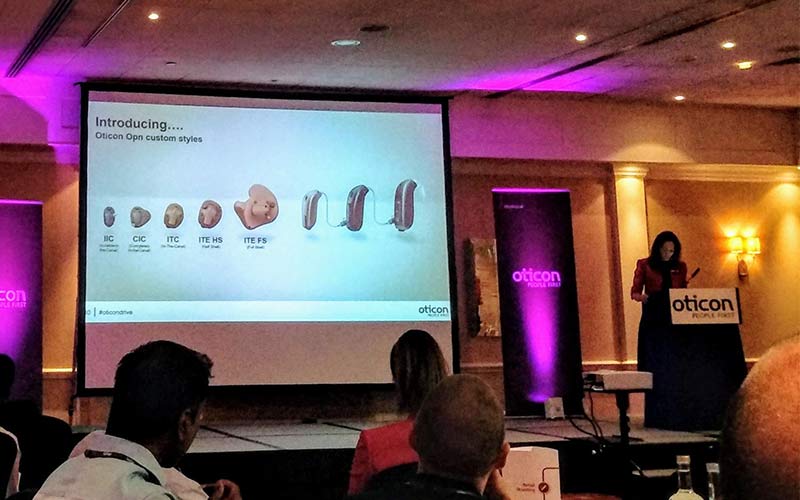
I have been speaking at some events for Oticon this week, if you have been trying to email me I apologise, email has been spotty at best. Anyway, back to Oticon, during the conferences they announced that they are going to launch the Opn customs in quarter four this year and the majority of them will be direct streaming (Made For iPhone). They will be only the second hearing aid brand with Made For iPhone custom hearing aids.
Details Are Tight
So, they are keeping the details tight at this stage, but we received a pretty good heads up of what will be available. The Opn customs will be available from full shell all the way down to invisible in the canal. However, they will not all be Made For iPhone which is pretty much in line with what is on offer from the only other brand in this market sector. The line up is as follows:
ITE Full Shell (Made For iPhone)
ITE Half Shell (Made For iPhone)
ITC In The Canal (Made For iPhone)
CIC Completely In Canal (Not Made For iPhone but is wireless)
IIC Invisible In Canal (Not Made For iPhone, not wireless)
An invisible hearing aid that will fit eight out of ten people!
An Even Smaller Invisible Hearing Aid
Another striking bit of news is that Oticon has managed to make their IIC even smaller than ever. It means that they are now confident to say that their IIC will physically fit the ears of eight out of ten people. That’s a strong claim but Oticon are happy to make it. The device is not wireless, but what do you want from such a small hearing aid?
The excitement around Made For Android hearing aids has heated up with the recent announcement that Resound and Google have agreed to a partnership to deliver the protocol to allow direct connection between hearing aids and Android phones. I was in Resound headquarters in Denmark last week and discussed the deal and the expected availability of the feature with a chap from the R&D department. The protocol should be ready for release in mid-2019, but there are other things you need to know, let’s talk Made For Android Hearing Aids.
Quattro Made For iPhone, Made For Android Hearing Aid
As I said, the Linx Quattro will be the first-ever Made For Android hearing aid on the market. When the protocol is released on Android, the Linx Quattro will be enabled with a direct connection to Android phones. That means direct streaming, without any intermediary accessory, a first for Android phones.
Definitely On Pixel Phones First
The protocol will only be available on Pixel phones initially and probably only on the Pixel 3. It appears that there is a specific hardware need and older devices don’t stack up. While the protocol will be available as an Android update to other phone manufacturers such as Samsung etc, it is unclear how long it will take them to offer it, or whether their hardware is capable.
Probably Need a New Phone
I would imagine that to take advantage of the feature you will probably have to purchase an up to date phone. However, as we get nearer to the release and phone manufacturers start to update their own phones we will keep you up to date on compatibility. In fairness, it is a good excuse to buy a new model.
Nuheara recently announced the release of a new feature called Focus, which is the latest upgrade for their IQbuds BOOST™. The IQbuds are probably one of the most successful Hearables so far. Focus, pretty smart name, is a software update that allows the devices to take full advantage of their two microphones. In essence, NuHeara just gave all IQbuds Boost users a new directional microphone feature. The lines between hearables and hearing aids really are beginning to blur, let’s talk about the IQbuds Boost.
I
II reviewed the IQbuds Boost on Hearing Aid Know a while ago and I found them to be really cool devices. I said at the time that they were situational devices as opposed to something that you would wear all the time. The new feature doesn’t change that, but it makes them even better situational devices.
NuHeara says that the new feature uses “audio beamforming” technology to isolate and enhance sounds directly in front of the BOOST user. This is in essence, a directional microphone feature that ensures the audio to the front is clearer or more emphasised than the audio from the back. I think that NuHeara is the first ever Hearable company to use directional microphone features in their set up.
The ideal use for the feature is when you are in noisy surroundings, turning on the feature focuses the devices to the front and attenuates the sound to the rear giving you a better opportunity to hear speech clearly. NuHeara hopes that the feature will give you even greater conversation clarity in noisy environments.
My experience of it so far has been pretty good, there is a noticeable drop in the background noise when you turn the feature on. However, like any directionality feature, the efficacy of it is best when you make sure that your back is to the noise.
NuHeara seems to be determined to blur the lines with their devices, I look forward to seeing what they come up with next.
If you have a pain in your body, you know to go to the doctor. A toothache? Schedule a visit with the dentist. Worsening vision? Time to see the eye doctor. But what do you do if you think you’re losing your hearing? Unfortunately, most people who experience hearing loss decide to live with it rather than seek treatment by visiting a hearing care professional and getting hearing aids.
Ignoring hearing loss means more than just missing out on conversations—it could also affect your overall health and wellness. Harvey, Danyell, and Robert are three people who experienced the dangers of hearing loss firsthand. Although all three had hearing loss for decades, they chose to ignore it, until it became too much for them.
Maintaining safety at work
Each year, 22 million American workers are exposed to potentially dangerous noise levelson the job. That risk is highest for those in noisy professions like manufacturing, transportation, armed services, emergency response, and similar fields in which you’re around loud machinery. But hearing loss isn’t the only hearing-related danger at work. For jobs in which hearing is essential, employees with difficulty hearing may put themselves, their colleagues, and the public at risk. Whether misunderstanding work directions or not hearing notifications that something is wrong, poor hearing can lead to unsafe situations.
Harvey Patterson understands this dilemma very well. As a machine tool designer and a NASCAR pit mechanic in his spare time, he has spent much of his life around loud machinery, which took a toll on his hearing and introduced new risks to his job. If a machine isn’t working correctly, the sound it makes is often the first sign that something isn’t right, and Harvey found himself struggling to hear those sound-based clues. After realizing the potential dangers of his untreated hearing loss at work, in addition to struggling to hear conversations with his loved ones, Harvey took action and got hearing aids—and convinced several of his coworkers to do so as well.
When one “good” ear isn’t enough
People with unilateral or single-sided hearing loss might think that because they can still hear out of one ear, they don’t need to address it. But humans are meant to hear binaurally, picking up sound from both ears. Despite hearing out of one “good” ear, such individuals can still experience a diminished sense of balance and reduced spatial awareness. This can lead to an increased risk of dangerous falls and difficulty hearing potential danger like an approaching car when crossing the street.
Additionally, people with a single-sided hearing loss might experience pain and discomfort. Since they need to constantly reposition themselves or turn their head to make sure their good ear faces a speaker, they risk developing chronic neck and back pain or headaches.
Danyell Schendel went most of her life without hearing out of her right ear, and she has described her condition as “having a shadow” on her right side. Recognizing her single-sided hearing loss was no longer something she could shrug off, Danyell got contralateral routing of signals (CROS) hearing aids. This advanced system picks up sounds coming toward her bad ear and transfers them to the hearing device in her good ear. The CROS solution has lifted the shadow she dealt with most of her life and helps protect her from the health and safety risks of untreated single-sided hearing loss.
Mental health
Your ears and hearing play a crucial role in maintaining your mental health. Hearing loss makes keeping up with conversations at restaurants or other social events draining, so you might find it easier to limit socializing or avoid visiting people as a result. Over time, this self-imposed social isolation, as well as the simple fact of not hearing like you used to can lead to depression. Additionally, research shows that, compared to people with normal hearing, individuals with hearing loss show an increased risk of cognitive decline and are more likely to develop Alzheimer’s disease or other forms of dementia.
While Robert Seidler’s passion has long been riding his bike through the backroads of northern Florida, his hearing loss made it difficult to enjoy this hobby. Since he preferred to conduct business meetings and bond with his family and friends while biking, doing so became difficult, and he struggled to hear conversations off the bike as well. Robert’s loved ones noticed that his difficulty hearing led to moments of sadness and depression.
When Robert finally decided to act on his hearing loss and get fitted with hearing aids, his life was transformed. He could once again follow conversations and enjoy all the sounds of nature when riding his bike. He summed up his renewed sense of hearing as “pretty magical.”
Choosing to address hearing loss
The effects of hearing loss extend far beyond missing conversations in background noises and can affect your overall health and mental wellness. But the sooner you seek treatment for your hearing loss, the better your chances of mitigating the associated health risks. Harvey, Danyell, and Robert each recognized how hearing loss diminished their quality of life, and affected their health, then made the decision to address their hearing loss. You too can make the right choice.
A Review of The Phonak Lyric, My Experience Wearing The Truly Invisible Hearing Aid
I have been fascinated with the Phonak Lyric hearing aid for a long time. I mean there is no other hearing aid like it. It lives in your ear for months, you can sleep with it in, hell you can shower with it in. No taking it out, no changing batteries, it is simply placed in your ear and you forget about it until it has to be replaced. I was asked to give it a try, my answer was hell no! But I did it anyway. I am glad I did and here is what I found.
Mid Ear Pressure Problems
First of, why hell no? I have mentioned it before here, I suffer from mid ear pressure problems because of nasal issues I have had since I was a child. At this time of year, those pressure problems are always at their worst. So the thoughts of having something placed in my ear canals blocking them up were horrifying.
Anyway, I went to speak to the guys at Audi-Lab Hearing Practice in Sutton in Dublin. The first thing they said, was that neither my hearing loss, which is a high-frequency hearing loss, and my mid ear problems made me a candidate for Lyric. In fact, they ensured I was not a candidate for Lyric. Remember that, because it will be important later. Anyway, I am kind of stupid, interested I mean, interested. So I said let’s do it in any way.
Fitting the Lyric Hearing Aid
The fitting process is different from any other hearing aid. Initially, any ear wax will be removed from your ear canals. Then, your ear canals will be sized and the length measured. Typically, it turns out I have tiny ear canals for a big bloke and one is slightly smaller than the other. Dave programmed the Lyric hearing aids to my hearing loss and then fitted both. The fitting of the Lyric is done with a special forceps and they are placed deep in your ear canals. He then talked me through how they worked and how to use the magic wand that comes with them.
The magic wand (SoundLync, but magic wand sounds so much better) is a magnet that you use to turn the Lyric devices on and off, turn up the volume and put them in sleep mode. It also has a claw-shaped feature at one end which can be used to take the Lyric out if you need to for any reason. Dave made sure I could easily take out the devices before he would let me head off, just in case I found them massively uncomfortable with mid ear pressure I had reported.
They Were Amazing
Here is the thing, they weren’t uncomfortable, after some initial discomfort when they were placed in my ear canals, I just got used to them. I mean I knew they were there, but they didn’t cause me any problems or discomfort. Even the feeling of their presence faded after a couple of hours. Like I said earlier, remember I wasn’t a candidate for the Lyric, but I did really well in anyway.
My first impressions of the sound was, damn, these aren’t like anything I have ever worn before. In fact, they aren’t, I have always worn digital hearing aids and the Lyric believe it or not is the last of the analogues. I was astonished to hear Dave sound just like Dave, but clearer, I mean they sounded really natural, almost like my own hearing, except when it was normal. Now that was an interesting experience.
In the next article, I will cover my daily experience with the Lyric, what it sounded like, how it performed and why I would definitely consider it moving forward.
Just a Clarification
After I wrote this, I thought to myself that I should clarify why my loss and mid ear pressure would normally ensure that Lyric was not the best choice for me. Firstly, I have good low-frequency hearing, that would normally mean that if you block up my ear canal, I suffer from the curse of occlusion. That basically means that every time I talk or eat, the sounds explode in my own ears, kind of like talking in a barrel.
On top of that fact, I also have mid ear pressure problems which makes closing up my ear canals even more uncomfortable. The beauty of Lyric is that it sits deep within the ear canal in the bony portion. Theoretically, if we can get a hearing aid that deep, well then occlusion should not be an issue. Dave got it that deep, and occlusion was not much of an issue thankfully. It just goes to show that giving it a try can often be worth it.
We are very happy to welcome Dr Cliff Olson and Applied Hearing Solutions to the Hearing Aid Know Network. Dr Olson’s name has become synonymous with clear and honest hearing aid and hearing care advice on his Youtube channel. His outlook and ethos chimes with ours and we are happy to have him on the network. Truly, if you are looking for hearing aids in Phoenix, Arizona.well then this is the place to start.
Dr Olson was a Marine Corp Scout Sniper Team Leader up until 2006. After he left the service he discovered that he had a hearing loss. That prompted him to study Audiology and gain his Doctorate. He moved to Arizona in 2015 and opened his business soon after.
The Best Advice
Dr Olson is committed to offering the best advice and his intimate understanding of hearing loss and its effects have moved him to offer informational videos informational videos for his Youtube channel Doctor Cliff, AuD, to help consumers around the world, better understand hearing loss and their treatment options. That is in fact what we like so much about Cliff Olson, like us, he is dedicated to providing good solid advice to people he may never meet.
Best Practice Hearing Care
Dr Olson is committed to delivering the very best hearing aids with gold standard best practice hearing care. He is a strong advocate for in-depth testing and fitting of hearing devices. That means that when you go to see him, you can be assured that you will receive a gold standard service.
Ecstatic Patients
When you look through Dr Olson’s testimonials you get a clear idea of who he is and the level of service he offers. Testimonials like the one below are typical of the praise he receives.
“I drive from East Mesa to see Dr. Olson. It’s worth the drive because Dr. Olson truly works to get you not a good fit but a great fit. Watch his YouTube videos and you see that he does his homework. He’s a one-man shop but that’s a benefit in getting personalized care. I’ve been to three audiologists this year and wasn’t happy until I found Dr. O.” G Hancock




 yourhearingaidknow