GN ReSound Linx 3D Review – Bluetooth Connectivity For Phone Calls, iPad and More.

This is the third part of my review of my new GN ReSound Linx 3D 9 hearing aids.

This is the first time I’ve had a hearing aid with Bluetooth connectivity options in it. I was excited to try it out but to be honest, I always considered Bluetooth a vanity extra and not something I was particularly bothered about having; I thought I was only interested in hearing well in everyday situations through the normal hearing aid microphone, I was wrong.

Bluetooth?

Bluetooth is a technology for connecting devices that are physically close to each other – it is used to connect
wireless keyboards and mice to computers, send photos from your phone to your laptop, talk hands-free on your phone whilst driving, and loads of other stuff.

It can wirelessly transfer audio as well, it’s the tech used in wireless headphones and speakers – which makes it pretty useful for hearing aid wearers. 

Bluetooth in Hearing aids

Having hearing aids with Bluetooth, basically means you can have audio played directly into your ears through your hearing aids, kind of like if you were listening to a pair of headphones. When you take a phone call via Bluetooth you don’t need to put the phone to your ear, the audio is sent from the phone to your hearing aid and then played to you from the aid.

I guess you could think of the difference in listening via Bluetooth to normal “over the air” listening as being the same as the difference between listening to with a good pair of headphones and listening to a car stereo: both of them have great sound but the headphones are clearer because they are your sole focus whereas with the car stereo there are other sounds going on to.

Confused About The Right Hearing Aid For You? 

Confused about hearing aids?
hearing aid buying guide

Our buying guide, easing the confusion with clear easy to understand info, we guarantee it will help you pick the right hearing aid for you.

Is the Linx 3D Bluetooth any good?

The short answer is yes!

I have used my Linx 3Ds with my Android phone and my iPad for phone calls, listening to music and watching Netflix. 

The sound quality is superb and makes a phone call miles easier than the conventional way, I used to avoid phone calls where I could but I’m happy to take them all now, safe in the knowledge I will be able to hear easily. The audio played over Bluetooth is crystal clear at all times. When I’ve been watching Netflix I’ve been listening to the show instead of watching subtitles, and again, the audio is crisp and clear and it is always in sync with the video, no lag at all.

How do I connect my Resound hearing aids to my devices?
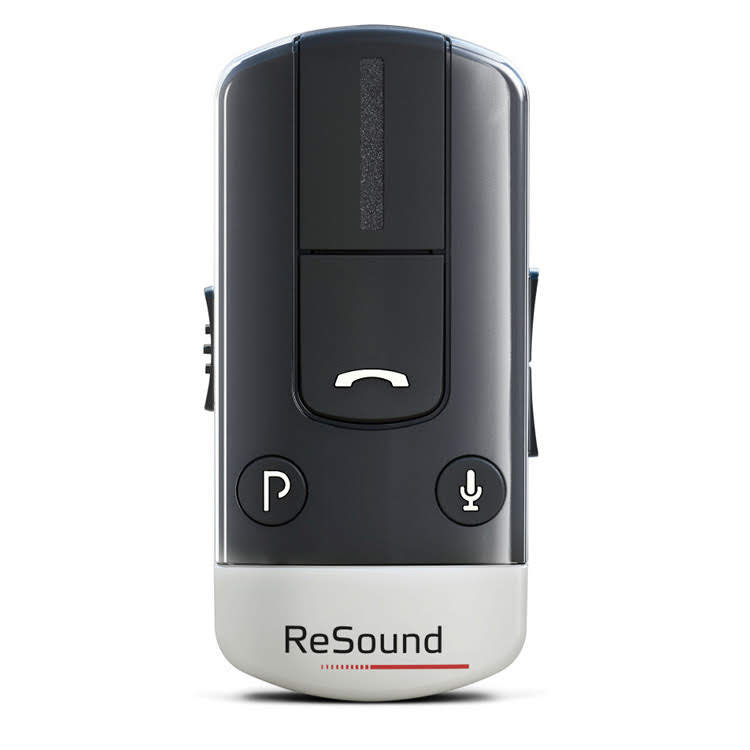
Resound Phone Clip+

It works a little differently for Android and Apple devices.

Apple devices newer than iOS 7 (*I think*. Check this if you have a really old Apple device), will connect directly to the Linx 3D – they will stream phone calls and music to the aids and will also allow you to change some settings of the aids from your Apple settings menu. This takes about 20 seconds to set up and then works seamlessly from then on. There are some screenshots from my iPad at the bottom of this article.

For Android devices, you will need a ReSound Phone Clip+ streaming device to be able to stream audio. I think the reason for this is that hearing aids with Bluetooth use a low-powered subset of the Bluetooth protocol, which not all phone/tablet/etc devices have implemented, Apple has, but Google and other Android developers have not – in other words, even though both your phone and your hearing aids talk Bluetooth, they talk slightly different dialects and can’t understand each other, so ReSound have the Clip+ which translates for them. The aids use a low-powered subset of Bluetooth to stop your batteries running out very quickly.

The Phone Clip+ and my Android phone sound just as awesome as the Apple devices do. Again, completely seamless, crystal-clear audio at all times. I connect my Clip+ to my phone via Bluetooth, then connect it to my aids (using the other Bluetooth!) and away I go. The Clip+ has a microphone on it, so when I am on the phone I am listening via my hearing aids, talking into the Clip+ microphone and my phone is sat on the table doing not much. The Clip+ also works great with watching Youtube or playing audio from my Android. You charge the Clip+ using a standard USB cable, one charge seems to last for days. The Clip+ is pretty small and discrete, and as the name suggests does actually have a clip on it, so it can easily be worn on clothing or kept in your pocket – carrying this around with my phone has not been a problem. I’ve taken it out running with me a few times to listen to music, it stayed firmly clipped to my t-shirt.

When listening

As I said before, this is the first time I’ve had Bluetooth hearing aids and my first question when I got them was: will I be able to hear things around me while listening to Bluetooth?

Yes, I can.

Normal environmental noise is reduced when listening to Bluetooth but it is still there. So phone calls and audio are extremely clear but the aids do play you the sounds around you too, but at a lower level – so you are aware what is going on around you but it doesn’t distract from the streamed audio. The balance of background sounds to Bluetooth sounds is perfect, I feel confident that if someone speaks to me from the side or behind I will hear them, which is useful as my Linx 3Ds are discrete and it is unlikely that someone has spotted them or will have any idea that I’m listening to Blondie’s greatest hits or taking a call.

ReSound Linx 3D hearing aids are the answer to your phone call and TV watching problems

Seriously. I have avoided phone calls for a long time and am used to watching TV with subtitles. My ReSound’s fixed both of those problems for me, I didn’t use to think I wanted or needed Bluetooth hearing aids but I was very wrong.

Having Bluetooth capability has changed the way I am doing things. For example, when I’m out jogging I never used to listen to music (couldn’t wear earbuds as already wearing hearing aids) but now I’m streaming from my phone strapped to my arm, wirelessly with excellent sound quality and there’s no chance of my Resound’s falling out of my ear like the new Apple buds apparently do.

Don’t ignore Bluetooth as an option on your hearing aids, it makes a real difference to hearing ability – the ReSound Linx is at the forefront of hearing aid/Bluetooth connectivity and is a great choice.
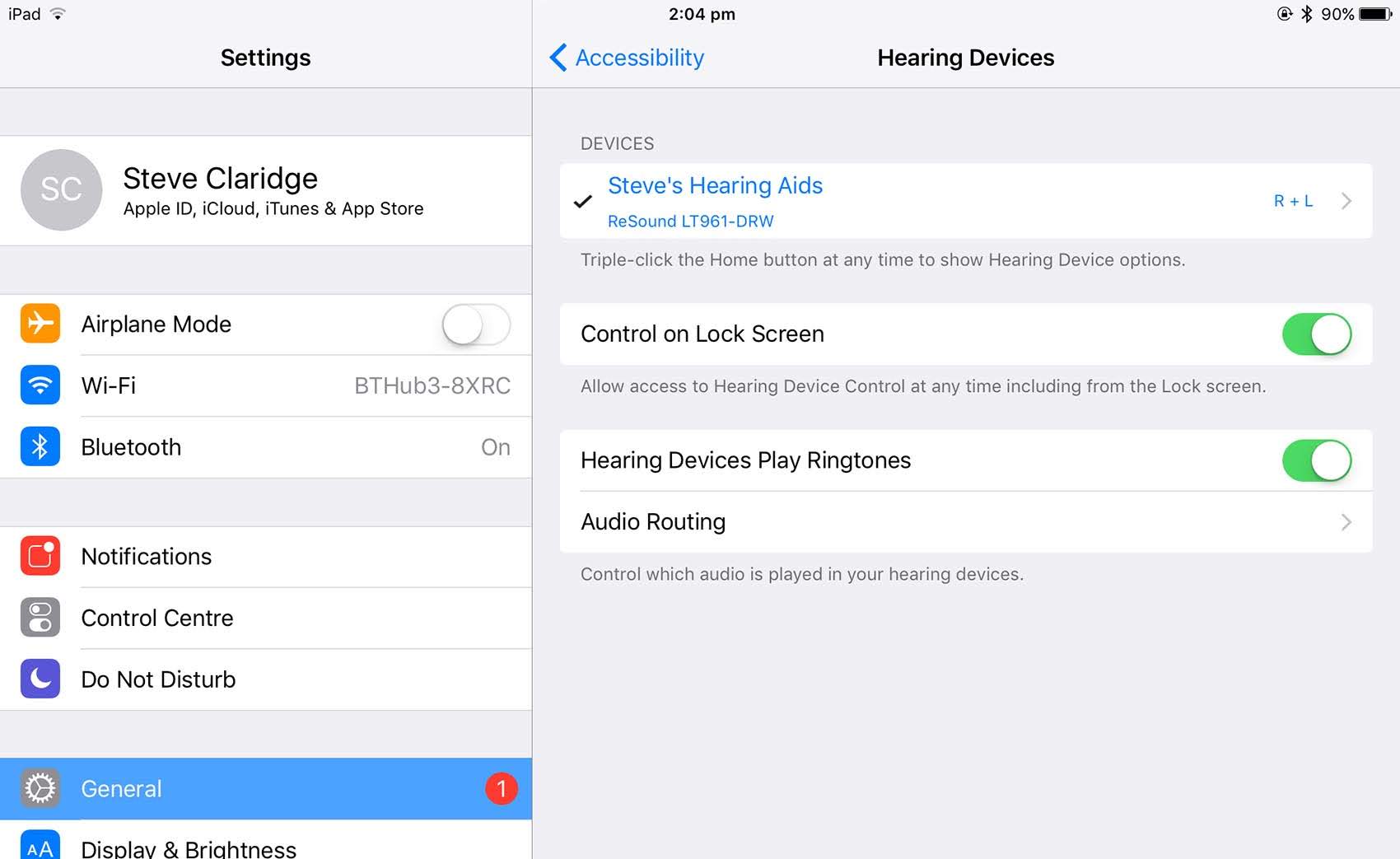
iPad hearing aids interface screenshot

This is a screenshot from my iPad settings screen. In General -> Accessibility -> Hearing Devices. You can see my hearing aids are already connected to my pad. To sync them initially I went to this screen and the iPad automatically looks for Bluetooth devices to connect to, I opened and closed the battery doors on my ReSounds and a few seconds after this the iPad find the aids and connect to them. That is setup done!  
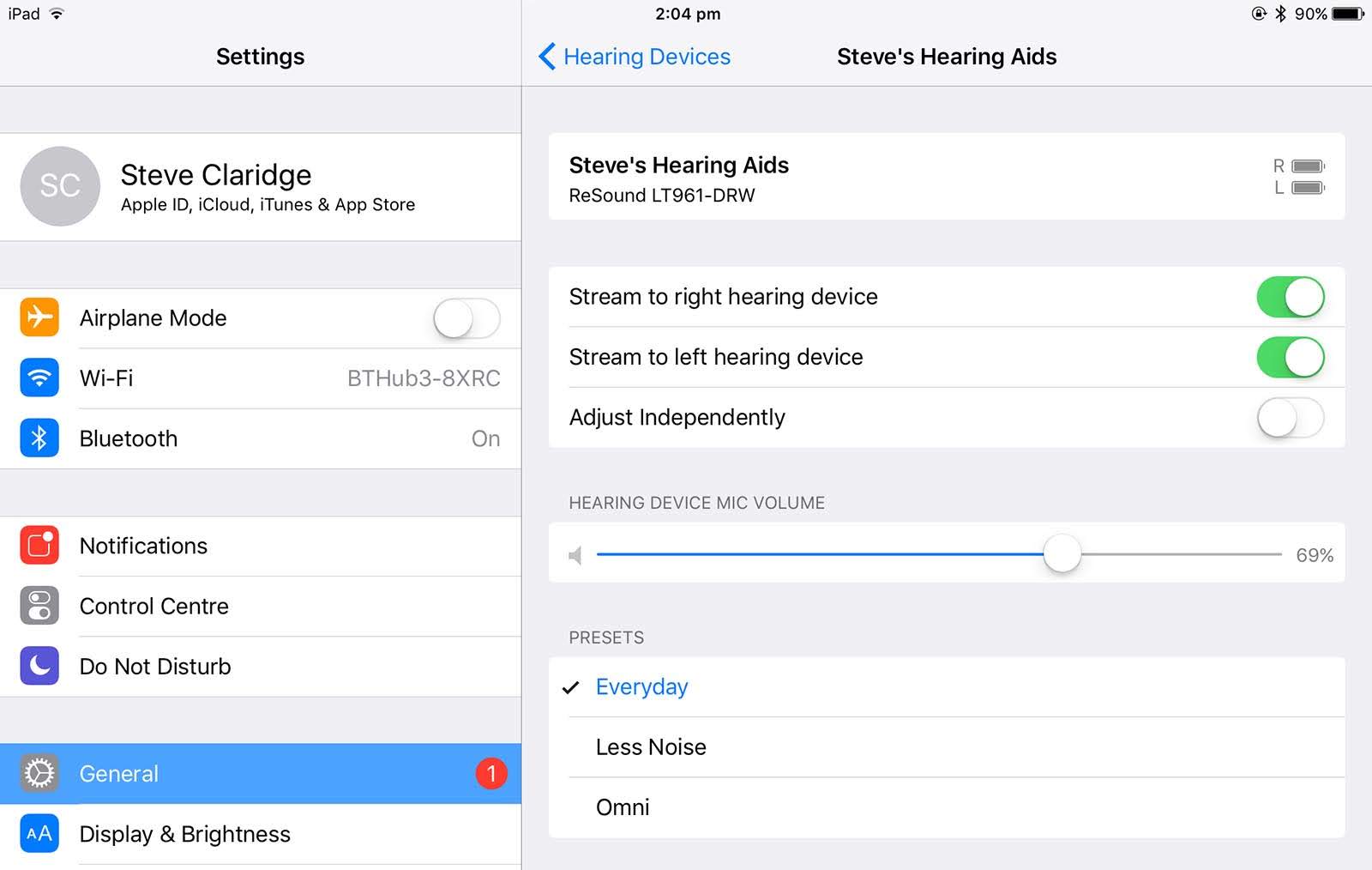
iPad hearing aids interface control screenshot

If I select my hearing aid from the previous iPad screen (shown above) then I see this page. I can switch on hearing aids with Bluetooth off streaming of audio to my hearing aids, I can adjust their volume and I can also select between some “presets”. The presets can be set up by your hearing aid provider when they fit you with the Linx 3D, you can have different presets for different hearing situations (if you want), traditionally you would use a button on your hearing aid to switch between presets but you can do this from your Apple device now too.

Overall I have to say the experience so far has been outstanding, the LiNX 3D and it’s Bluetooth connectivity has made a real difference to my life. The hearing aids themselves deliver while the extra functionality delivered by the streaming capability just delivers so much more. I have found the connection to be stable and it there has been very little problems.

Find An Independent Hearing Aid Centre in Your Area

Arrange a consultation with a trusted Independent hearing healthcare professional in your area
Ear Infections, What Do You Need To Know?

I remember when my children were young, they seemed to tag team us with ear infections. My young lad, in particular, had a lot of problems with his ears and eventually he had to have grommets fitted. It was a quick ten-minute operation but at the time he had to go under general anaesthetic. Hard to believe that they are now fitting grommets in the office. Anyway, I have been thinking about ear infections since I spoke about the hearScope a couple of weeks ago, then, I had someone come and see me with Otitis Externa (that’s outer ear infection in English). I thought to myself, hey Geoff, let’s chat with the nice people about ear infections. 

Ear infections

Hearing Loss From Infection

Before we go into the ins and outs of ear infections I want to briefly speak about sudden hearing loss. Over the next few paragraphs, it will quickly become clear that hearing loss is a function of ear infections in many cases. However, it is important that you understand that any sudden hearing loss should be treated as a medical emergency. Sudden Sensorineural Hearing Loss is a problem of the inner ear, if you are to recover, it needs treatment within days. 

Outer Ear Infection

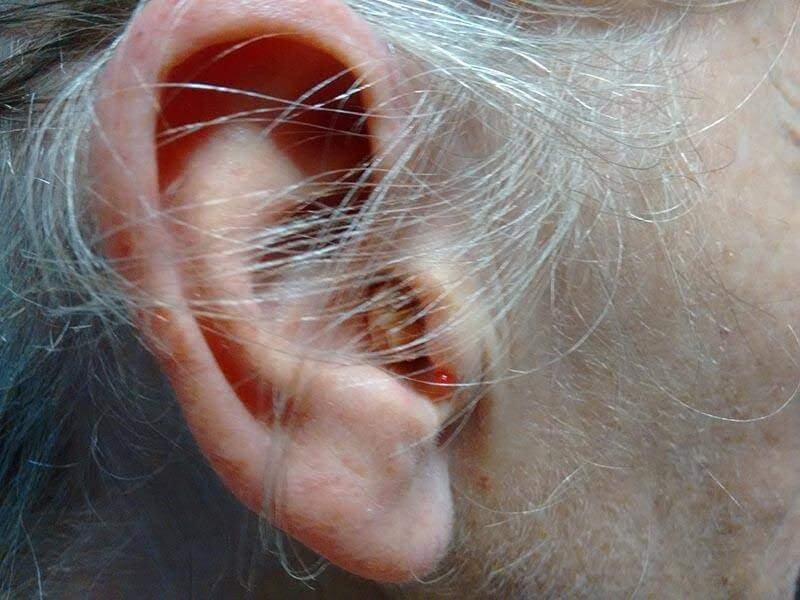
The chap who came to see me suffered from pretty bad outer ear infections. They were chronic and recurring and they had left his outer ear misshapen and swollen. At the time I saw him there was no infection active, but nevertheless, it had been a long and painful road for him. Unfortunately, he had a nervous habit of poking at his ears and this was causing the infection. 

Ear Infections & Hearing Aids

Steve (my business partner) has also suffered from otitis externa, he detailed his problems in the article Ear Infections. He spoke about the problems he had with ear infections as a hearing aid user, he also gave some pretty good tips about how to deal with it.

Intolerable Pain

An ear infection can deliver intolerable pain, all the worst because there is little you can physically do about it. Ear infections happen when germs such as bacteria, viruses or fungi cause swelling and irritation of the structures of your ear. They are most common in childhood, but they can happen at any age. There are generally two types of ear infections:

  • Otitis Media (middle ear infection) 
  • Otitis Externa (outer ear infection)

Otitis Media, Middle Ear Infection 

Middle ear infections or otitis media occur inside the middle ear, behind the eardrum. Middle ear infections are exceptionally common in young children but can happen in adults as well. In fact, most children will have a bout of otitis media during their early life even if there are no symptoms. The reason for it in children is often a combination of upper respiratory tract infection and eustachian tube dysfunction. Don’t worry, I ain’t getting all medical, the eustachian tube connects the middle ear and the back of the nose and throat. It is responsible for drainage and keeping the pressure in the middle ear equal. In children, the eustachian tube is smaller and more horizontal than adults. 

The Eustachian tube is pretty narrow, it also has an isthmus, means an even narrower bit. The middle ear cavity and the eustachian tube are lined with mucous membrane (the same as your nose). When you combine all these things with some sort of infection, you get a closed up eustachian tube, pressure and fluid build up in the middle ear and if the mucous build up gets infected, you get pain, deep, deep pain. The symptoms of middle ear infection are:

  • Pain
  • Fever
  • Pressure or fullness in the ear
  • Hearing loss
  • Puss or fluid draining from ear canal
  • Headaches

Otitis Externa, Outer Ear Infection

Sometimes this type of infection is called “Swimmer’s Ear”, it is an infection of the eardrum, ear canal or outer ear. The reason it is often referred to as swimmer’s ear is that it is often caused by swimming. It often begins with water inside the ear canal, however, other things can cause it. In general, many outer ear infections are fungal in nature, but I have seen some whopping bacterial ones. While both types of ear infections can cause pain and discomfort, outer ear infections affect the visible part of the ear and canal, often appearing as swelling, redness and itchiness. Symptoms of outer ear infection:

  • Painful ear
  • Often tender to touch
  • Occasionally pus or fluid
  • Red appearance
  • Swollen

When do You Need to Visit a Doctor

In the case of mild outer ear infection, some antiseptic cream or medicated drops may do the job. In the case of a mild middle ear infection, the eustachian tube may open and relieve the pressure and drain fluid. If the infection doesn’t clear up on its own after a week, or if it keeps returning. If you begin running a temperature combined with ear pain, you really ought to go and see your Doctor.

Treatment

The type of treatment given depends on the type of ear infection and what may have caused it. In many cases of middle and outer ear infections, antibiotics are necessary. In some cases of outer ear infections, antifungal treatments are necessary.  

Treating middle ear infections

Many middle ear infections are treated with antibiotics. In most cases, the antibiotics will be taken orally. On some occasion, antibiotic ear drops may be prescribed. They will also prescribe pain medication or advise the use of over-the-counter pain relievers. Many Doctors will also advise the use of a decongestant, nasal steroids, or an antihistamine.

Opening The Eustachian Tubes

A helpful technique here can be popping your ears, the medical term is auto-insufflation. It is a technique taught to scuba divers to equalise pressure, it also is a favourite of anyone who flies regularly. It’s meant to help clear your eustachian tubes. You do this by squeezing your nose, closing your mouth, and very gently exhaling. This can send air into the eustachian tubes, causing them to open, relieving pressure and help drain the fluid. Be careful doing this, if your middle ears are well and truly infected this can be painful. 

Treating outer ear infections

First off, the outer ear should be carefully cleaned. That is then followed by the application of antibacterial or antifungal and anti-inflammatory medications on your ear. Antibiotics would be prescribed if your doctor thinks the infection is bacterial. Viral is different and irritating, viral infections don’t really have a treatment, simply clean it and put antibacterial medication on it so that it doesn’t turn bacterial. You then just have to wait for the infection to sort itself out. However, if it is something like herpes simplex (don’t panic, it’s a cold sore), more specialised treatment may be necessary.

Home Remedies or Alternative Treatments for Ear Infections

Don’t do it, nope, nope, nope and nope. You can take some painkillers and hope it might pass, it might. It also might become chronic and if it is a mid ear infection eat away the attic of the middle ear and enter the brain. Yes, you heard that right, you just gave yourself meningitis, how cool, you didn’t need that hearing or the hand or leg anyway.  

Preventing Future Infections

There are a couple of things you can do to prevent a further infection, especially in the case of outer ear infection. Here is what you can do:

  •  Don’t stick anything in your damned ear, no fingers, no bobby pins, no keys, nothing, de nada
  • Try to keep water out of your ears. If you’re a frequent swimmer, get earplugs or a swimming cap
  • If you didn’t follow the rule above (idiot) shake out or drain any trapped water inside your ears once you get out of a pool or ocean.
  • If you are suffering from a bad cold, use a decongestant, this can help keep the eustachian tubes open
  • If you feel stuffed up, try clearing your eustachian tubes by auto-insufflation

If you have any questions about ear infections, give us a shout here at Know, better still, go see a doctor and tell us about it later.

Will 2017 Finally Be The Year For Fuel Cell Powered Hearing Aids?

The talk of fuel cell powered hearing aids has been around since 2009. Since then several interested parties have been researching and developing the idea both seperately and in collaboration. While there have been breakthroughs and even prototypes, we haven’t seen anything arrive on the market. Although that may well be changing, let’s talk fuel cells and latest developments.

The talk of fuel cells came to light in 2009 when a new Danish project was announced. It was announced that Teknologisk Institut, DTU Nanotech, Kemisk Institut / iNANO Århus Universitet, and Widex A/S would work together to develop a viable fuel cell technology for hearing aids. All was relatively silent until a patent by Widex became public in 2013. The patent had originally been filed in 2011. Although there has been prototypes made and displayed, there has been no move to market.

However, that now looks like it is about to change, as reported here “Widex, Sonion and DTI have previously demonstrated the technology where micro fuel cell replaces batteries. This time the partners joins forces to bring the technology all the way to the market.” That made me giggle a little, I am sorry, it might just be my sense of humour but that reads like “The last time it was serious, but this time it is personal!” Like I said, probably my sense of humour.

So, it would seem some serious funding was raised and has been ploughed into actually delivering the technology for use. The funding was raised during 2015 and the work began in 2016. But what is it and why might that be exciting?

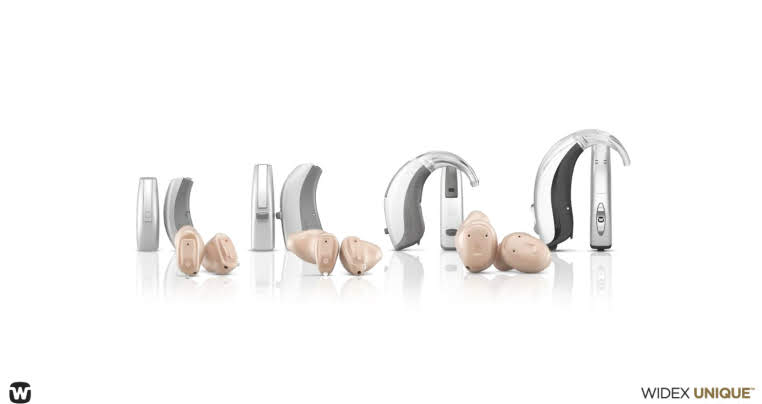
Widex Unique

Charge your aids in three hours? How about thirty seconds with no plug?

No electricity, no charging, no batteries, just place the hearing aid in a specially designed docking station, wait 30 seconds while it fills with methanol and your hearing aid will have enough energy for 72 hours of use. Fuel cells provide power via the use of hydrogen, methanol is rich in the stuff and it doesn’t need a pressurised storage facility to work. 

It is a truly innovative idea and could lead to the end of the use of batteries in hearing aids. In fact, the fuel cell technology may actually provide more power, power that can be used to drive more complex computing and the power hungry wireless technology that is demanded by modern consumers. 

At EUHA Widex were again talking about fuel cell technology, this time with very big smiles. So, maybe we are about to see a massive revolution in hearing aid power, I kind of hope so. 

If you like what you see, share it so others can benefit

BOSE HearPhones, Hearing Aids?

Update: 05/10/2018: Today, the FDA announced the approval of the “Bose Hearing Aid”, a new self-fitting hearing aid. Bose has been granted an unprecedented position by the FDA, the FDA has given Bose permission to market their new Bose Hearing Aid as a self-fitting hearing aid. The regulations governing this type of device do not exist and right this minute the over the counter (OTC) hearing aid regulations have not yet been finalized. More to follow. 

BOSE have introduced a very interesting new wireless headphone product called Hearphones. Hearphones do much more than just allow you to listen to your music or phone calls. They also combine two hearing aid technologies, active noise cancellation and directional microphones, to help wearers hear better in noisy environments. While the devices certainly don’t fall into the category of hearing aids, it looks to me like a first tentative step into the hearing aid space. Let’s take a look at what the products are. 

Bose Hearphones Website

What is it

So, first off the device is a set of wireless earbuds or earphones type device not unlike many other wireless headphones. The earbuds are connected to a reverse collar, which is similar in nature to many found on most wireless sets. The collar contains the BlueTooth radio, the rechargeable battery (they say good enough for ten hours) the power button and finally battery level indicators.

As with all wireless headphones they can be paired with any BlueTooth enabled mobile devices, allowing you to stream audio to hear music or make phone calls. BOSE has placed a remote under the right earbud which is used to control the Hearphones features. It’s the features and the accompanying app that has brought the devices to the attention of many within the hearing aid world. Bose is known for its noise-cancellation technology, but with Hearphones, they have done it differently.

Users can pick and choose what outside noises they want to hear instead of the norm which is to block everything out entirely. Bose says ‘Focus, amplify or reduce real-world sounds to the level you want.’ It even boasts the headphones can help with everyday chats. ‘Active Noise Reduction improves the listening comfort of conversations and takes the edge off the background noise.’

Listen to the world your way

The HearPhones can be used to listen to the ambient sound of the situation you are in, as I said they have directional microphones which allows a user to use the product to focus them in different ways to help them follow conversations.  This feature also allows the active noise reduction to reduce noise from different directions.

While you can control the features from the small inline remote under the right ear bud, the real power is delivered by the app. The Bose Hear app lets users customise sounds and create different presets for various environments that you may go to regularly.

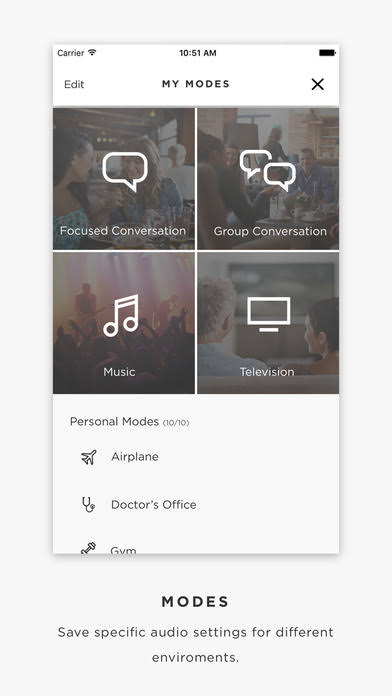
On the images above you can see that the user can change the direction of the focus, volumes and ambient sound levels. In the directionality feature Focused is designed for one-on-one conversation, Front is for talking with a group and Everywhere lets you hear sounds in all directions. It is interesting to see that you can also change the balance of the sound using simple treble and bass.

Bose has even provided what they call a Boost function, which gives emphasis to high-frequency sound. It makes perfect sense to do so, most sound systems would have the ability, but being able to turn the treble up may well help with clarity for someone who has a mild to moderate high-frequency loss. 

Not deaf enough

Let me explain that a little bit deeper, some people attend my clinic and they do indeed have a hearing loss. However, while it may be mild or indeed moderate it is in the higher frequencies only such as 4k or 6k and 8k. They are having some problems, maybe in really noisy situations or with the TV, but they aren’t necessarily candidates for treatment with hearing aids.

I often tell these people to adjust the treble on their TVs and sound systems to deliver more clarity for them. It will work up to a point, however, it makes their experience better. For people like these, I would most definitely consider talking to them about a product like HearPhones. Well back to the app and the product

Different presets

Bose Hear App Modes

There are different preset modes on the app so you can quickly choose a mode that best fits your situation. Each mode delivers different directionality and sound options. These settings seem to include, focused conversation, group conversation, music, television, airplane and doctor’s office among others. It appears these presets are designed with the optimum functionality of directionality and noise cancelling for the different situations.

Not on sale

The device is not yet on general sale, and only available to try at a series of ‘exclusive events’ at the company’s HQ for the moment. However, I think BOSE are taking this quite seriously and I would expect to see them go on sale soon enough. BOSE has recently advertised for a research Audiologist to join their R&D team, I think BOSE are probably focused on how they can expand this idea. 

BOSE hearing aids?

Will we see BOSE hearing aids in the future? I don’t know if they will consider delivering mainstream hearing aids. HearPhones kind of fall into the personal amplifier market, expanding within this market would probably make more sense for BOSE. It is quite a large market which doesn’t involve nearly as many FDA hoops to jump through. While there have been many new entrants to that market, none have necessarily really dominated it. 

Funnily enough though, with the advent of Here headphones, a whole new market has begun to open. For simplicity purposes, we will call it augmented reality. In essence Here and Bose with HearPhones are offering devices that allow you to adjust and augment your audio reality. It seems that this is attractive to more than just people with some hearing loss.

A solution for people with mild to moderate high frequency loss?

Are they a solution for people with mild to moderate hearing loss in the high frequencies? I would have to say they probably are2, they might not be an ideal solution but I think the appeal is in the multiple functionality of the devices. They will give a boost to clarity, they will actively suppress noise and the added directionality will make a real difference in noisy situations. 

They will also allow you listen to music and talk on your phone, what’s not to like? If and when the products become available in the market I would be interested in testing them out, I have a high frequency hearing loss and I wear a set of hearing devices. However, my loss is such that if I wasn’t in the business, I probably wouldn’t wear them. 

I am in that grey area, where I have some problems but I don’t necessarily need hearing aids. I think, that for people like me, HearPhones could be an excellent solution and I would definitely talk to Patients who presented with hearing loss like mine about them. 

If you like what you see, share it so others can benefit

New Tech To Improve Your Hearing Aid Experience

I was recently introduced to Patient Insights from Unitron, I had heard about it and thought to myself, “Hey that’s a good idea”. Then promptly went about my business meaning to look into it. Never happened, hey what can I say, I was probably drunk and the early onset dementia is creeping in. Then when we attended Unitron Engage a couple of weeks ago I got a closer and more in depth look at it. I was blown away by it, not just by what it is right now, but what it could become in the future. Let’s talk about it and why I think it will change the face of hearing aid fittings forever.

Be more involved with your hearing care

I think the feature is already a powerful way for you to collaborate with your hearing care professional to improve your experience of and control over your hearing aids. I also think that the feature if expanded in some ways and combined with cloud computing could change the first fit and fine tune of hearing aids forever for the better.

This could result in better first fits and stronger and effective fine tuning of hearing devices, ensuring that the experience with hearing aids is a good one from the beginning. Combined with some user fine tuning ability (yep, that’s you) it could also increase your collaboration with your healthcare professional while also giving you more control, let’s talk about Patient Insights and possible futures.

In effect, it is designed to allow you to collaborate on your hearing care, I know that is not for everyone, but for the frustrated, it is a god send. 

Patient Insights from Unitron

What is it and what does it do?

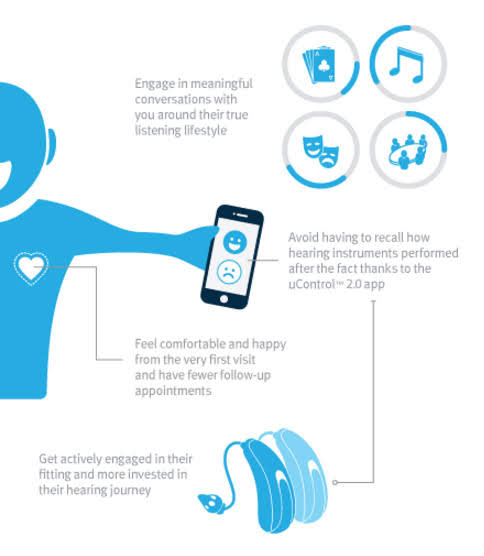
Patient Insights is a feedback system that lives on the U Control app (which can be downloaded on the PlayStore and the App Store) on your smart phone, it allows you to give your own feedback on how well you are doing in the moment with your digital hearing devices and the sound situation you are in. It registers the sound settings the hearing aids are in, and records your comments. It then sends that information to your hearing care professional’s software, allowing them to see exactly what is going on with you in a real-time situation.

In effect, it is designed to allow you to collaborate on your hearing care, I know that is not for everyone, but for the frustrated, it is a god send. It has to be activated and set up by your hearing professional, and of course you also have to have a streamer such as the U Stream or the U Direct and the U Control app on a smart phone. However, I think it is worth the investment and the learning curve.

The benefit to you

I think the current benefits are clear, you are more involved in your hearing care and for the professional, it is reliable feedback in relation to how well you are doing. It also clearly tells them about your experiences in real time situations and flags up what they may need to look at when you go in for follow up and fine tuning. Up to now it has always been difficult for the professional to get good info, the users memory and ability to explain an experience that happened a week ago has always been a problem. 

Simply better fine tuning, hearing aids that are better fit for you and a far better experience moving forward

I always asked my Patients to keep a sound diary, giving them headers to record the information under which prompted them to write the things I need to know. This method helped a fair bit, however, if I had access to what the hearing aids were doing at the time, it would have been the second part of the puzzle. It would have been data I would have rejoiced for believe me. It should result in better fine tuning, hearing aids that are better fit for you and a far better experience moving forward. 

How Could It Change Things Forever

I recently spoke about the future of hearing devices, I think I will need to update that section pretty regularly. What could Patient Insights mean for the future of hearing instruments? I think a better one, a future of hearing devices that automatically change and upgrade the solution they are providing.

This tech already gathers some good data, but if it was increased to include a detailed picture of the sound environment it would dramatically increase our understanding of the situation you are in. If it was combined with some fine tuning ability on your part, it would also give us a clear understanding of what you did to make your experience better in the moment. 

That would be fantastic data, it would allow us to see real time data on preferences, if it was tagged with simple info like speech clearer, more comfortable, it would also allow us to understand what the changes had done for you.

Usable data

If that data was combined with some artificial intelligence in the cloud it would allow the data to be used to change first fit protocols and fine tuning protocols for hearing aids. It would allow decisions about hearing aid features and function be based on real-time data from thousands if not millions of users. I really think that this could change the face of hearing aid fits forever (sorry giddy nerd moment there). The cloud solution could be then used to update the hearing aids on a continuous basis with new and better settings that made the hearing aids better and more customised for the user. 

The future of your hearing aids

Unitron have introduced another unique feature here, one that is focused on collaboration and the user experience. However, I think with just some imagination they have also pointed the way towards a possible future for hearing instruments. Right now, Patient Insights is an ideal solution for you to engage with your professional in a deeper and more effective manner.Only the imagination of Unitron and the other hearing aid manufacturers limits what it could be.

If you have a set of Unitron North hearing aids and you don’t have the U Control app, think about getting it sorted out. I think this feature is fantastic during the initial period when you purchase your hearing aids, however, I also think that it has continuous benefit for a user. Let us know what you think, contact us on info@hearingaidknow.com with your own experiences and thoughts. 

If you like what you see, share it so others can benefit

Widex To Introduce Remote Mic, Finally

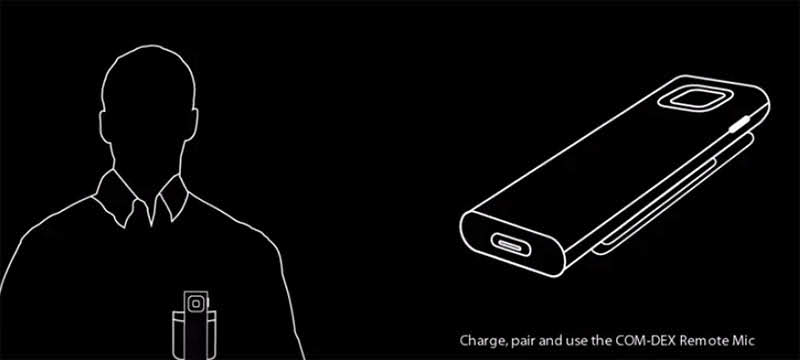
It appears that Widex is finally about to introduce a remote microphone system if a video that came across our desk a couple of days ago is anything to go by. The new Com Dex Remote Mic is probably going to be introduced at EUHA (massive hearing aid conference and exhibition in Europe). It’s about time, it is the only thing that their Dex line up has been missing and no doubt it will be a welcome addition.

Com Dex Remote Mic

Com Dex Remote Mic To Be Introduced

The video details the working and pairing of the new Com Dex Remote Mic and it appeared on YouTube a couple of days ago. The remote mic appears to be quite slim and reminiscent of the Com Dex  to which it will connect. As per usual with Widex it appears they have put plenty of thought into the design and functionality of the device. Here is the video:

The device will be a welcome addition to the Dex line up. Remote Mics are fantastic accessories to wireless hearing aids and their ommission in the Dex line up always seemed strange. A good remote mic can mean the difference between hearing in noise and not when you are wearing a lower technology hearing aid. This is something I have discussed before but it is worth saying again.

Everyone would like to buy top of the range hearing aids, however, not all of us can afford it. Buying a cheaper technology level but adding a remote mic to it can be a life saver for people who would like to hear in more complex sound situations. We will keep you updated if and when we hear more about the Com Dex Remote Mic

If you like what you see, share it so others can benefit

Signia Introduces Lithium-ion Rechargeable Hearing Aids

Lithium-ion rechargeable hearing aids are definitely one of the big stories of 2016. They have been exceptionally well received across the industry and by consumers. Signia have just launched their own Lithium-ion powered range called the Cellion. Let’s take a look at them. 

Signia, formerly Siemens has been famous for rechargeable options in the past. They are really the only mainstream manufacturer that have offered rechargeable options consistently. However, there was never widespread adoption of the technology by professionals because of the limitations of the battery technology. That of course has all changed with the introduction of Lithium-ion power packs.

Cellion Primax

Signia

Cellion Hearing Aids

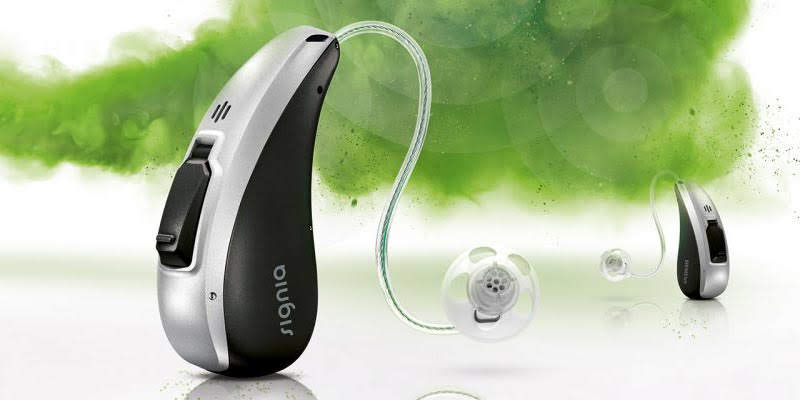
Signia say that the Cellion™ primax™ is the world’s first hearing aid with lithium-ion inductive charging. Inductive charging is undertaken by proximity, so there is no need to line up the hearing aids carefully because there is no contacts. The Cellion devices start charging automatically as soon as they are placed in the charger.

The devices have been designed to be smart, they turn off when dropped into the charger and turn on automatically when they are taken out again. The rechargeable lithium-ion power cell lasts 24 hours straight without charging. The Cellion is a Receiver in Canal hearing aid range and it can be used with a variety of receivers which will allow them to cover hearing losses from mild to profound. 

We assume, but are unsure at this stage that the devices will be available in three levels of technology, the 7, the 5 and the 3. The devices are also rated to ip68 which is for all intent and purpose almost water proof. 

What are the key features

  • Rechargeable lithium-ion power cell
  • Auto on when taken out of the charger
  • Auto off when placed in the charger
  • 24 hours continuous use with unlimited streaming
  • Contactless, inductive charging
  • Unique OneShell design
Signia Cellion in charger

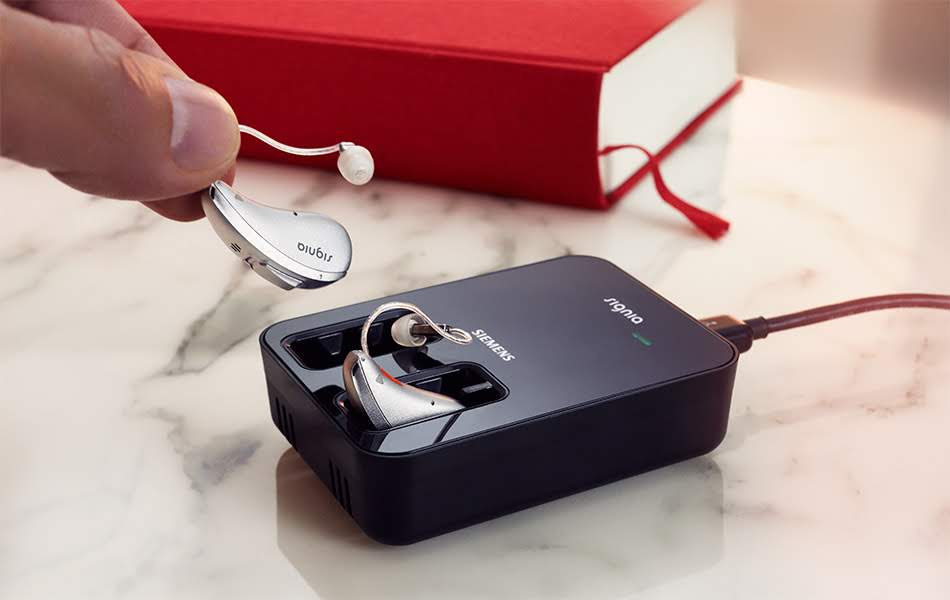
The inductive charger fully recharges Cellion primax hearing aids in four hours. They say that a full charge will ensure that the hearing aids deliver 24 hours of continuous outstanding hearing with unlimited streaming. LED indicators clearly display the status of both hearing aid power cells. During the charging cycle, the charger will also dehumidify the devices for better care and longer service life.

As we said the devices automatically turn off when charging begins and is reactivated when removed. The power cable for the charger is a simple micro USB connector. It will mean less cables to carry when on the move. It has three LEDs which clearly show the different charging progress statuses. The charger is pretty small and light’ it is no bigger than a business card, that and it’s weight means that it is ultra-portable.

Four hours in the charger will deliver a full charge. A 30-minute top-off if needed will provide seven hours of use. Signia have not designed a specific power pack for the Cellion, however, because of the micro USB connection it will compatible with a host of commercially available power packs for mobile devices. In essence this will probably cut down on the equipment you need, if you already have an emergency power pack for your mobile phone, it will double as a power pack for your Cellion devices.

This is the second manufacturer to enter the fray with Lithium-ion rechargeable hearing aids, but we don’t believe it will be the last. Signia have a lot going for them, in the past Siemens was seen as a catch up company. However, since Sivantos have taken the helm they are very much switching to innovation. The release of the myHearing app with remote fine tuning and fitting facilities is a huge step forward that is sure to be emulated by others. I for one would like to hope that they won’t rest on their laurels and I am fascinated and a little excited by what they might do next. 

You can also read about the pros and cons of rechargeable hearing devices here

If you like what you see, share it so others can benefit

New Innovation Makes Choosing The Right Hearing Aids For You Easier

Trying to choose hearing aids but unsure of which ones are right for you?

At Hearing Aid Know, we know that there is a lot of uncertainty, even fear, that you might get it wrong, however, we think there is a great solution to make your choice easier!

Unitron introduced a new and innovative hearing aid feature with the North Platform that we think has not got enough notice. It is a feature that will allow you to make decisions about the hearing aid solutions you need based on real time data and real world experience. What could be better than that? Getting to wear them for a week to really try them out? Well, for the feature to really do its job, that’s exactly how it works!

Log It All, Making You A Collaborator in Your Hearing Care

Want To Be In Charge Of Your Hearing Healthcare Decisions?

The beauty of this fantastic new tech is that it makes you a collaborator in your hearing care. It also puts you firmly in the driving seat when choosing the right solution for you. It does so by providing real world information on the situations you face every day and the hearing aid features that can help you to hear better based on your lifestyle needs. It is also a good thing for the hearing aid provider, because it gives them access to the real world information they need to really understand your lifestyle needs. 

How Does It Work?

Log It All is just one innovation in a package of three that Unitron has introduced. They have also made solutions called FlexTrial and Flex Upgrade available. FlexTrial is a special set of hearing devices that can be customised for your loss and set to work for a week or two, the Flex Upgrade solution allows the professional to set the FlexTrial devices to any technology level you would like.

In simple terms, if you would like to experience the benefits that the Unitron North 800 would offer, the professional can configure a set of FlexTrial hearing devices to that level of technology and allow you try them for a week or two. This alone is of real benefit for people who are trying to make a decision, however, Log It All improves upon this.

Basing Your Choice On Real Time, Real World Information

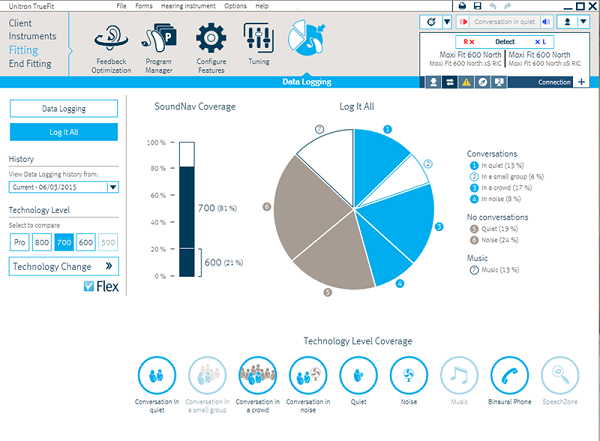
It works in the background during the trial period, gathering real-time and real-world data on the sound environments that you face on a  daily basis. At the end of the trial period, the hearing care professional can query the feature and show you the data as it presents it. Explaining the different soundscapes and what they mean. It is displayed visually in an easy to understand manner.

Unitron Log It All

As we said, the data is completely based on your experiences during the trial period, so it makes custom recommendations for you. Recommendations that are based on your lifestyle needs. This is what dramatically changes things, for the first time, you can make decisions on actual real world information. Not a question and answer session. You can understand clearly what a hearing aid feature will do for you in the real world and why you might need it.

A Massive Step Forward For Hearing Aid Buyers

We think that this is a massive step forward for both hearing aid buyers and the professionals who provide them. So do some of our professional colleagues as you can see from this story from a Glasgow hearing clinic. We believe that this technology gives the professional a very clear understanding of what a customer faces on a day to day basis. It allows them to collaborate with a customer on choosing the right hearing solution based on concrete, factual information.

Clear, Independent, Factual Information

It also allows you to experience the hearing aid technology in real time and real life, what else could be better? This groundbreaking and unique innovation allows customers to become truly involved in the decision-making process for buying hearing solutions. It also offers you clear and independent, factual information on what your lifestyle needs are, what you might need in hearing aid technology and why. So the next time you are thinking about buying hearing aids, why don’t you ask about Log It All? 

If you are looking for good, independent hearing aid device, you should check out our e-book. It details the types, pros and cons, technology levels and features of hearing instruments in clear and easy to understand language. We think that you shouldn’t buy a hearing aid without reading it first.

If you like what you see, share it so others can benefit

A Cure For Hearing Loss May Be As Little As Five Years Away

Japanese researchers have discovered a process to turn stem cells into cochlear (inner ear) cells. This breakthrough could lead to the replacement of damaged haircells in the cochlea reversing previously untreatable hearing loss. They believe that they may be able to deliver a treatment in five to ten years, however, first they have to identify a way of delivering the cells to the cochlea safely and effectively. 

The initial research is based around finding a cure for a specific type of congenital (from birth) hearing loss caused by a genetic mutation. The work, which is being carried out in a laboratory at Juntendo University in Tokyo, Japan, aims to correct a mutation which accounts for deafness or hearing loss for one in a thousand children.

In some parts of the world, mutations of this gene are responsible for as many as half the instances of congenital hearing loss. Professor Kazusaku Kamiya and his team have engineered and grown stem cells to replace human cochlear cells without this mutation. Hereditary hearing loss is often caused by a genetic mutation in the hair cells of the ear, which are found in the inner ear, or cochlea, and are the sensory receptors of sound. Acquired sensorineural hearing loss is caused by damage to the very same hair cells. 

Juntendo University Tokyo

Professor Kazusaku Kamiya, a specialist in ear diseases who is leading the research, said: “I am very excited by what we have done. We hope this work will lead to a cure for a form of hereditary deafness.

The key will be to find a safe and effective way to deliver these new cochlear stem cells to the cochlea. One possibility is through injection into the cochlea, however, it will have to be done surgically. While the breakthrough brings us a massive step forward towards curing hearing loss, there will still need to be delivery methods designed and clinical testing to be undertaken. 

It will be a step by step process, because even if the researchers can get the cells into the ear and it leads to the growth of new inner ear haircells. We don’t know if those cells will act as normal passing sound information to the brain. However, within the next few years we may well have answers to all those questions.

If you like what you see, share it so others can benefit

Reddit User Suffers Sudden Hearing Loss in One Ear After Intense Sit Ups

A recent article caught my attention because it reminded me of a young man I tested a couple of years ago. He had been doing some intense weight training when he had felt a pop in his ear. He quickly realised that he couldn’t hear from that ear and he came searching for answers. In the article, a Reddit user going by the name Unilythe talked about a similar problem he had after doing sit ups.

If you hear a pop in one ear and suddenly begin to suffer with tinnitus in that ear, you need to treat it as a Medical Emergency. Don’t take the chance that it is nothing, don’t take the chance that it will be alright. 

Sit ups image from Pexel.com

In the article which can be found here, he details his recent problems at the Gym. In essence he was pushing himself to the limit to get his workout finished. He said that he was using bad form and wasn’t really using decent breathing control. As he undertook his last sit up, he felt a pop in his ear and his ear began ringing. At this stage, there didn’t seem to be any other symptoms so he shrugged it off. 

When he woke up the next morning he seemed to be deaf in the ear and he was suffering really bad dizziness. In fact any movement he made, made him so dizzy that he was nauseus. After googling his condition, he was pretty sure that he had fractured his round or oval window. Two tiny parts of the Cochlea (inner ear). He attended his doctor and was sent on to hospital, it eventually ended in some surgery. 

While his vertigo stopped, his hearing unfortunately was gone for ever and it won’t return. Like the young man I saw some years ago, the pressure build up in the body caused something in the structure of the ear to fail. The chap who saw me had some hearing in his ear, but his speech understanding in that ear was completely shot. While we don’t know what failed in the structure of the ear of the chap that saw me, it was felt the round window was fractured in the chap from Reddit. 

Exercise Causing Vertigo

While many of us enjoy exercising to the max, or pushing the weight until your head pops, it isn’t healthy. If you undertake exercise and feel dizzy, you are doing it wrong. Remember that many structures in your body are delicate, including the membranes in your inner ear. By increasing your internal blood pressure by un-controlled effort you put those structures under serious pressure. Sometimes they give out. 

Sudden Hearing Loss is a Medical Emergency

You should treat any sudden hearing loss as a medical emergency. Sudden hearing loss is something that needs to be treated within 72 hours for there to be any hope of a full recovery. In most cases this type of hearing loss is treated with steroids and possibly oxygen treatment. If it is treated within 72 hours there is a good chance of recovery, or at least, the chances of recovery are increased.