Hearing Tests in The UK & Ireland

WHAT HAPPENS DURING THE HEARING TEST?

What are the hearing tests and what do they tell us?

HEARING TESTS, WHAT HAPPENS AT THEM?

Many people get a little worried before a hearing test, there is no real need to. It is usually the fear of the unknown, the word test also doesn’t help. It conjures up images from school days that many would prefer to forget. A better word is assessment because that is what the procedure is. An evaluation of your hearing system and your ability to hear. It is not a test that you pass or fail. Let’s talk about the hearing test, we will explain what each test is and what information it gives. 

Looking For The Latest Hearing Aid Technology or a Hearing Test?

Find a trusted Independent Hearing Care Professional in your area

The Hearing Test

The hearing test appointment will usually last about one and a half hours. The test is made up of several different parts that allow a professional to understand the background to any hearing loss. Any medical issues pertaining to your hearing and then your ability to hear. Each part of the process is designed to furnish different information. After the hearing test is complete, the professional will explain precisely what he or she has found and will make recommendations on those findings. 

What happens during the hearing test?

Generally, the hearing test no matter where you get it will follow the same pattern with similar components. Components within the overall parts may differ based on who is providing the test and the results they are getting. For instance, some professionals may not undertake speech in noise tests at all, and middle ear testing may not be undertaken unless something points to it being specifically required. The hearing test will usually include:

  • Examination of the ear and auditory canal, including video otoscopy
  • Case history
  • Full audiometric hearing assessment that will include pure tone testing, middle ear testing and possibly speech testing in quiet and noise.
  • Explanation and discussion of outcome
  • Impartial advice on the most suited hearing system for your requirements 

Let’s talk about those stages in more depth. 

Otoscopy (Examination of the ear)
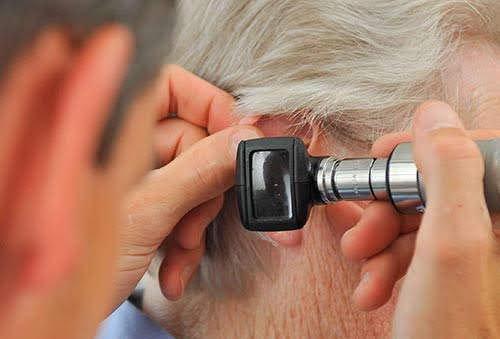
Otoscopy

This part of the assessment is about the health of your ear, your outer ear and your ear canal. The professional will first examine the outside of your ear using a light. They are looking for any blemishes strange marks or sore spots. They will then use an instrument called an otoscope to examine your ear canal and your tympanic membrane (eardrum).

This again is to check the health of your canal and eardrum. They will check something called the light response on the eardrum, this is merely the way the light is reflected on the drum. A healthy tympanic membrane will reflect the light in a specific way. This examination may also give indications of problems with your middle ear and signs of any history of perforations. Once the professional is happy, they will move onto the next part.

Case History

A case history is taken to get an understanding of the background of your hearing loss. During the case history, they will ask you questions such as your name, address and date of birth. They will ask you about any treatments in the past that may have used ototoxic drugs (medicines that are toxic and damage hearing). Then the professional will ask you questions about any background to the hearing loss, such as your working history when you noted an issue if the issue occurred suddenly, has it worsened suddenly, do you have tinnitus, if so is it in only one ear etc.

These last few questions are designed to allow the professional to assess if you have what is called a referrable condition. If they find this to be so, they may well continue the test but will refer you on for further examination by an ENT professional. Once this is done the professional will also ask you questions about the perception that you have of the impact of your problem on your daily life. These questions are important because it allows the professional to begin to understand your lifestyle and the effect if any that hearing loss is having on it. After the case history is undertaken, they will move onto the auditory testing proper. 

Auditory Testing

Auditory testing is made up of several tests that assess the full function of your auditory system. It is essential that the examination is comprehensive, but certain parts of the test may not be needed depending on results from earlier tests. 

What happens during auditory testing?

As we said, not all tests may be undertaken, for instance, tympanometry may not be needed,  however best practice auditory testing involves the following criteria;

  • Pure tone testing (Audiometry)
  • Speech in quiet testing 
  • Speech in noise testing
  • Tympanometry
  • Acoustic Reflex Threshold testing
  • Distortion Product Otoacoustic Emissions (DPOAE) testing

Confused about hearing aids?

Confused About The Right Hearing Aid For You? 
hearing aid buying guide

Our buying guide, easing the confusion with clear easy to understand info, we guarantee it will help you pick the right hearing aid for you.

Audiometry ( Hearing Test)
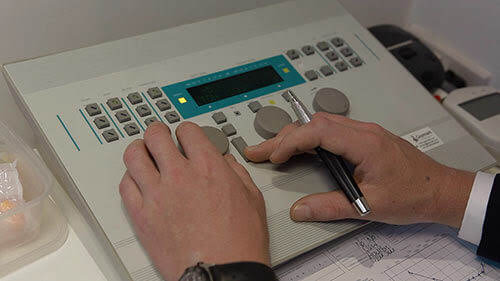
Audiometry hearing test

Audiometry or pure tone testing is a series of tests where pure tones (sound like whistles and chirps) or warble tones (similar but they oscillate or vary) are presented through either headphones, insert earphones or a bone conduction headband. The results are plotted on an audiogram which shows your hearing sensitivity in the tested frequencies.

These tests tell us the softest sound that you can hear and allow us to tell you if your hearing sensitivity is within a normal range, or if there is a hearing loss. Audiometry results tell us many things beyond just your hearing sensitivity; it allows us to see if there is any asymmetry in your hearing loss ( a hearing sensitivity that is not equal between the two ears).

It also allows us to see the configuration of your hearing loss (the shape of the way your hearing loss occurs tell us a lot about your hearing loss causes) This and other tests can help towards a diagnosis of ear abnormalities.

How is audiometry performed?

The initial test involves you carefully listening through headphones that are placed over the ears or insert earphones that are placed in the ear canals. Pure tones will be presented through the headphones or insert earphones. This part of the test is called air conduction testing and is designed to allow the professional to assess what you can hear from the outer ear. If you hear the sound, you will push a button or raise your hand in response. The professional will continuously reduce the volume of the sound until you can no longer hear it. The key here is that the expert is trying to identify the softest sound you can hear, so no matter how quiet it is if you think you hear it you should push the button. Many people are never sure and feel like they are letting down the professional.

This couldn’t be further than the truth, relax and don’t get frustrated. Once the headphone or earphone test is undertaken, the professional will then change to a bone conduction vibrator on a headband that is placed behind the ear. This part of the test is designed to find out what your inner ear can hear, it is very rarely different, but in cases of conductive hearing loss, there will be a marked difference. This part of the test is essential, conductive hearing loss is a referrable condition, even if you know about it and an ENT has assessed it, the results are still necessary for the programming of any hearing aids that may be prescribed. This overall test will determine your hearing thresholds. Additional tests called masking may be added to the group of tests if an asymmetry of thresholds is found or if you have conductive hearing loss.

Speech Testing

Words will be presented at a comfortable listening level either free field which is presented through a calibrated speaker or through headphones. You will have to repeat the words, and the professional will score you on the results. This test gives the expert a deeper understanding of how you hear speech sounds, it also identifies the speech sounds you are missing.  The analysis will then be undertaken with increasing levels of background noise. This test is an integral part of the assessment, it will give the professional a lot of information about how you perceive speech and the signal to noise ratio you need to hear and understand speech in noise. 

Why is it important?

The level of sound you hear is only a starting point for our understanding of the impact of your hearing loss. This just tells us the mechanics of the sound levels. Speech testing actually allows us to understand how well the brain centres that manage hearing are working. It is often the case that speech scores can be radically different between two people, even if the audiogram results are the same. The speech in noise testing also allows us to understand what type of hearing aid technology level is most suitable for your hearing loss. For the best diagnosis and hearing aid recommendation, the speech testing protocol is a must.

How is speech testing performed?

Most independent hearing health professionals have updated their testing equipment to allow them to run automated speech and speech in noise tests through their audiometer. During these tests, you will be asked to repeat words that are presented to you at normal speech volume levels with and without noise. Word recognition scores will be determined and recorded on their system. 

Middle Ear Analysis

What is middle ear analysis?

Middle ear analysis tests are undertaken to assess the function of the middle ear. The tests will determine how sound travels through your middle ear and also how your brain reacts to some sounds. You will feel a slight blocked sensation while a recording takes place. There are two parts to the Middle Ear Assessment: Tympanometry and Acoustic Reflexes.

Tympanometry

What is tympanometry?

It consists of measuring how much your eardrums are moving and if that movement is within normal limits. It tells us if there is any fluid or congestion behind the eardrums. (presence of fluid behind one’s eardrums is known as glue ear, and it is widespread in children). This test measures how well your middle ear works. Your middle ear includes your eardrum, the middle ear bones, and your Eustachian tube. It will reveal abnormalities which will signify and can explain a conductive hearing loss and/or a sensation of pressure in the ear.

How is tympanometry performed?

An ear tip is placed in the canal that is connected to a handheld machine; it briefly varies the pressure in the ear. By changing the pressure, the movement of the eardrum can be measured. It takes only a few minutes to complete. You will not need to respond during this test. 

Acoustic Reflex Thresholds

What is acoustic reflex threshold testing?

When we hear a loud noise, our ear protects itself with a reflex which stiffens the eardrum. We use this reflex to test the Facial and Auditory nerves. This test measures how the stapedius muscle contracts in response to a loud sound. The absence or presence of acoustic reflexes can be important for differential diagnosis.

How is acoustic reflex threshold testing performed?

Often, tympanometry and acoustic reflex thresholds are done together. With the ear tip in your canal, you will hear beeps that are progressively louder. You will not need to respond. Instead, the machine will automatically measure the response.

Distortion Product Oto-acoustic Emissions (DPOAE)

What is DPOAE testing?

This test measures how well the outer hair cells in the cochlear work. The outer hair cells produce low-level sounds called Otoacoustic Emissions in response to clicks. A conductive or sensorineural hearing loss will often result in absent DPOAE responses.

How is DPOAE testing performed?

With an ear tip in the canal, clicks are presented in the ear. In response, the cochlear emits a sound which is recorded by the equipment. The extent of the response and the frequency at which the reaction occurs is measured and recorded.

Explanation of the results

Once the testing is complete, the professional will explain the results, they will tell what they have found and detail why it is having the impact it is in your life. They will also make recommendations based on their results for you to return to a more normal level of hearing and allow you to engage fully in your life. 

Hearing Aid Benefit Assessment

If you are a suitable candidate for hearing aids, many professionals will then move onto a hearing aid benefit assessment or demonstration. In essence, what they will do is programme up a set of demo hearing aids to your loss, they will not give you full amplification but a level close to it. This will allow you a taste of what hearing aids sound like and how they will work. Any professional worth their salt will move through a demonstration of different features explaining to you as they go what they are and how they will work for you.
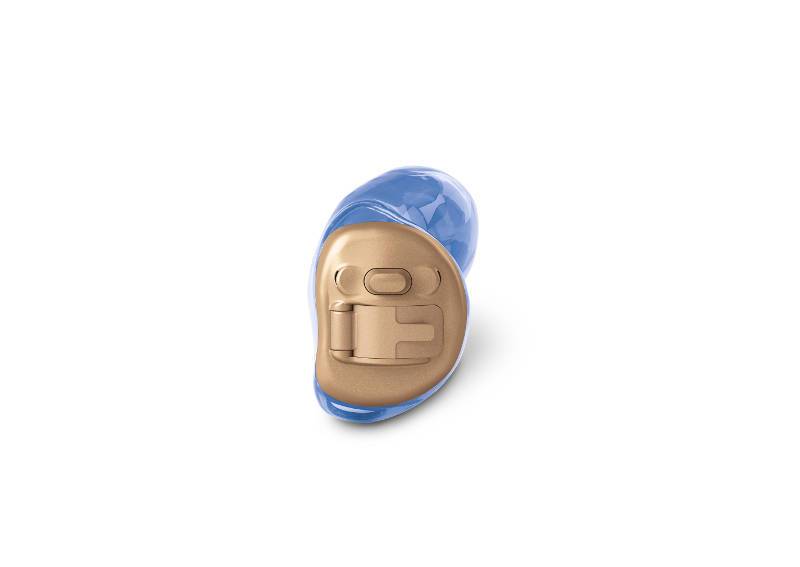
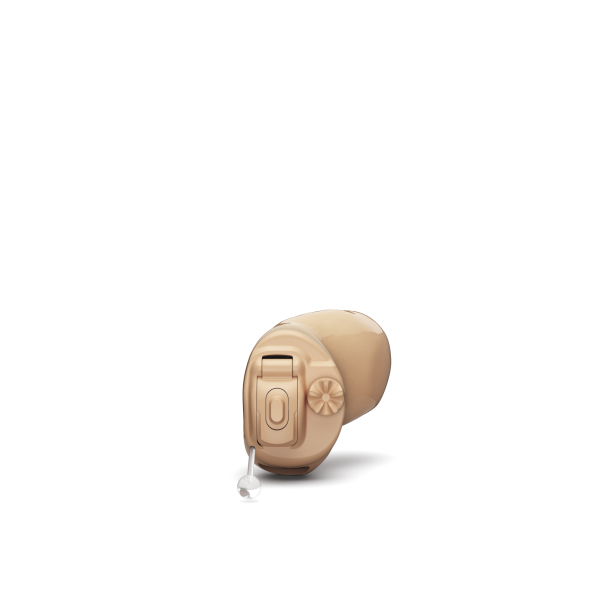
Invisible Hearing Aids 2017

Smallest Hearing Aids

Virto V Nano

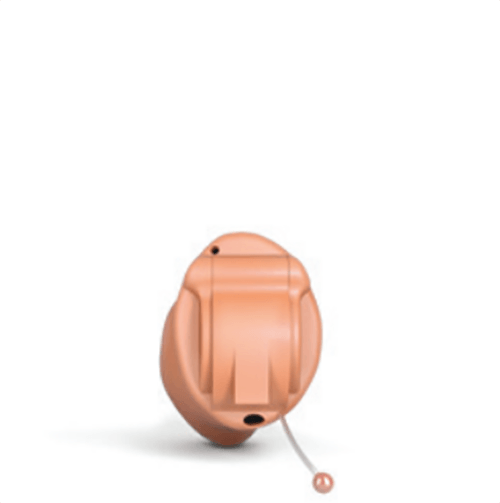
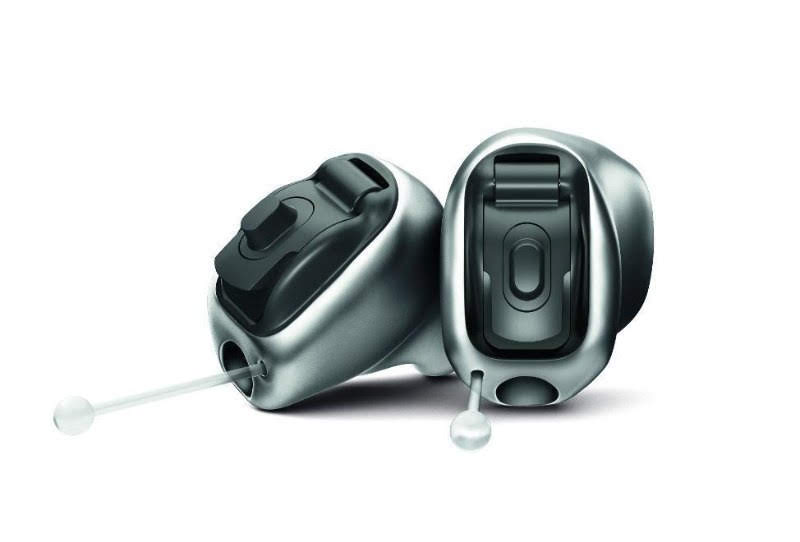
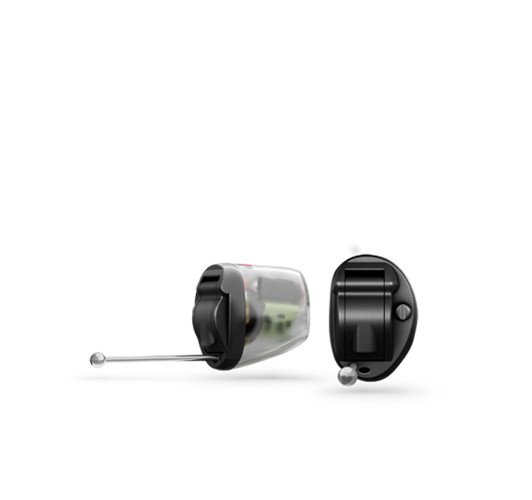
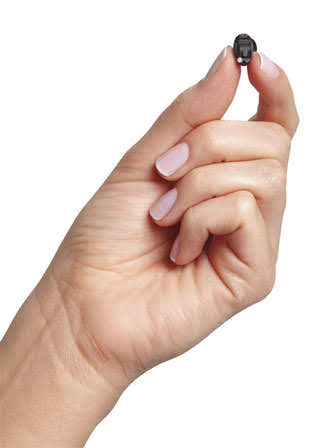
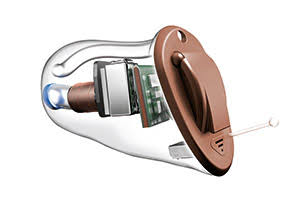
Invisible hearing aids are always popular, there are absolutely tiny hearing aids and many consumers love them. We did a post last year outlining what was available in the market at that time and updated as we learnt of new products. The article was always a firm favourite, so we decided to write one in the same vein for 2017. Again, we don’t really understand what the obsession is with the smallest hearing aids available, but there you go. At this stage, really the only new thing to report is the introduction of the new Phonak Virto B-Titanium and possibly the Signia Silk. So let’s talk about what’s available in so-called hidden hearing aids. Again, as things change we will continue to update this post during the year.

Discreet Hearing Aids

Invisible hearing aids or IIC hearing aids are the most discreet hearing aids available. However, that discretion often comes with trade-offs. They are placed deep in the ear canal which leaves all of the components open to moisture and wax ingression. So it is important that they are well taken care of. Because if you don’t follow a daily clean and care routine, they will fail. It is also important that you ensure you follow a drying routine with these devices. Moisture will kill your hearing aids, so make sure you don’t allow it to build up inside the case.

Invisible Hearing Aid Prices

In general, invisible hearing aid prices are similar if not the same as other devices within the level of technology chosen. Where once custom hearing aids were more expensive than BTEs, that has generally changed and they are usually the same price. Just to be clear, we don’t set prices here and they differ from Practice to Practice across the World so our expectations aren’t binding, they are just a guess and some research. Always remember, we all like to shop around, but always be clear about what is being delivered. You will need care and support, make sure you will get it. You will also need your hearing aid validated or verified to get the best experience, paying a little more to ensure your experience is good, is not wasted money. That’s our price rant for the day over, let’s talk about the devices.

Phonak

Virto B Invisible Hearing Aids

Meet The New Phonak Virto B Range

Phonak have now introduced the full range of their new Virto B in the ear products. They say that they are custom-made to perfectly fit in your ear, Phonak Virto B is the world’s first hearing aids with Biometric Calibration, which take your individual ear anatomy and hearing needs into account. That’s an interesting description.

They say that they will identify over 1600 biometric data points in and on your ear, and the unique calibration settings are calculated for each Virto B hearing aid. In this way, Virto B is able to more reliably sense where sound is coming from, thereby giving you access to better hearing performance.

What does that all mean? Well, we think that Phonak is the first ever hearing aid manufacturer to carefully map the outer ear to take advantage of its natural abilities. They say that the new process will deliver a 2dB signal to noise ratio improvement. Basically, it means it will make the signal (what you want to listen to) 2dB higher than the noise.

2dB doesn’t sound like much but combined with all the other strategies that Phonak use it will be a marked improvement. Phonak Virto B is available in six models to match your hearing needs. It is also available in the usual four levels of technology, the 90, 70, 50 and 30. 

Virto B-10 NW O

Virto B-10-NW O
  • Custom Product
  • Mild to severe hearing loss
  • Battery: 10 zinc air
  • Truly invisible
  • Non Wireless
  • Omni-Directional

Resound

Resound LiNX 3D LTIIC (Invisible In Canal Hearing Aid)

Linx 3D IIC Prices

We would expect the range depending on technology level, to be sold at prices from £1200.00 to £2200.00 in the UK depending on the Practice and location. We would expect the range to be sold at prices from €1200.00 to €3000.00 in Ireland. We would expect the range to be sold at prices from $1200.00 to $3200.00 in the USA.

Resound LiNX 3D LTIIC

Resound have just introduced a brand new platform called the LiNX 3D. It is an upgrade to their exceptionally popular LiNX 2 Made For iPhone hearing aids.

The platform is a full range of hearing aid styles with one being an invisible hearing aid. The LTIIC is the smallest of the LiNX 3D custom hearing aids. Because it is so small you will lose some of the benefits of the technology.

However, that is always the trade-off for discretion. The device is available with only one level of receiver power, the LP. It will only cover hearing losses to a max 70 dB in the low frequencies and 85 dB in the high frequencies.

Suitability

The suitability of this device is also based on the size of your ear canal. If your canal is too small, you won’t be able to avail of it. If your hearing loss is close to 70 in the lows and 85 in the highs, you won’t be able to avail of it.

It can not have a push button or volume control, but the devices all have smart start which gives you a couple of seconds to get it in your ear before it comes on. But you lose out on the direct audio streaming, no ear to ear communication, and no wireless accessories. The battery size on this aid is size 10.

By choosing discretion you do lose out on a lot of features and benefit. Firstly, there is no telecoil, something that many like. You also miss out on the new Resound smart 3D app and the remote assistance. You lose all the directionality functions because you only have one mic, no Wind Guard and you lose all the wireless functions. That is a lot of benefits gone because you wanted it small, really think about this, because honestly, no one cares that you are wearing a hearing aid.

Feature Set

The feature set of the device is as follows.

  • Up to 17 channels of compression depending on tech level
  • Environmental Classifier
  • Environmental Optimizer II
  • Noise Tracker II
  • Expansion
  • Sound Shaper
  • DFS Ultra III with Music Mode
  • Auto DFS
  • Acceptance Manager
  • Tinnitus Sound Generator

Tired of Listening to Bla? We Got You Covered

hearing aid buying guide

Our buying guide, no Bla, just clear easy to understand info, we guarantee it will help you pick the right hearing aid for you.

Tired of the blah

Phonak

Virto B-Titanium Invisible Hearing Aids

Virto B Titanium Prices

We would expect the range depending on technology level, to be sold at prices from £1500.00 to £2200.00 in the UK depending on the Practice and location. We would expect the range to be sold at prices from €1800.00 to €3000.00 in Ireland. We would expect the range to be sold at prices from $1900.00 to $3200.00 in the USA.

Phonak have just introduced this device across the world. As part of a raft of introductions, Phonak announced that they were introducing a new Virto hearing aid type as part of their Virto Belong range. The Belong range is Phonak’s latest platform.

Virto B-Titanium

A Titanium Shell

They named the hearing aid as the Virto B-Titanium and said it will be the most discreet in-ear device they have ever made. It is a fascinating device that uses titanium for the shell instead of the usual hard acrylic. This is the first time that titanium has been used in the manufacture of a custom hearing aid.

Will Fit More People Than Ever

The material is exceptionally strong, which allows Phonak to make the shell much thinner than ever before with even more strength. This combined with new component design allows them to deliver an invisible hearing device that they say will fit 68% more ears.

The deep position in the ear canal of the device will allow the hearing aid to use the natural shape of the ear to funnel sound to the microphone. This strategy has always proved to deliver excellent directional hearing.

Who will the Virto Belong-Titanium be suitable for?

While invisible hearing aids can be a bit hit and miss for suitability, Phonak says that their new designs and materials will, in fact, make the hearing aids suitable for more people than ever. While that will most definitely be the case, there will still be some limitations on the ability to fit. I would imagine if the bends in the ear canal are too tight, it will preclude this device from being suitable.

Other contraindications are the same as every other invisible hearing aid such as excessive waxy ear canals, history of mid-ear infections or perforated eardrums. If you face these issues, this will not be the product for you. In these cases, other discreet hearing aids may be more advisable to consider.

The device will offer three receiver levels which means that it will cover more hearing losses than ever before. The device will only be available in the V90 and V70 technology level.

Looking For an Invisible Hearing Aid? Visit Your Local Hearing Pro

Arrange a consultation with a trusted Independent hearing healthcare professional in your area

Phonak

Virto Venture Nano Invisible Hearing Aids

We spoke about the Venture Nano last year, it is the invisible hearing aid option available on the Venture platform from Phonak. It will remain available this year for some time so we have included it here. The Phonak Venture Nano was and I suppose still is the latest Nano invisible hearing aid from Phonak until the device is replaced by the Belong range. It is a typical invisible hearing aid which sits deep in the ear canal.

As I said before, the deep position in the ear canal allows the Phonak Nano to use the natural shape of the ear to funnel sound to the microphone which delivers excellent directional hearing, as well as virtual invisibility.

The Nano sits very deep in the ear canal, they manufacture it in order that the front of the hearing device is in permanent shadow because of the depth it sits at.

Who is the device suitable for?

The Nano Venture is typical of hidden hearing type devices, it is not suitable for everyone for two reasons. Firstly, the device will only fit certain shapes and dimensions of the ear canal, if your ear canal is too narrow or has too tight a bend it might not be suitable. The other contraindications are things such as excessive waxy ear canals, a history of ear infections or perforated eardrums.

Outstanding features of the Phonak Nano include:

  • Perfect fit: each IIC hearing aid is custom made to ensure a perfect fit
  • Better localisation: tight fit means users can better determine where sounds are coming from
  • All-purpose use: can be worn in all listening situations
  • Durability: all components are contained in one unit making it extremely durable
  • More comfort: no joined parts mean there are no hard edges

Oticon

Oticon Invisible Hearing Aids

Oticon invisible hearing aids

Oticon introduced a new type of invisible hearing aid that had wireless communication. We spoke about them last year and we expect them to update them this year. They have introduced a new range of hearing aids called the Opn. At present, the devices are only behind the ear hearing aids at present, however, they have already indicated that they will introduce a range of in the ear hearing aids this year.

The introduction of Oticon’s IIC instruments with wireless technology meant that for the first time choosing discretion did not mean you would lose out on the benefits of wireless technology. It meant that for the first time it was possible to combine the discretion of hidden hearing aids, with wireless access to communication and entertainment and an optional remote control.

The device is shaped to fit so snugly deep inside your ear that no one will see it, or even realise you are wearing it. The placement also means that the hearing aid will not affect your use of headsets or telephones, nor how you wear your glasses. As it is placed deep inside the ear, Oticon IIC captures sound in the same way that your ears were designed to do. The devices available currently, are based on Oticon’s Inium Sense technology and are available at three technology levels to suit all budgets.

Looking For The Latest Invisible Hearing Aids? Visit Your Local Hearing Pro

Arrange a consultation with a trusted Independent hearing healthcare professional in your area

Starkey

Starkey SoundLens Synergy

Starkey SoundLens IIC Prices

We would expect the range depending on technology level, to be sold at prices from £1200.00 to £2200.00 in the UK depending on the Practice and location. We would expect the range to be sold at prices from €1200.00 to €3000.00 in Ireland. We would expect the range to be sold at prices from $1200.00 to $3200.00 in the USA.

Starkey introduced the original SoundLens several years ago and updated it last year making the device even smaller and they added a second wireless invisible hearing aid to the lineup.

Wireless Invisible Hearing Aid

The wireless version of the SoundLens is no bigger than the older SoundLens type, so it will be a discreet deep-fitting hearing aid.

Technology Levels

Starkey SoundLens

The Soundlens is available in three levels of technology

The Premium i2400

The Advanced i2000

The Standard i1600

Let’s Talk Styles

The Starkey SoundLens Synergy comes in two styles

Starkey SoundLens Wireless

Wireless (invisible-in-canal) device, only available in the premium range i2400

Starkey SoundLens Non-Wireless

non-wireless (completely-in-canal) available in all tech levels

Signia

Insio Primax IIC

Signia Insio IIC Prices

Signia Insio

We would expect the range depending on technology level, to be sold at prices from £1200.00 to £2200.00 in the UK depending on the Practice and location. We would expect the range to be sold at prices from €1200.00 to €3000.00 in Ireland. We would expect the range to be sold at prices from $1200.00 to $3200.00 in the USA.

The Insio has bragging rights for the being the most powerful invisible hearing aid. Siemens / Signia introduced the Insio Primax IIC last year as part of the Primax introduction. As I said, it is, in fact, the most powerful invisible hearing aid available covering hearing losses well into the severe range which is quite unusual for an invisible hearing aid. It is available in three levels of technology the 7px, the 5px and the 3px.

Wireless Invisible Hearing Aid

The Insio Primax is also a wireless invisible hearing aid.

The invisible hearing aids are pretty decent hearing aids, but they have their pros and cons. We have general details about hearing aid types including the hidden hearing aids and other types of devices in our consumer hearing aid buying guide. It also details technology levels and features of hearing instruments in clear and easy to understand language.

Signia

Insio Primax Silk

Signia Insio Primax Silk Prices

We would expect the range depending on technology level, to be sold at prices from £1200.00 to £2200.00 in the UK depending on the Practice and location. We would expect the range to be sold at prices from €1200.00 to €3000.00 in Ireland. We would expect the range to be sold at prices from $1200.00 to $3200.00 in the USA.

Signia says that Silk is the first completely-in-the-canal (CIC) hearing aid that’s both almost invisible and ready to wear. The devices are powered by Signia’s latest primax chipset and are designed to fit up to 80% of all ear canals. While the device is labelled a CIC, for some people it is actually an invisible hearing aid.

The device is a modular type hearing aid that uses a flexible Click Sleeve to provide an immediate and comfortable fit. In essence, Silk allows the possibility that you can walk into the Audiology office and walk out the same day with a new hearing aid without having to wait for a custom-built device.

Signia Silk Primax

Instant Fit Invisible Hearing Aid (almost)

The Click Sleeves are made of soft silicone and are available in six different types which allow the device to fit in the majority of ear canals and to fit the majority of hearing losses. With the right Click Sleeve in place, the hearing aid sits quite deep in the canal making the device either invisible or almost invisible.

Because Silk is powered by Signia’s primax platform, users of the device can benefit from all of the outstanding features of that platform including their binaural OneMic directionality system and all of the other features that the Primax chipset offers. The device is also wireless so you can use your smartphone to adjust your hearing aids via the Signia touchControl™ app, and wirelessly stream virtually any audio device with the optional easyTek™ accessory.

The devices are built on fantastic foundations, the Primax and Binax chipset before it has been responsible for a turn around in the fortunes of Signia/Siemens. The concept behind the device is also good and it aligns with a lot of the conceptual ideas that Signia are bringing to the table right now like the remote fine tuning capability. It will be interesting to see if this idea has finally come of age and what the uptake of the devices will be both professionally and more importantly by Users. Knowing what I know about Signia devices I think these will be pretty good devices, if you give them a try, let us know what you think.

If you like what you see, share it so others can benefit

Those ebay Hearing Aid Retailers, They Have Launched A Website

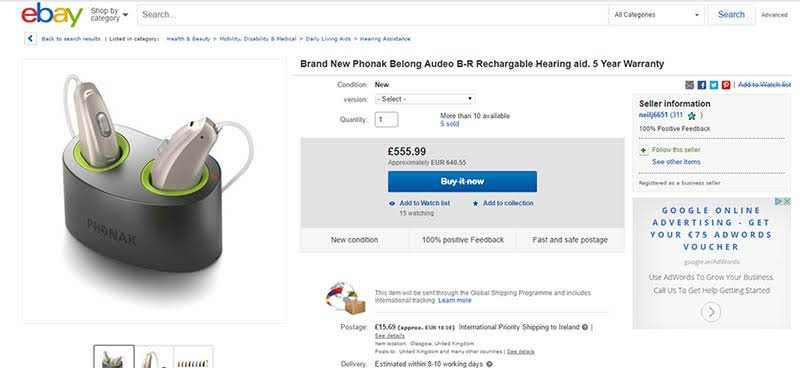
Those ebay retailers I spoke about earlier have in fact launched an e-commerce website selling hearing aids online at what they term wholesale prices. In fact, they are selling non custom hearing aids from all of the big hearing aid brands at probably the lowest price in the UK. The question is, should you buy them? 

Ebay listing for Phonak hearing aids

Online Hearing Aid Sales UK

For the first time there is now an online hearing aid sales website that sells devices from the big hearing aid brands in a true e-commerce way. Apparently, the original ebay sales were a market research exercise to test the Public’s appetite for this type of purchase. The second phase is to offer the products direct on their own website to the public at the same knock down prices.

A New Hearing Aid Business Model

In essence, the company is trying to introduce a new hearing aid business model where hearing aids as a product are sold separately from service. Some hearing aid advocates have lobbied for just this type of business model, but generally they wanted their local professional to provide it to them. Their question has always been why should I pay for service that I don’t want or need? Wholesale Hearing Aids is using this same sentiment as a unique selling point. It will be interesting to see if the buying public accept it. It will be more interesting to see if the hearing healthcare professionals accept it.

Wholesale Hearing

At the time of publishing this article they are offering top of the range hearing aids from Phonak, GN Resound, Widex and Starkey for under a thousand pounds sterling each. The owners of the site advise you that they can pre-programme your hearing aids from an audiogram before they are shipped. They say that they prefer an audiogram that is under three months old. In fact it is illegal in the UK to sell hearing aids from an audiogram that is six months or older. 

They also advise you that it is a good idea to actually visit a hearing professional before you purchase in order that you can get a full hearing test and recommendations on which hearing aids are most suitable for you. They further advise that –

We believe that the best success comes from getting the best devices and working well with a professional who is competent and that you trust. So many times we have been told that patients stopped going to their existing audiologists because of poor service or feeling that they were just a number. We are building a global network of trusted audiologists that you can be linked up with who will charge you per visit often saving you thousands of pounds in aftercare costs. It’s like a pay as you go mobile phone! 

A Global Network of Trusted Audiologists

It is obvious from looking through the site that the owners have big ambitions. They hope to sell their hearing aids beyond the UK and Ireland going global with their offering. Although they speak about a Global network, there is no mention of who or where these professionals are other than vague references. I honestly think that is because there probably isn’t many of them and they probably are not as widespread as the owners hope. 

In our last article ebay sales. We said that our worry about this business model was that people may buy the hearing aids online and then find it difficult to get a professional to help them. We are unsure about how the bulk of hearing aid professionals are going to feel about this. So there are several things you really need to consider so you can make an educated choice here.

Here are the things you need to consider. 

  • Will someone fit them for you?
  • How much will the hearing test and fitting cost?
  • How much will it cost for aftercare visits? (you are going to need them)
  • How much will it cost for repairs to be handled?
  • Will the extra costs mean a net saving or loss for you?

Simply Independent Hearing Aid Advice

Again, we aren’t telling you this isn’t a good deal and we most definitely aren’t telling you not to do it. What we are telling you is that you need to carefully consider everything here. I really would urge you to discuss it with a health professional before you do it. You need to know that someone will actually take care of you, otherwise you will be left with some very expensive ornaments.

Right this minute, this concept of hearing aid sales is not getting a great reception within the hearing healthcare profession. That may change however. We will keep you updated on the reaction to all of this and we would welcome your comments at info@hearingaidknow. 

Late update here, BSHAA (The British Society Of Hearing Aid Audiologists) has released a statement, it reads 

BSHAA Chief Executive Prof David Welbourn said: “We are concerned at hearing aids being sold without the qualified care and advice of a professional audiologist. We need to look at any effect this may have on the trust between the public and those clinicians who do provide high quality hearing care. We are also considering whether this practice is consistent with the conduct we expect of clinical professionals who are members of our organisation. “We are in dialogue with the regulator to review whether the practice is contrary to the legally protected function of a hearing aid dispenser.”

Late Update 2. In a statement from Neill Pottinger (Starkey Management UK) made on Linkedin, Starkey Hearing Technologies have instructed the owners of this website to remove their brand from this site. It allows consumers to purchase hearing instruments without the intervention of a qualified hearing professional and is in contravention of our stated internet sales policy.

We think that this one might run and run

If you like what you see, share it so others can benefit

What Can You Expect From Hearing Aids?

So you have taken the first step to hearing better, you have bought a set of hearing aids. Firstly, I would like to congratulate you. Well done, I do understand that for some people, this is a huge step. I won’t get into what I think of the stigma that exists and the psychological tricks that we play on ourselves. I will just admit I understand them and congratulate you for overcoming them. But what happens now and what can you expect?

Resound Linx3D

Hearing aids are not normal hearing

Let’s be clear here, hearing aids are not natural hearing. They do not restore your hearing to the normal, before you lost some of your hearing. Hearing aids are just that, an aid to hearing. However, a good hearing aid which has been carefully fitted to you. Taking into account your type of hearing loss and your lifestyle, will make a significant difference in your life.

Modern hearing aids are amazing

Modern hearing aids are quite astonishing in comparison to the devices available five or ten years ago. They deliver well, even in noisy and complex sound environments. But, hearing is not like sight and hearing aids are not like glasses. You cannot compare hearing aids to glasses. When you wear a pair of glasses for the first time, you see the difference straight away. With hearing aids you will see a huge difference but you will have to get used to hearing differently.

Acclimatisation

The initial period after the fitting of a hearing aid is generally called acclimatisation. Rehabilitation doesn’t in fact start until after the initial period. The period of acclimatisation varies from user to user. When we first fit your hearing aids, we will not fit you with a full level of amplification to help correct your hearing. The reason is pretty simple, you wouldn’t like it.

Over a period of time we will move you towards a full level of amplification for your loss. That period of time varies from user to user. In general I find that most users acclimatise to full prescription within six weeks. Again, that can vary. It can take up to four months for you to get accustomed to your hearing aids and be accepting of full levels of amplification. In fact, real rehabilitation only starts then.

In general I schedule an appointment with a new user three weeks after the initial fit. During that appointment I will begin to gather feedback on experiences. I will use that appointment to increase the level of amplification towards the prescription level. I will also check that the user has read the information I have given in relation to the hearing aids and can perform the cleaning and care. 

A new hearing aid users secret weapon….. a notebook!

I will then schedule another appointment for three weeks time. This appointment is similar in nature to the initial follow up. However, at this appointment I will move the user to full amplification and explain what I want them to do for the next month or so. In essence what I want them to do is to start gathering information about how they are hearing. More importantly, how they would like to change that. I always advise people at this stage to start taking notes in a note book. Good observations written down at the time will always beat memory, this should be your secret weapon of choice!

Rehabilitation

The rehabilitation period can also vary by user. For some it is a couple of months, for some it is longer. I will often need to adjust the hearing aids several times during your rehabilitation period. The prescription levels of hearing aids are based on years of research to deliver what you need when you need it. However, sound is a very personal sense. In my experience it is rarely that someone ends up on exactly the prescription level.

Some want some more bass, some want some more treble. Like I said, it is a personal sense. This is a team effort, so do not be afraid to speak up. The greater amount of information you give me, the better we can make the hearing aids for you. When you first begin to use hearing aids, your brain will start to hear sounds that it has been missing.

You need time to get familiar with the high-frequency sounds of speech and environmental noises. Don’t forget, you probably haven’t heard them properly for years. Initially, your brain isn’t sure what to do with them, but it learns quickly enough. Re-acclimating your brain to normal levels of sound, after years of hearing loss takes a little while.

Geoff….When I flush the toilet!!!!!!

Your perceptions of everyday sound will improve over time. At first, all sounds will seem loud. The common observations are that your clothes rustle as you move. Yes, they do. You can hear your feet on carpet, yes, I can to. Your footsteps on wooden floors are loud. Yes they are. Running water will give you a real fright and the news paper rustles when you change the pages. Yes and yes again. Welcome back to the world.

When your hearing was normal, you heard those sounds and just ignored them. Now that you are correcting your hearing loss, those sounds are almost new again. These sounds will become part of your subconscious again as your brain begins to reduce the focus on them.

When I see you after the initial acclimatisation visits I want you to go over your lifestyle and what you have done with your hearing aids. This will help me understand where there may be issues and the need for adjustments. 

As you move through your rehabilitation period I will change and re-programme the hearing aids. For instance, I may add one or more sound programmes. These are programmes with fixed adjustments for certain situations. For instance I will probably add a music programme, music is different from speech and needs a different focus. So adding a specific music programme makes sense. 

I also may add a programme for experimentation. If you talk about certain problems in certain situations, I will set up a programme specifically with that situation in mind where you can try it out and give me feedback. This allows me the info I need to make adjustments that are suitable. All of this happens over time, if I tried to sort all of this out at the start, it would be way too much to handle. 

Hearing aids are a team sport!

A relationship with the professional

Like I said, hearing aids are a team sport, you need to be equally involved in the process. You need to have a good and ongoing dialogue with your audiologist. This is why the relationship between you and your professional needs to be good. The more information you tell them about your experience using hearing aids, the better they can change them to suit you. Fitting a hearing aid is an ongoing process. As you become more familiar with your hearing aid and how it works for you in different situations. You can give your Audiologist the information they need to make the hearing aids work better for you.

Before you attend your follow up visits it is important that you consider a few things. Be sure to note the sound quality of your hearing aid in different sound environments. Does it sound hollow? Is the sound too loud or soft? What sounds are too loud or soft? Is it soft sounds, medium sounds or loud sounds? Does the aid whistle? Do you use all of the programmes? Would you like a programme added because you think you will use it?

So, what’s the main takeaway for you here? Hearing aids are a process, but they are a process worth sticking with. Find an Audiologist you get on with, because you and them are going have to work together. Be part of the process, take your notes, explore the power of your hearing aids. Congratulations on taking the big step, don’t let it be in vain, understand the process and work with it. 

If you like what you see, share it so others can benefit

Find An Independent Hearing Aid Centre in Your Area

Arrange a consultation with a trusted Independent hearing healthcare professional in your area

What’s The Best Hearing Aids For an Active Lifestyle?

Debi Ghose was always careful with her hearing. She has unusually sensitive ears, meaning that being in loud environments without earplugs can be physically painful, and her uncle, an ENT surgeon, lost his hearing on one side from an ear infection, making her “hyper aware of how fragile hearing is.” All of which made her doubly alarmed when things started to go wrong. 

She’d been booked to play on the Sunday of Bloc festival in 2016, and arrived on Friday night to enjoy the festival. She’d picked up some disposable earplugs at the bar, but at some point noticed that the one in her right ear had fallen out. “I woke up the next morning and had a searing pain, like white-hot painful, and mad tinnitus in my right ear,” she says. “I couldn’t believe it; it was just incredible pain. That whole night I couldn’t even go near the venue, and then I had my show the next day. I knew it was the worst thing for it but I was there to play, so I played.” 

The above is from an excellent article called A music-lover’s guide to tinnitus on residentadvisor.net, which contains this superb quote:

“Close your eyes, and think about what you’re seeing. You don’t see black, you see colours and lights and movement. That’s partially the light coming in from the outside world, but it’s also your brain trying to turn up the gain and see something out of the nothing that you’re getting. You’re seeing your nerves firing and working. And what we’re hearing when we’re hearing tinnitus is the same thing. Just your brain and your ear and your nerves working. It’s a sign that the engine is functioning. I don’t think that we can get rid of that, because it’s a natural part of our body.” 

Click this link to read the original  A Musician’s Guider to Tinnitus article.

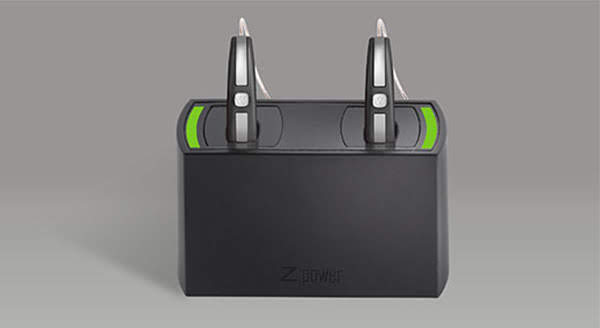
The Beyond Z Rechargeable Hearing Aids Finally Arrive

The Beyond, Rechargeable, What’s Not To Like?

So the Beyond Rechargeable hearing aids are finally arriving in the UK and Ireland. The Beyond has had its problems, just like many other of the Made For iPhone hearing aids, but since they pushed out the firmware upgrade they seem pretty solid. I believe there is another firmware upgrade in the works which will make them even more solid. Rechargeable has been around a while now, so I asked one of the Widex team what was the holdup? The answer came a little out of left field and opened up a lot of questions.

CE Mark

So, the Beyond hearing aids are CE compliant, and Z Power’s rechargeable system is CE compliant, however, when you put the two together, they are no longer CE compliant. That surprised me, in fact, I was a bit flabbergasted. So, I decided to ask around a bit, I am sending out emails as we speak, but Oticon have already responded, their Opn rechargeable is CE marked and they went through the process. I hope to hear from other manufacturers over the next few days. Anyway, let’s talk about the Beyond Z. 

Widex Rechargeable Digital Hearing Aids

BEYOND Z™ is a rechargeable battery solution for the BEYOND range of hearing aids, created in collaboration with ZPower.   The good news is that current BEYOND users will be able to get BEYOND Z™ by having a hearing care professional retrofit their current BEYOND hearing aids with the rechargeable system. BEYOND Z™ will cover all BEYOND models S, M, P and HP at all technology levels. 

Beyond Z rechargeable hearing aids

The Benefits For You

The BEYOND Z™ is charged and ready to go within 3-4 hours which will give you all day use. ZPower batteries last a whole year and only need replacement once a year. The ZPower batteries are interchangeable with disposable zinc-air batteries which means if you forget to charge or get caught out, you can simply use normal hearing aid batteries. Widex say that the Beyond Z offers the very best battery life in it’s class. I would tend to believe them, Widex generally don’t make claims that they can’t back up. 

  • Rechargeable silver-zinc power cell
  • 24 hours continuous use
  • Available in all levels of tech
  • Easy to replace battery pack
  • User can use disposable batteries if needed

Like I said, I am glad they have finally arrived, but the arrival has actually raised some questions. Widex have the CE mark, Oticon also do, do all the others? I will let you know when I find out.

If you like what you see, share it so others can benefit

Starkey Halo 2, How Good Are They?

So, I have a mild bordering on moderate high frequency hearing loss. It never really causes me much grief except if I am tired and in noise. Then it causes me grief, however, I have been wearing differing hearing aids for the last few years when I am in these situations. Recently, I tried out the Halo 2 from Starkey, I am not sure what I was expecting really, but I was pleasantly surprised. Let’s talk the Halo 2 Made For iPhone hearing aids. 

Halo 2 i2400

Starkey Halo 2 with comfort tip

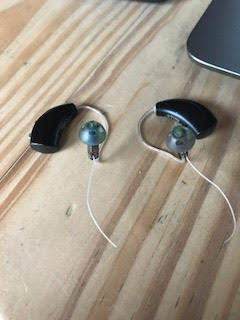
So the aids I was given were a set of black and sterling silver Halo 2 i2400s which are the top of the range Made For iPhone hearing aids from Starkey. The devices were the 312 configuration (they took a 312 battery). They are small enough, they also have a nice curve on the inside edge of them which allows them to sit on the ear very nicely.

They are pretty discreet RIC (Receiver In Canal) device and sit well on the ear, the design of the ear wire means they sit tight to the face. I had sport locks on mine and at first I found them a pain in the ass. Not used to them, but, after a while they were easy enough to tuck into my ear.

Interesting Instant Tips

So, the Starkey’s came with some interesting instant tips. They call them comfort tips and I think they are probably unique in the hearing aid business. I certainly don’t ever remember seeing anything like them before. They are reminiscent of typical tips to be found on earphones, except they are designed as open tips with pieces cut of them.

They are very comfortable, but, I believe they are more occluding than the typical open tips I am used to. Let me explain, I have really good low frequency hearing. So if i block up my ear canals I suffer with the effects of occlussion. I feel reverberation in my ear canals when I speak or eat. Pretty damned irritating to be honest.

This unhappy situation is usually dealt with my fitting any hearing aids with open fit tips which allow a lot of the low frequency energy to escape from the canal. The Starkey comfort tips are really comfortable and the sound quality of streamed audio or music through them was really good.

But, they irritated the life out of me and I eventually changed them for a set of open tips. I am sorry I had to, because the streamed audio suffered for it. It wasn’t as bassy with the new tips. However, it was still pretty good. If you don’t have problems with the comfort tips, use them, they deliver excellent sound balance.  

Stream Boost Memory

So the Halo 2 enters a memory called Stream Boost when you begin to stream audio from a phone or tablet. This is a nice feature because the sound quality is pretty good, delivers a nice bit of bass and makes music well rounded. The problem with streaming for many people with typical high frequency hearing loss is that audio streamed through the hearing aids sounds tinny. This is because the low frequency amplification there might be typically escapes the canal. Starkey deal with the problem by automatically boosting the bass of the streamed audio. 

The App is pretty Cool

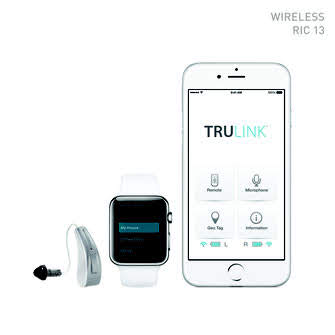
Trulink app

The companion app  is cool enough, it seems to have endless opportunities to save your own custom memories. Changing the settings on a memory is a bit un-intuitive though, it involves an x and y axis system where one access is intensity and the other is sound quality. I mean it is easy to use, but it takes a bit of thinking about. Most of the other manufacturers use a bass mid and treble set up that you manipulate. The Starkey system is actually a bit more incremental than others and probably suits audiophiles much better. However, it takes a little while to get a handle on. 

Performance in noise

So, having got that all out of the way, how do they perform? I have to say they perform pretty well, they delivered a little more high frequency emphasis than I was used to, but that was okay. I never found it uncomfortable in any way and it made things very distinct, delivering pretty good clarity.

General performance

I have to say general performance was pretty good, the automatic programme was excellent and any changes that were happening seemed to be seamless. They delivered excellent clarity in all of the situations I found myself in.

Bluetooth performance

Unfortunately I wasn’t able to really put them through their paces when it came to Made For iPhone. I am not an Apple Fanboy and I wasn’t buying a phone for the test. I did pair them with an iPad and I was pretty happy with the sound quality delivered. The connection also seemed to be quite robust. There was the occassional issue, but no more than I would expect with Bluetooth. 

For instance, when I went out of range of the iPad and then came back into range, the right hearing aid would refuse to connect. I opened and closed the battery doors to re-connect but it refused. So, i turned the bluetooth on the iPad on and off. Hey presto, they both connected just fine. Like I said, I would kind of expect this from Bluetooth, so I wasn’t really phased. 

Occasionally if i moved the iPad suddenly, the audio being streamed got a little garbled. Not hugely, it was still understandable, but a little garbled. Again, I think this is a combination of Bluetooth and antenna technology in the hearing aids and the iPad. I would like to emphasise again, this isn’t any more than I would expect with Bluetooth. 

Pretty happy

I have to say I was pretty happy with them, their performance was excellent, sound quality was good and clarity was there in all the situations I was in. If you are looking for a set of Made For iPhone hearing aids, the Halo 2 i2400 seems pretty solid.

If you like what you see, share it so others can benefit

Find An Independent Hearing Aid Centre in Your Area

Arrange a consultation with a trusted Independent hearing healthcare professional in your area

Three new year resolutions for all hearing aids wearers

It’s the 11th January, which means if you are anything like me you’ve probably given up on your New Year’s resolutions about nine days ago. Even so, here’s a few New Year’s resolutions for hearing aid wearers to help you get the most from your hearing and hearing aids in 2017. 

Get a dehumidifier pot

They are cheap, easy to use and very effective in keeping your hearing aid working at its best and prolonging its lifetime. Moisture can buid up inside a hearing and cause problems, I find if I don’t use a dehumidifier often enough my aids start to make an occasional crackling sound. If you leave moisture to build up for too long it can cause damage to the electronics inside the device, so you’ll probably end up with a repair bill, or even worse, needing a new hearing aid. Pots cost $10 and work for a very long time, a good investment. 

Moisture is especially a problem for in-the-ear hearing aids but behind-the-ear models will also benefit from a night in the pot. If you have a heaing aid, get a humidifier pot. 

Clean your hearing aids

A dehumidifier pot gets rid of the moisture but it won’t shift earwax, hairs, dirt and godknowswhatelse is stuck to your hearing aid. Aids can get blocked up and cause them to not work as well as they should, all models have at least one microphone input and one sound output, any of those can get blocked up with wax or other gunk and need a clean – any sounds coming in to your ear that are going through a wall of wax are not going to be as clear as they should.  

When you bought your aids you should have got a little tool set with it. You would have got some stiff brushes 
and maybe some other tools for removing filters, depending on what type of aid you have. It’s time to dig them 
out of the draw. 

We will at some point do some detailed instructions on cleaning and maintaining hearing aids, but here’s a quick  
overview: 

For behind the ear models: clean the shell (the bit that goes in to your ear) with a baby wipe or anti-bacterial 
wipe. If you have an air-blower tool, pull the wire off from the hearing aid and use the blower to clean out the wire. The actual hearing aid unit is usually clean in behind-the-ear models but moisture can still get in to it, so a dehumidifier pot is your friend. For these models, concentrate on making sure the mould/shell that goes in to your ear is wax-free and clean. 

For in the ear models: cleaning these can be a bit more tricky as you need to clean the actual hearing aid unit. Whatever you do, do not soak the hearing aid in water! Before doing any cleaning, remove the battery from your aid and make sure the battery door is propery closed, you do not want to accidentally break off the battery door and you do not need to clean inside it, so make sure it is closed. Use an anti-bacterial wipe to gently clean the outer shell of the aid and remove any wax or dirt – any stubborn grime can be scraped off with a finger nail or one of the hook tools you may have got with  your aid. In-the-ear models will typically have a filter at the bottom, the bit that goes deepest in to your ear, which is there to stop any wax getting in to the aid, this filter can get blocked with wax and need changing – if you have an aid like this you will have a filter-removal tool for this. 

If you don’t want to clean your own aid then get your hearing aid supplier to do it, it will take ten minutes to do and will help your hear better and keep your hearing aid working properly for longer. 

Show the world

A lot of people try to hide their hearing aids, I did for many years, but it actually makes a lot of sense to keep your hearing aids visible and to make sure everyone knows they are there. Hearing loss is an invisible disability, which means that often people are not going to know that you have problems hearing them unless you let them know – if you have your aids on display then it saves you having to tell them, they’ve already seen your hearing loss, so hopefully that conversation is a little easier for you. Hiding your hearing loss makes communication more difficult for you –  if you are embarrassed to show your aids, ask yourself this, which is more embarrassing: someone seeing your aids or having a super-difficult conversation where you said the wrong thing because you didn’t know what they were saying?

Hearing Aids and iPhones, Which Work Best?

What hearing aids work with iPhones

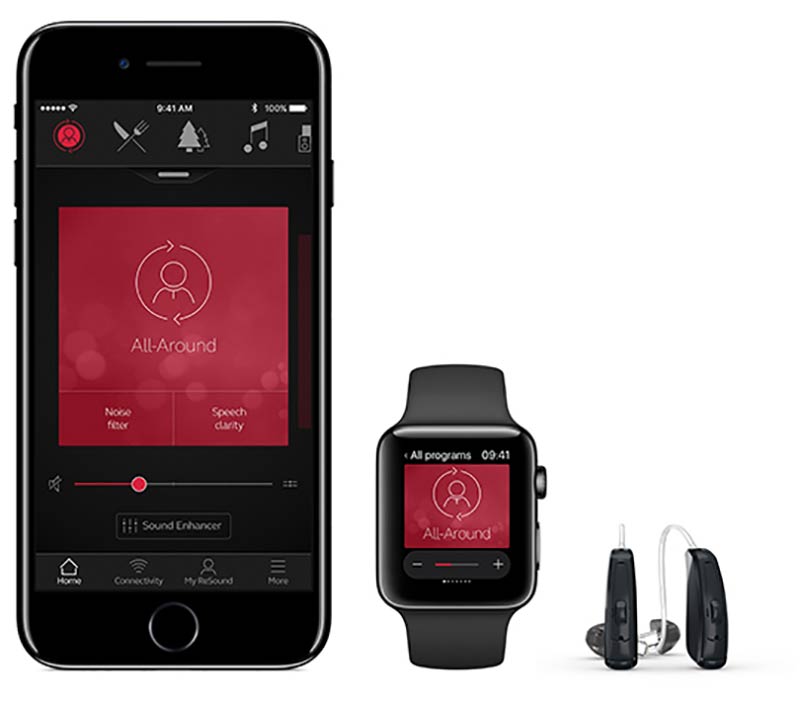
It is a question we get asked regularly, which hearing aids work with iPhones. Funnily enough, nearly every hearing aid on the market will work with an iPhone. You have to be careful though, just because a hearing aid has an iPhone app, doesn’t mean it is a Made For iPhone hearing aid. Many will not work without an intermediary streamer. If your question is, which hearing aids have a direct connection to the iPhone? The simple answer has to be any hearing aid that carries the Made For iPhone mark. Since I wrote this article there have been many changes and developments, so I decided it was long past time to update. 

Just because a hearing aid has an iPhone app, doesn’t mean it is Made For iPhone!.

Resound Linx3D

Made For iPhone & Made For Any Phone

The direct connection world has been shaken up a bit, Sonova, both Phonak and Unitron brands introduced the Made For Any Phone lines and it introduced a new concept in direct connectivity. More of that a little later, however, it has spurred one of the major brands to look at Made For Android again. 

Resound and Google has announced a partnership to bring direct connection to Android phones to reality. The first hearing aid that will be able to do it will be the new LiNX Quattro. That is expected to happen in 2019 and it will again revolutionise direct connection. 

Hearing Aids That are Compatible With iPhones

The current best hearing aids (as of January 2019) which work directly with iPhones are:

  • the Oticon Opn range
  • the Oticon Siya range
  • the Zerena range from Bernafon
  • the LiNX Quattro from Resound
  •  the LiNX 3D range from Resound
  • the Enzo 3D range from Resound
  • The Evoke Fusion 2 range from Widex
  • the Beyond range from Widex 
  • the Halo 2 range from Starkey
  • the Livio AI range from Starkey
  • the Pure 13 BT from Signia
  • the Nx range from Signia
  • the Phonak Audeo Marvel range
  • The Phonak Audeo B-Direct (won’t stream audio)
  • the Unitron Moxi All (won’t stream audio)

They will all work with a direct connection to with iPhone 7 Plus, iPhone 7, iPhone SE, iPhone 6s Plus, iPhone 6s, iPhone 6 Plus, iPhone 6, iPhone 5s, iPhone 5c, iPhone 5, 9.7-inch iPad Pro, 12.9-inch iPad Pro, iPad Air 2, iPad Air, iPad (4th generation), iPad mini 4, iPad mini 3, iPad mini 2, iPad mini, and some of the iPod touch range.

Made For Any Phone

Audeo B-Direct hearing aid

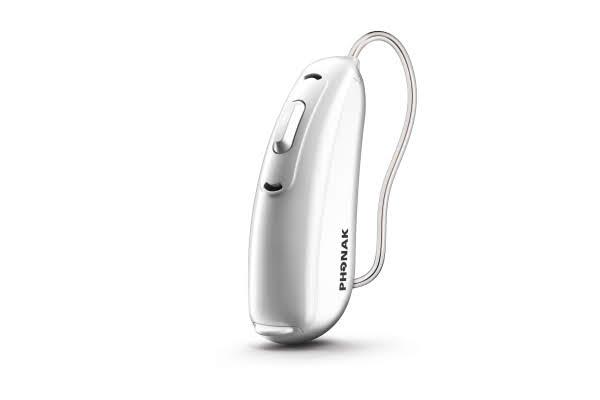
Phonak introduced a device in 2017 called the Audeo B-Direct. It is the first ever Made For Any Phone hearing aid. It is a revolutionary concept that changes wireless hearing aid connection to the mobile phone. The Audeo B-Direct connects to any Bluetooth® enabled mobile phone, directly without a streamer. It also is the only device to offer true hands-free calling. As it supports the classic Bluetooth protocol, it provides direct connectivity to cell phones – including AndroidTM, iPhone® and even classic cell phones – with no extra body-worn streaming device required. I have put a comparison chart at the end of the article which compares Made For Any Phone with Made For iPhone. This is their first ever Bluetooth hearing aid. 

Phonak Marvel Hearing Aids

Phonak have updated their Made For Any Phone hearing aids with their new Marvel hearing aids range. It is a great step forward for them because it offers stereo streaming of audio and phone calls from any Bluetooth enabled device including mobile phones, computers and even TVs.

Bluetooth Enabled Hearing Aids

Every hearing aid brand has wireless enabled hearing aids that will connect to both iPhones and Android phones. However, they will only do so through an intermediary streamer device. For some people, this seems to be an intolerable solution. I don’t know why, I don’t mind streamers, especially multifunctional ones like the Oticon Connect Clip. In fact, I think wireless hearing aid accessories are outstanding and I recently wrote an article about them and why you should buy yourself one for Christmas. Anyway, nuff ranting here is the comparison chart I promised earlier

Feature ComparisonLiNX 3dAudeo Marvel
Direct Wireless Connectivity To iPhoneYesYes
Direct Wireless Connectivity To AndroidNoYes
Stream Phone ConversationYesYes
Answer Phone With Hearing AidNoYes
Handsfree CallingNoYes
Phone Conversation in Both EarsYesYes
Streaming of Audio From PhoneYesYes
Use iPhone as Remote MicrophoneYesNo
Find Lost Hearing Aid FeatureYesNo
Remote Fine Tuning of Hearing AidsYesYes
Tinnitus Therapy FeatureYesYes

If you like what you see, share it so others can benefit