In a report presented July 20 at the Alzheimer’s Association International Conference 2017 (AAIC 2017) in London, The Lancet International Commission on Dementia Prevention, Intervention, and Care said that more than one-third of global dementia cases may in fact be preventable. They believe that there is the possibility to prevent dementia through addressing lifestyle factors that impact an individual’s risk. The AAIC announced.
These potentially modifiable risk factors—which included hearing loss—have been identified at multiple phases across the lifespan, not just in old age. “Our results suggest that around 35 percent of dementia is attributable to a combination of the following nine risk factors: education to a maximum of age 11-12 years, mid-life hypertension, mid-life obesity, hearing loss, late-life depression, diabetes, physical inactivity, smoking, and social isolation,” the study said. I have spoken about the link between hearing loss, cognitive decline and dementia before in the article Untreated Hearing Loss Causes Dementia!!!!!!! and all of the evidence that is gathering is worrying. There is a great weight of evidence that dealing with these factors will reduce the chances of Dementia.
Preventing One Third of Dementia Cases
In essence what they believe is that managing lifestyle factors such as hearing loss, smoking, hypertension and depression could prevent one-third of the world’s dementia cases. The report was presented at the Alzheimer’s Association International Conference (AAIC) 2017 and published in The Lancet. The report also spoke about the beneficial effects of non-medical interventions for people with dementia. It highlighted social contact and exercise as something that would deliver benefit. It said:
“There’s been a great deal of focus on developing medicines to prevent dementia, including Alzheimer’s disease. But we can’t lose sight of the real major advances we’ve already made in treating dementia, including preventive approaches.”
66 Million People With Dementia by 2030
Currently there are around 47 million people have dementia worldwide but the number is expected to rise to 66 million by 2030. It was also noted that they would expect that to increase to a frightening 115 million by 2050.
The Nine Risk Factors For Dementia
The commission’s report identified nine risk factors in early, mid- and late life that increase the likelihood of developing dementia. They believe that 35 percent of dementia cases is attributable to these risk factors:
lack of education in early life (early life)
Untreated hearing loss (early, mid and late life)
Hypertension (mid life)
Obesity (midlife)
Stopping smoking (late life)
Treating depression (late life)
Increasing physical activity (late life)
Increasing social contact (late life)
Managing diabetes (late life)
The report stated that they believe that dealing with these risk factors could reduce the incidence of dementia by a staggering 35%. That far out weighs any effect of the experimental medications now being studied. Dementia is a terrible burden on the people directly effected by it. It is also a growing burden on creaking health care systems everywhere.
Reducing the incidence of dementia can only be a good thing for everyone. Again, I would say that we have known for some time that there is a link between untreated hearing loss and cognitive decline. As I have said before, though, the link between untreated hearing loss and dementia is less clear. We do know that there is a clear correlation between the two.
Above and beyond everything we now know, treating your hearing loss makes sense in many ways, it will keep you socially active. It will ensure that you don’t become isolated, therefore it will reduce your liklihood of depression. I keep saying it, life is for living, so go live it. If you think you may have hearing loss, just go and get it sorted.
Life Changing Breakthrough for People with Hearing Loss
I don’t know how many times I have heard groundbreaking, or game-changing in the hearing aid tech world. In fact, we hear those expressions so much we just tend to nod. In fairness though, much of the innovation within the space is life changing. Phonak today have delivered true game-changing technology for people with hearing loss. A technological innovation that means hearing aid users, no matter what brand of mobile phone they use, will be able to enjoy the simple pleasure of mobile phone calls with ease and simplicity.
Meet The Audeo B-Direct
Phonak Delivers Made For Any Phone
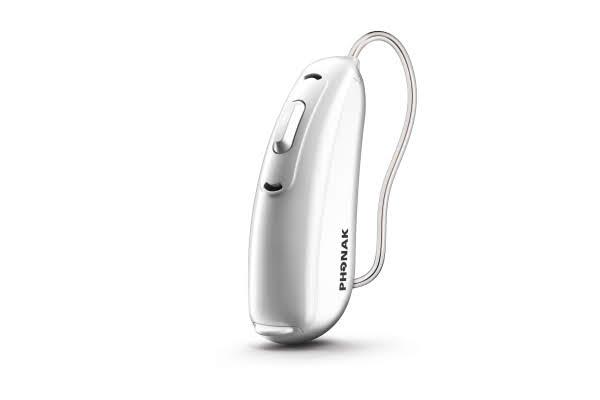
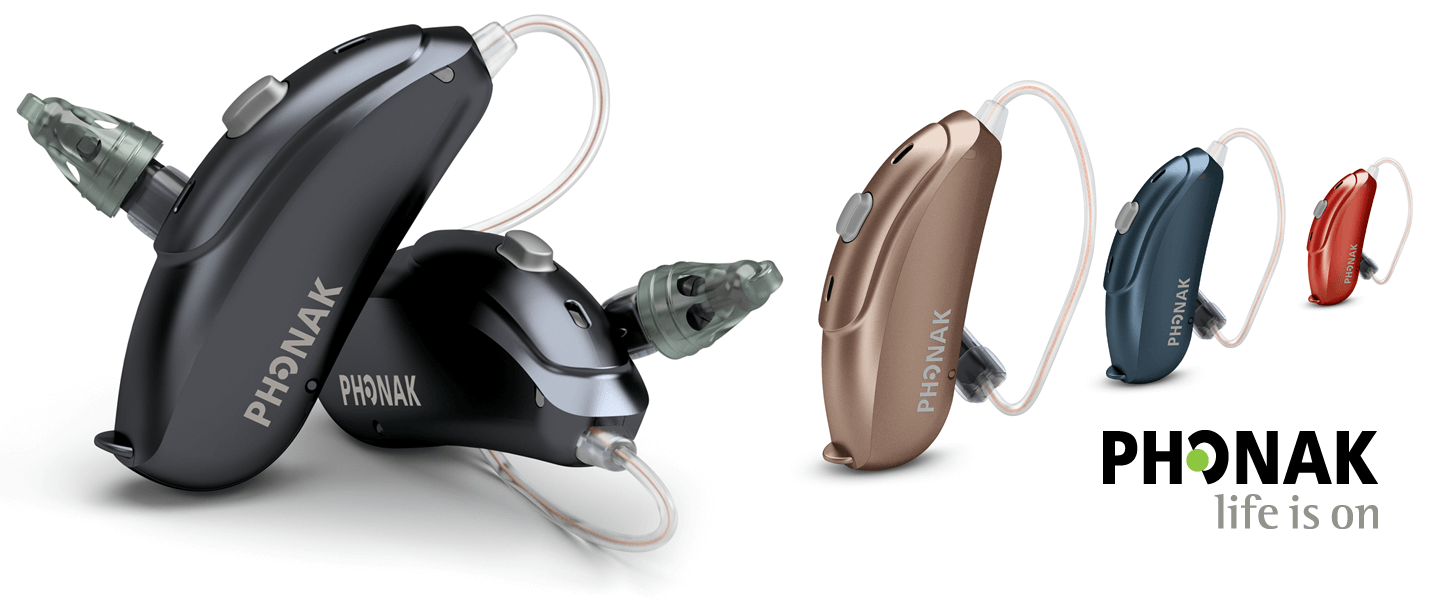
Phonak have just introduced a device called the Audeo B-Direct. It is a revolutionary hearing aid that changes wireless connection to a mobile phone forever. The Audeo B-Direct connects to any Bluetooth® enabled mobile phone, directly without a streamer. Even better, it offers true hands-free calling. As it supports the classic Bluetooth protocol, it provides direct connectivity to cell phones – including AndroidTM, iPhone® and even classic cell phones – with no extra body-worn streaming device required. This is their first ever Bluetooth hearing aid, something that they had been under pressure from their shareholders to deliver.
True hands-free calling is now a reality
The hearing aids offer real hands-free voice calling. The wearer can answer or reject a phone call by simply pressing the push button on their hearing aid. The ringing of the phone is heard through the hearing aids and once the call is accepted, the conversation is instantly streamed. You don’t even need to pick up your phone. Your voice is picked up by the hearing aid’s intelligent microphone network and transmitted to the other caller similar to a wireless headset.
No Music Streaming
At this time, while phone calls will be streamed, music or other audio like Audio Books cannot be. I don’t think this is a deal breaker, considering the telephone functionality that is delivered. I mean answering a call with a touch of your hearing aids? That is truly amazing stuff, no need to pick up the phone to talk either. Those are big selling points for many. They have dealt with audio streaming from other sources though, so enjoying music or the TV is catered for.
Hearing aids that double as a wireless TV headphones
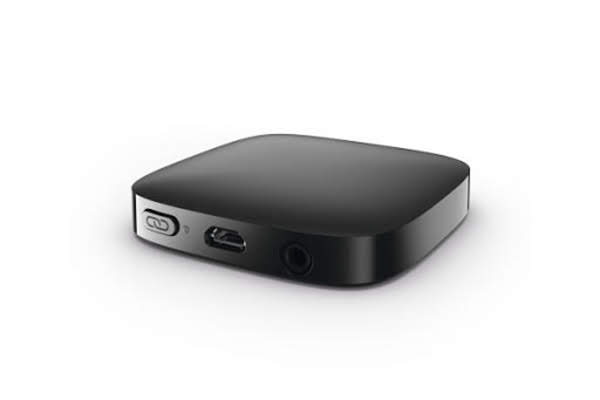
They have also introduced an accompanying TV Connector, which uses their proprietary AirStreamTM technology. It is designed to be a state-of-the-art compact multimedia hub that seamlessly connects wearers to their favourite TV programming for an immersive audio experience. It’s a plug and play solution that automatically turns a pair of Audéo B-Direct hearing aids into wireless TV headphones. The TV Connector can also connect and transmit to multiple sets of Audéo B-Direct hearing aids simultaneously. That’s a pretty good solution for couples with hearing loss.
Delivering direct streaming to an underserved group
Android is the predominant player in the smartphone market with an estimated four out of every five smartphones being Android. The Audéo B-Direct will now bring direct streaming to this neglected market while also providing compatibility with Apple’s iPhone. More than that though, the new solution allows users who own a classic cell phone to avail of direct streaming as well.
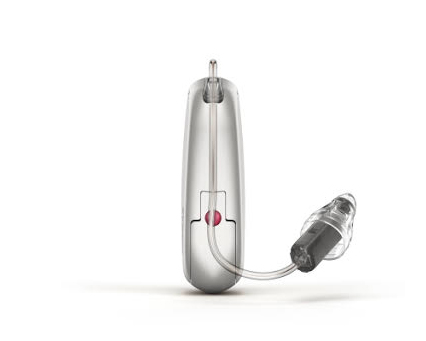
The device is a receiver in canal (RIC) hearing aid which means that it will be suitable for a wide range of hearing losses and users. It is also the first device to make use of Sonova’s revolutionary SWORD chip and wireless radio technology. They say that the low-voltage radio chip has the lowest power consumption of any hearing aid using Bluetooth Classic.
The device uses a size thirteen battery and Phonak reports some excellent battery life figures. They say that the battery should last for six days with one hour of phone use and 3 hours of TV per day. That isn’t bad, I would say though real-world experience will vary, some people like to talk more and watch a lot more TV. Even though the device is a size thirteen, it isn’t actually much bigger than their Audeo B 312.
Three levels of technology
The new device will be available in three levels of technology, the 90, the 70 and the 50, so no entry level device this time around. Although that was to be expected based on the introduction of the rechargeable devices.
New Accompanying App
There is a new app to go with the devices for smartphones; the app offers the typical features you would expect.
Volume adjustment, programme changes, you can also rename the programmes to make them easier to remember. The app will show a list of the available audio sources and allow the user to control the balance of audio when streaming.
What really excites me is that the device is not just Made For iPhone, not just Made For Android; it is simply made for any phone. Astonishingly as it may seem to many of us. Not everyone has a smartphone. There are people out there who just want a mobile phone that allows them to call people, shocking isn’t it? The Audeo B-Direct and the onboard Bluetooth technology will finally solve the irritation that is streamers. It will deliver complete freedom for hearing aid users to finally speak on mobile phones just like everyone else. The hearing aids are expected to be available in late August or early September and the official UK launch date is the 8th of September.
Seven Tips To Help You Survive The Office With Hearing Loss
Modern offices are a tough place for those of us with hearing loss. The trend of late has been for “open plan” offices, basically large open spaces stuffed full of desks, with no dividing walls between desks or areas. This is supposed to improve collaboration amongst employees as everyone can talk and see everyone else, the jury is out as to whether an open plan office improves anyone’s working life at all, but one thing is for sure: it’s a nightmare if you have hearing loss.
Years back the office trend was for everyone to be in cubicles like each person had their own little walled-off area with just them and their desk in it, this layout was widely hated but it would have been a much easier environment to hear in. Offices have a lot of background noise, with different groups of people talking and general noise like phones ringing, chairs scraping, clattering on desks, computer noise etc.
I found it really hard to concentrate on work with all the background noise, add to that the fact that I’m trying to ignore all the noise but also trying to remain alert to anyone talking to me – that might be easy for someone with good hearing to do, I found it very hard, either I was paying attention to all the noise or none of it, which meant people had to get my attention before speaking to me, either by coming over to my seat or waving at me.
Meetings are also a source of grief for the hearing impaired. The bigger the meeting room and the more people that attend, the bigger the problem. Meetings have people talking from all angles and from differing distances, sometimes people over loudspeaker phones and multiple talkers at the same time. Trying to keep up with meeting conversations can be exhausting if you are struggling to hear, I’ve often found myself drifting out of the conversation and thinking, “If someone asks me a direct question now, I am doomed”.
How can you make your office life a bit easier?
The seven tips to coping with hearing loss in the office
Tell everyone about your hearing loss
State your needs
Find the best seat
Use non-vocal collaboration tools
Get stuck in the middle of meetings
Use your hearing aids to their full potential
Consider how accessory devices can help overcome problem areas
Let’s take a little deeper look at those concepts.
Tell everyone about your hearing problem.
This is number 1 on any advice on how to make your life easier when you have hearing loss. If you tell everyone in the office you have a hearing problem then you immediately give yourself a headstart. You will be surprised how accommodating people will be, most people are happy to get your attention before speaking and repeating what they said when needed. Remember: you are not your hearing loss. You have skills, assets and positives that you are bringing to your job, don’t let your hearing loss take away from that, make it a much smaller issue by making sure everyone knows about it and deals with it.
Another thing: people forget. My hearing loss is a big thing TO ME, I don’t expect it to be more than a passing thought to anyone else. If someone forgets about your hearing problem, remind them, they have their own stuff going on in their life, don’t expect them to remember what you’ve got going on as well.
It’s especially important to let your superiors know about your hearing problem, i.e. the people deciding if you get a pay rise or not – make sure they judge you for your abilities, not your disability.
State your needs
A good employer should be willing to help you with the things you need to get your job done to the best of your ability. The one thing I always state to any employer is that I don’t use a desk phone, it is just so much more difficult for me to hear on a desk phone than it is on my mobile/cell phone. When I use my cell phone I can use my ReSound Phone Clip+ and have the phone call played directly into my hearing aids for a much louder and clearer conversation.
This is the best way for me to take calls and I make sure any employer knows that. I’ve never had an employer who has had a problem with this, I think if you say, “look, I need this thing because it makes it easier for me to do my job” then they are happy to provide it, after all, they are paying you money to do a job, they want you to do it as best you can.
Find the best seat
Location. Location. Location. Where you sit in an office can make a big difference to how well you hear, especially in a large open plan office. As I said before, offices tend to be noisy places with sounds coming from all angles, to make it easier for you to hear it is best to minimise the unnecessary noise around you – one way to do this would be to sit with your back to a wall so that there’s no noise behind you, getting a corner seat would be even better, blocking off two directions of noise. Getting a good seat is often difficult, people don’t like to move once they’ve found “their spot”, again, it’s worth mentioning to your employer to see what they can do.
Use non-vocal collaboration tools
Times are a-changing, not so many people use the phone for communication anymore, which is great news for us. Email is the obvious alternative, if I’m initiating a conversation with somebody at work I will almost always email them, I will never call them, I find if you email someone first they will usually stick with email throughout but if you call them first then the phone remains the communication device. Sometimes people will ask to call as its better for them, when that happens I explain about my hearing loss and say that it could be an issue but let’s try a call and see what happens.
Again, if people are aware of your hearing loss then it’s no drama if it becomes a problem. Don’t let other people dictate the terms of communication to you if you are more comfortable with email then push them to email, if they want to talk/call then let them know the possible problems with that.
Get stuck in the middle of meetings
If I am in a large meeting room where it is going to be difficult to hear I try and sit in the centre of the table so that I’m as near as I can be to most of the people. If there is someone I know is a real quiet talker I try and sit near them. If you are the person setting up a meeting, book a small room, better to have everyone squashed in and sitting close to you!
Your hearing aids have options, use them
Most hearing aids have a volume control and some changeable programmes, use them to your advantage. Don’t be scared to reach up to your ear and press the volume up button if things are too quiet, better still, install the smartphone app for your hearing aids that lets you control the settings via your phone, its much more discrete, especially as most people spend meetings looking at their phone and/or laptop anyway.
All hearing aids these days have “settings” or “programmes”, this is something your hearing aid provider can set up and it means you can have different setups for different environments. For example, a hearing aid can pull in sound from a 360-degree radius all around you in equal measure or it can focus 100% on the person talking directly in front of you, or focus on a 90-degree angle in front of you, etc. They can also be programmed to expect different levels of background noise or to be extra loud and so on.
Basically the point is this: your hearing aid provider can set up your hearing aids to have a programme specifically for meetings and this may help you hear much better than your normal everyday hearing aid setting. If you are having a problem in meetings then explain that to your provider and get them to set up a new “meeting programme”, you’ll need to explain the environment to them so that they can set it up best for you. Hearing aids are very smart these days and “just work” most of the time, but if you need something specific for a specific meeting room or office environment then you can have that too.
Remote microphones and other add-ons are extra helpful
Every hearing aid manufacturer offers remote microphone and Bluetooth phone connectors with their hearing aids. These are immensely useful to me in the office. I take all phone calls on my cell phone and have the call relayed directly in to my hearing aids via Bluetooth, this results in a much clearer and easier-to-follow phone call, before I had Bluetooth-enabled hearing aids I was reluctant to make calls as they were almost always problematic, but now I am much more relaxed about the phone.
I also occasionally use ReSound’s Multi Mic remote microphone if I am in a presentation or somewhere else where the speaker is some distance away – the remote mic means that I can leave the microphone device near the speaker and have their voice relayed directly into my hearing aids via Bluetooth. This sounds like the speaker is sitting right next to me and singing sweet nothings into my ear, the audio is clear and sharp, it makes a potentially difficult listening environment into a very easy one.
In Summary
I’ve worked in many offices over the years and they are consistently the most difficult places I have had to hear in, I’d often find that I’d spend the working day having to really concentrate to stay in the game but at home and elsewhere I could hear comfortably. Open plan offices are not our friends but you can make your life easier by taking control of your hearing loss, telling people about it and setting up your working environment as best you can so that you can do your best work without your hearing being a problem.
Don’t let your hearing loss stop you from doing your best work.
It has come to our attention that many Veterans in the UK have conflicted feelings about using the Veterans Hearing Fund. Many feel they are making a claim against the British Legion. In fact, that couldn’t be further from the truth. The Veterans Hearing Fund is in fact funded by HM Government using monies from fines raised during the Libor Scandal. Let me explain.
The LIBOR Scandal
The Libor Scandal was a series of fraudulent actions in which financial institutions (Bankers, it’s always Bankers) were accused of fixing the London Interbank Offered Rate (LIBOR). LIBOR is an important interest rate in global finance. It is used to determine the price that businesses pay for loans and individuals for mortgages and is also used in derivative pricing.
The rate is supposed to represent the interest rate that a bank pays to borrow from another bank. The scandal involved banks understating the interest rate, which could keep the Libor rate low. Because of the manipulation of the rate leading up to the financial crisis in 2008, this made financial institutions appear stronger than they actually were.
Millions in Fines
The scandal became evident as emails and phone records were released during investigation. Regulations in both the United Kingdom and United States levied millions of dollars in fines on banks involved in the scandal.
Funding The Veterans Medical Fund
HM Treasury decided that some of the cash raised through these fines would be used to support Veterans medical needs (imagine Governement actually getting something right!). The Royal British Legion’s Veterans Medical Funds programme is funded through a five year, £13m commitment from HM Treasury using income from the Libor fines.
Hearing Loss and Serious Physical Injury
The Veterans Medical Fund has two elements: support for veterans with hearing loss and support for veterans with serious physical injury. Each programme has been designed in consultation with the Ministry of Defense (MOD), National Health Service (NHS), Department of Health and representatives from subject matter experts in the medical and Armed Forces charity communities. The structure and intent of the Funds are based on the Legion’s desire to reduce or negate disadvantage to those who have served.
The Veterans Hearing Fund
We have spoken about the Veterans Hearing Fund before, however to re-iterate, the Veterans Hearing Fund provides support to veterans who acquired hearing loss during Service where there is a wellbeing need that cannot be met through statutory services. For instance, because of the typical nature of hearing loss caused by service, often hearing aids may not be enough for an ex service person to manage. In this case, the fund will finance extra equipment like wireless accessories or assitive devices to ensure they get on.
UK Veterans Hearing Help
We have mentioned UK Veterans Hearing Help here before, these guys are committed to working with the Royal British Legion to ensure that Vets get easy access to the fund if they need it. The lads will guide you through the application and they have built a network of hearing centers across the country who will look after you.
As an ex service member with hearing problems you should be well looked after. Again, this isn’t the normal type of legal claim or compensation. No solicitors and no courts involved. Simply the UK Government through the British Legion recognising your service and your individual needs because of that service.
I’ve got into running recently in a pretty big way. I started around March 2017, here’s my stats so far. And yes, in case you are wondering, I have become one of those annoying people who can’t stop talking about running.
But anyway, I started having a hearing aid versus sweat problem pretty quickly. I have been wearing my Phonak BTEs whilst running, mainly because my ReSound Linx 3Ds are a receiver-in-the-canal model and so I figured, given all the sweat and heat in my ear, a rubber mould on the BTE would be less likely to be damaged than the receiver on the RITE. So the problem isn’t in the ear as such, but over the top of it. The sweat drips down and gets in the main BTE unit, seems to be worse on the right hand side, on which the hearing aid usually stops working after a decent amount of sweat gets in – the left continues to work but the microphone does make some crunching noises after a while.
Any hearing aid is going to have a problem with excessive sweat, rain, or any other moisture exposure – microphones, electronics and water don’t mix that well.
So I’m hoping that a pair of Ear Gear will save the day. Ear Gear are basically a stocking for your hearing aid, they are waterproof but do not affect the sound getting in to the aid at all, they don’t block out any sounds that you want to hear.
Another post to follow when they arrive and I give them a spin.
If you like what you see, share it so others can benefit
Debi Ghose was always careful with her hearing. She has unusually sensitive ears, meaning that being in loud environments without earplugs can be physically painful, and her uncle, an ENT surgeon, lost his hearing on one side from an ear infection, making her “hyper aware of how fragile hearing is.” All of which made her doubly alarmed when things started to go wrong.
She’d been booked to play on the Sunday of Bloc festival in 2016, and arrived on Friday night to enjoy the festival. She’d picked up some disposable earplugs at the bar, but at some point noticed that the one in her right ear had fallen out. “I woke up the next morning and had a searing pain, like white-hot painful, and mad tinnitus in my right ear,” she says. “I couldn’t believe it; it was just incredible pain. That whole night I couldn’t even go near the venue, and then I had my show the next day. I knew it was the worst thing for it but I was there to play, so I played.”
The above is from an excellent article called A music-lover’s guide to tinnitus on residentadvisor.net, which contains this superb quote:
“Close your eyes, and think about what you’re seeing. You don’t see black, you see colours and lights and movement. That’s partially the light coming in from the outside world, but it’s also your brain trying to turn up the gain and see something out of the nothing that you’re getting. You’re seeing your nerves firing and working. And what we’re hearing when we’re hearing tinnitus is the same thing. Just your brain and your ear and your nerves working. It’s a sign that the engine is functioning. I don’t think that we can get rid of that, because it’s a natural part of our body.”
Are Bluetooth Hearing Aids About to Change For Ever?
So Phonak are leading up to a big announcement and launch cycle in September. They have been dropping hints all over the place and everyone knows that it will be the launch of their Made For iPhone hearing aids. Here is the thing though, while cryptic, their hints just lately make me think that it might just be Made For Android hearing aid time!
I don’t know about you, but that looks like a direct jab at Made For iPhone to me. We know that Android accounts for the largest market share in the Smartphone world. However, up to now, there has been no true Made For Android hearing aids. Mainly because Android didn’t sort out a system that was similar to Apple’s, and none of the hearing aid manufacturers coded one either.
Made For Android Hearing Aids
While many bluetooth hearing solutions will connect to Android phones they will not stream directly. They all need some sort of intermediary device. While hanging said device around my neck doesn’t bother me, other people get really irked by it. A true Made For Android hearing aid would have a direct streaming link and offer similar features to common Made For iPhone hearing aids.
The obstacle, for now, has been that Android has never coded a system in their os like Apple’s. The only way around that is a shed load of coding work from a hearing aid manufacturer to organise their own system. that’s a lot of time and effort. Phonak are really the last to come to the Made For market, maybe extra coding time was the reason?
We will have the answer in September, but if I am right, Phonak will be delivering a truly groundbreaking hearing aid system that caters to 100% of Smartphone users. I (nerd that I am) for one, can’t really wait to find out.
Researchers from Columbia University in New York have designed a hearing aid that uses cognitive cues to deliver focus on the voice you want to listen to. In essence, they have invented mind controlled hearing aids. The hearing aid picks up several speakers before separating them into individual voices. The hearing aid then uses the listener’s brain signals to determine the focus of the listener, the dominant voice they wish to listen to, which it amplifies. The problem at present is that it takes ten seconds to do so and you can’t exactly walk around with the set-up, however, that will change as more research and design is undertaken.
The concept of mind control of hearing aids has been around for some time. The Cognitive Control Of A Hearing Aid project was set up some years ago as a collaboration between several Research Departments across the world. The vision of the project was to work towards cognitive control of hearing aids as the ideal way to increase the benefit of them. Their work has been ongoing since then.
This particular discovery however, came from a team in Columbia University in New York. They made a breakthrough in auditory attention decoding (AAD) which in simple language means how humans sort out sounds. They combined this with a deeper understanding of neural networks and have proven that it is possible to use cognitive signals to present the voice that someone wishes to focus on.
In testing, they were able to do just that. However, real world applications are a long way off. As I said earlier, it takes ten seconds to achieve the effect at the moment. Initially the first step will be to change that to milli-seconds. Once that is done, the next step will be minaturisation and a strategy to develop un-invasive sensor sets that would be more suitable to daily use.
We know that the ear canal is a fantastic place to mount sensors of all kinds to read biological data. We can even perform an EEG with a sensor in the ear canal. There will need to be real work done to find a way to place sensors to read the neurological data. That may not be a difficult step though, it just depends on what level of data and how best to collect it.
No matter what, this is a huge step forward to delivering hearing aids with mind control. Like I said, don’t hold your breath just yet, but hopefully within a few years we may see the first mind controlled hearing aids enter the market. When and if they do, it will truly be a groundbreaking moment for hearing aids. It would mean hearing aids that would probably be better than normal hearing, it could make hearing devices attractive to people with no hearing loss.
If you like what you see, share it so others can benefit
Find An Independent Hearing Aid Centre in Your Area
Arrange a consultation with a trusted Independent hearing healthcare professional in your area
Delivering Outstanding Hearing Care The Best Hearing Aids in Nottingham
We are very happy to welcome Correct hearing in Nottingham to the Hearing Aid Know network of premium Independent hearing aid centres. Correct Hearing is a family run business who have a long history of providing best in class hearing care and the very best hearing aids in Nottingham. Let’s meet the team.
The business is managed by Sarah and Ian Vokes, Sarah is a Director and Audiologist at the Correct Hearing. Sarah has extensive experience both personal and professional with hearing loss. During her teenage years a bout of meningitis left her with a unilateral (one sided) hearing loss. So she fully understands the impact and difficulties that arise from hearing loss.
In fact it was that hearing loss that spurred her to study Audiology. She studied at Nottingham School of Audiology where she was awarded a BAAT and went on to work within the NHS. She built up her skills and specialities to include multiple disciplines including tinnitus care and paediatric testing (children’s audiology). Sarah moved from the NHS to a large National hearing aid company before deciding to establish Correct Hearing in 2009.
A Bespoke Hearing Aid Service Without Constraints
Sarah wanted to provide a more relaxed and bespoke service for people with a hearing loss without the constraints that exist within a National business. And so, Correct Hearing was born. Sarah has been involved with the Audiology Profession for many years and is dedicated to delivering best Practice hearing care. She is also dedicated to improving the lot of both people with hearing loss and the Profession she belongs to. She is an active member and has recently been elected the President of the British Association of Hearing Aid Audiologists (BSHAA).
Hearing Aids Nottingham
Sarah is committed to providing the very best hearing aids from the biggest hearing aid brands. She will only use the latest hearing aid technology because she believes that is what offers the best outcomes for her customers. As an Independent hearing aid centre she has access to all of the big six hearing aid manufacturers like Phonak, Resound, Widex, Signia, Starkey and Oticon. Their pricing structure offers outstanding value and runs from £395 to £1600 and beyond based on the technology level of the hearing aids. That’s the very best hearing aids at each level and dedicated aftercare to ensure full success.
Microsuction Ear Wax Removal
They also offer ear wax removal at the location and they say that microsuction ear wax removal is by far the most popular method of ear cleaning. They can also undertake irrigation ear wax removal. Like others, Sarah says that when the methods are explained in detail, most people choose micro suction, no mess, no fuss. They offer the service for £50 for one ear and £80 for two.
Hearing Tests
They of course offer full and comprehensive hearing tests, undertaking audiological work ups to aid diagnosis and to deliver enough information for in-depth treatment recommendations. Sarah is also qualified to undertake Children’s hearing tests, something that is relatively rare in Private Practice.
Home Vist Hearing Tests Nottinghamshire, Lincolnshire and Derbyshire
Correct Hearing also offer a free home visit service for people with mobility difficulties. If you are unable to visit them at their hearing aid store in Nottingham, they will by request arrange a home visit hearing assessment in the comfort of your own home. They have fully portable equipment for assessing your hearing and the ability to demonstrate the latest digital technology in your own surroundings.
I have known Sarah for many years having often met her at educational events and BSHAA events. She is committed, hard working and has always impressed me with her passion for the profession and the people we care for. If you are looking for hearing aids or hearing care in Nottingham, I couldn’t recommend Sarah Vokes and Correct Hearing enough as a place for you to start.
If you like what you see, share it so others can benefit
Find An Independent Hearing Aid Centre in Your Area
Arrange a consultation with a trusted Independent hearing healthcare professional in your area
One of the very first things that I did when my left ear suddenly stopped working was to hold the landline receiver to my ear to see if I could hear the dial tone. I couldn’t. Early on, this was my rudimentary way of isolating each ear to try to work out what on Earth had just happened and over time became the way in which I would test whether there had been any improvement. Cue the day, some 6-8 weeks later, when suddenly I could hear the tone at an almost normal level. I was elated and thought that my hearing problems were perhaps at an end.
Not The Recovery I Hoped For
Sadly, although even a small improvement is certainly something to be celebrated, it turned out that being able to hear a dial tone was not the recovery that I’d hoped for and here lies the big misunderstanding that I had about hearing loss that I think many others have too – particularly those who do not have difficulty hearing themselves.
Just Turn it Up Right?
Before I had hearing problems I’d presumed that the world just seemed either a little or a lot quieter for those with hearing loss and that a sound boost from a hearing aid would largely sort that out. As it turns out instead of the sound being turned down, as if on a TV, what actually happens is that you lose frequencies and each frequency can be lost or retained to a rather different degree to the next and some may even stay intact altogether.
This causes confusion because instead of everything being quieter, only some sounds are (much) quieter, so if you shout at someone with a hearing loss similar to mine where I’ve lost much of my high and mid-frequencies, I’m still going to wince at the volume because the booming bass frequencies are still intact and yet I still might not understand exactly what has been said.
Guilty as Charged
What makes this newly-found understanding of hearing loss worse is that I’ve been guilty of rolling my eyes at elderly relatives who, I felt, clearly hadn’t grasped that full cinematic surround sound was just a click of a hearing aid button away if only they’d learned how to use it properly. Equally, and perhaps by way of retribution, I’ve been on the receiving end of an 8-year-old challenge my assertion that I hadn’t heard her with, “You’re fine! You’re wearing your hearing aid!!” at a volume which I got the general gist regardless of which frequencies I’d lost.
What is of course difficult to understand for an 8-year old, and adults too, is that with the right wind (or preferably without any wind!), with perfect acoustics, no traffic noise and a relatively low-pitch conversational level I can hear you just fine, but when all those enemies of the hard-of-hearing come together, when you’re not on my right side and when you’re animated and speaking at me in a much higher pitch, then sadly at times, I really have no clue at all.
Walking a mile in the shoes of those with hearing loss has hopefully made me a more understanding and knowledgeable individual. I try to explain to anyone who will listen how hearing loss works in the vague hope that some understanding trickles through, though I suspect like most things until it happens to you, it’s very difficult to imagine.
If you like what you see, share it so others can benefit




 yourhearingaidknow