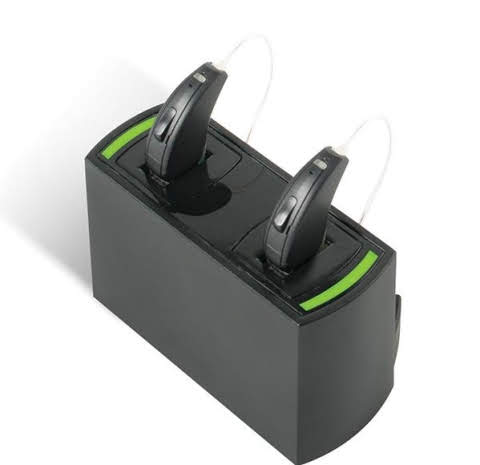
Yesterday Resound were the latest big hearing aid brand to announce the introduction of a rechargeable hearing aid. The device is a Receiver in Canal (RIC) hearing aid and a brand new form factor from them. They say that the new model is similar in size to their existing RICs. It will be one of few rechargeable Made For iPhone hearing aids on the market.
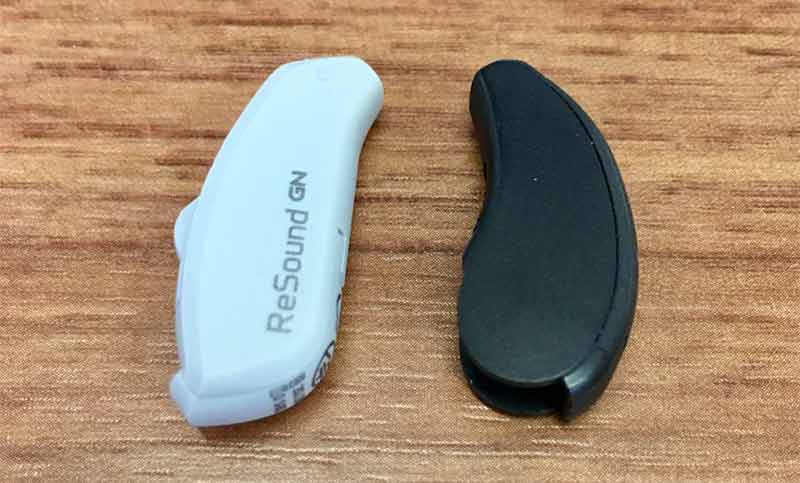
As I said, the device is a completely new form factor and is similar in size if a little different from their existing LT61. The device is officially designated the LT61-DRWZ and it runs on a 312 rechargeable battery which we believe is supplied by Zpower as is the recharging technology. That means there should be plenty of power for a full day of use even if you are streaming audio and taking phone calls. You can see the device below beside the LT61 version of the LiNX 3D.
Rechargeable Made For iPhone Hearing Aid
The devices will be one of very few rechargeable MFI hearing aids available on the market. While MFI can be a bit power hungry, the Silver Zinc rechargeable system seems to offer more than enough output and life to meet the needs of even the most committed mobile phone users.
Three Levels of Technology
The rechargeable model will be available in the three levels of technology on offer with the LiNX 3D range, the 9, the 7 and 5. They will also be loaded with the usual features and the ability to be remote fine tuned. The devices should be launched in September and we would expect them to be priced in line with the Resound LiNX 3D range.
Ruth has recently got involved with us on Hearing Aid Know , she wanted to tell her storyin order that others may recognise Sudden Sensorineural Hearing Loss (SSHL) and get treatment as soon as possible. In this article, she speaks about her experience with the hearing aid provided by the NHS, the Oticon Spirit Synergy. Her experience has not been fantastic, but I think there are very valid reasons why. First I will let Ruth tell her story and at the end, I will make observations on why she may be having the difficulties she is.
I’ll be honest with you, I don’t have a great deal of experience with hearing aids. I’ve only ever had the one, I lost my hearing just over a year ago and lost it in only one ear at that.
So, for 39 years my hearing in both ears was excellent and if I’m being really honest I’d never previously even entertained the notion of my ears stopping working.
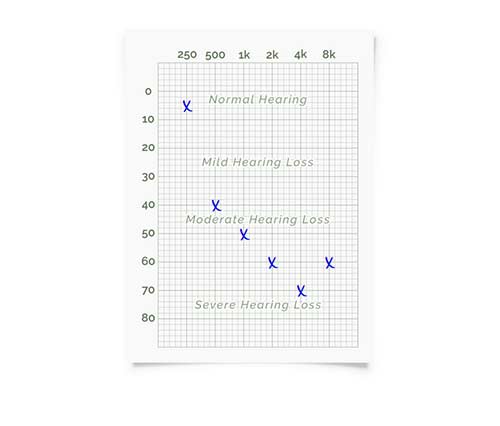
But due to a viral-induced Sudden Sensorineural Hearing Loss (SSHL) last August, I now have one fully functioning ear and one fairly deaf ear – in audiogram terms my left ear resembles a ski slope, things aren’t too bad at the top of the slope with those low, base tones, but once you get going down the higher frequency end (where all the consonants hang out), things on my left side get pretty quiet.
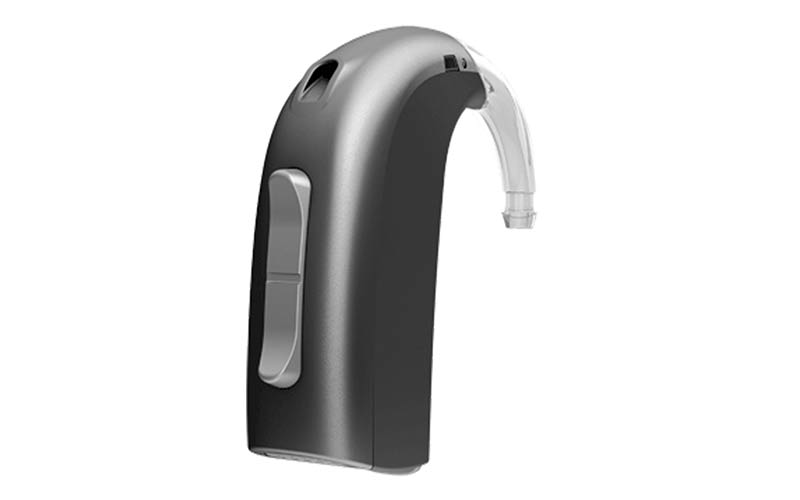
To help with this I’ve been wearing an NHS supplied Oticon Spirit Synergy and as my only frame of reference is to a fully functioning ear (and to the recent memory of two fully functioning ears) I thought I’d share my experience with it.
Firstly, given the aid is digital, supplied to me for free on the NHS and looked after by a brilliant team of audiologists at my local hospital I cannot praise the aid enough. After an initial period of getting used to it and some fiddling with the settings I feel that the Oticon is certainly a benefit to me and that it improves my understanding of the world around me. However, as time has gone on and I wear the hearing aid in a range of different settings I can’t help wonder whether this is as good as it can get for a hearing aid and I suspect that the answer to that is no, but that to address the question would entail a significant cost implication.
Out and about with traffic noise, the wind blowing, people chatting I still feel pretty left-sided deaf with the Oticon. The difference, I guess, is that with the aid, I generally now know that there is someone or something on my left side, though in a noisy environment I still struggle to make out what might have been said and sometimes where the sound is coming from. If I close off my right ear (which does a lot of the hard work) the clarity of the Oticon is disappointingly tinny with a sense of distortion in the higher frequencies where I am most deaf. My word recognition is also very poor without the assistance of my good ear, though it is still a lot better than when I am not wearing the aid.
So, I guess because my right ear is doing its job the Oticon does improve my ability to hear and supports rather than undermines my confidence in noisy environments. However, I suspect that if I had the same level of loss in my good ear, then the Spirit Synergy would not be for me as I feel I’d need an aid that would work a little harder in terms of all-round clarity and in delivering the sounds that I want to hear, such as conversation and dialogue with less of the clatter, commotion, car sounds and wind noise that I’d rather stayed in the background. Overall though, the benefit of having a solid, reliable, fairly small digital hearing aid, supplied for free on the NHS feels like a pretty good deal.
Ruth
As Ruth says, she suffered SSHL probably from some sort of viral agent that entered the cochlea. When this happens, if treatment is rapid and in-depth, people can be lucky enough to regain much of their hearing.
I have noticed though that in many cases of SSHL I have seen, the speech resolution in the bad ear seems to be pretty bad. Even worse than the hearing loss may account for, it may be a function of the damage done to the nerve endings in the cochlea from the event that caused the loss.
In the case of a hearing loss similar in nature to Ruth’s, amplification to the bad side is one solution. However, a CROS device solution may also be a ready and perhaps better solution. A CROS system works by routing the audio from the bad side to the good side.
I have in fact had some really great results with CROS systems, if you face a situation like Ruth’s, try both solutions, amplification to the bad ear and a CROS system, pick the one which is best for you, the one which gives the best results.
If you like what you see, share it so others can benefit
Yesterday Donald Trump signed the Food and Drug Administration Reauthorization Act of 2017, legislation that provides for greater public access to over-the-counter (OTC) hearing aids into law. The legislation means that adults with perceived mild to moderate hearing loss can access OTC hearing aids without being seen by a certified and licensed audiologist or hearing instrument dispenser.
What Happens Now?
Initially, the product segment that is Over The Counter hearing aids doesn’t exist and there is no guidance for what those devices will be. The Food and Drug Administration (FDA) will be working on the development of the regulations that will guide the implementation of this new legislation. That process can take up to three years, however, signals from the FDA appear to suggest the process will be much shorter than that.
THe FDA will have to regulate this new category of OTC hearing aids to ensure they meet the same high standards for safety, consumer labeling and manufacturing protection that all other medical devices must meet. This will give consumers the option to purchase a safe, high-quality FDA-regulated device at lower cost.
Who Will They Be Suitable For?
The legislation says mild to moderate hearing loss, so I would imagine that the devices would be theoretically suitable for anyone with a hearing loss up to 60 dB across the board. However, it remains to be seen what will be available and from who.
While there are many electronics companies interested in this segment, Bose and Doppler Labs being two of them. Some of the traditional hearing aid manufacturers have signalled interest in the market segment as well.
Interesting Times
I think there are very interesting times ahead for everyone who is involved with hearing loss and hearing healthcare. As the regulations play out and the devices begin to arrive to market, we will keep you informed.
Natural Own Voice Sound, Fantastic Connectivity and Access To Telecare
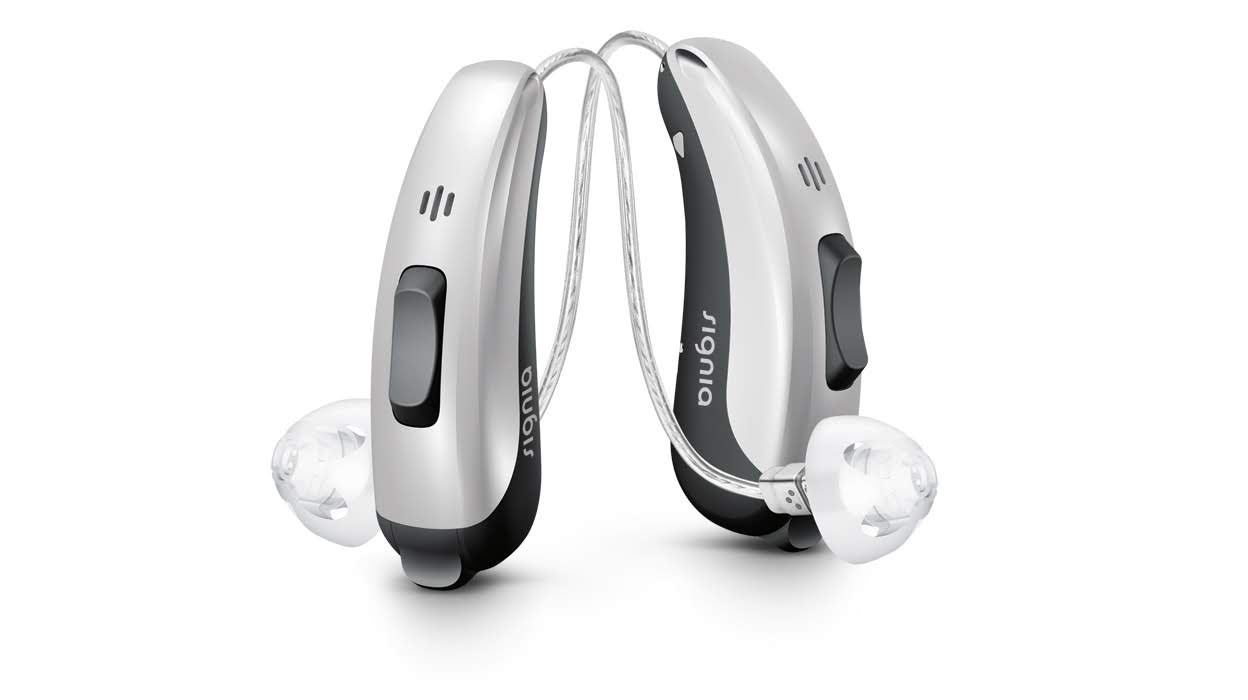
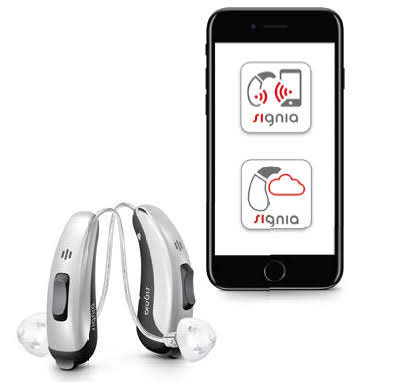
I have been wearing a set of Signia Pure 312 7 Nx hearing aids for the last week, and I have to say I am pretty impressed with them. I am going to have to break this run-down into a few articles because there really is so much to talk about. Great sound quality, direct connection to an iPhone, pretty impressive in noisy situations and pretty astonishing Own Voice Processing (they aren’t joking about this). All of that and so much more, let’s talk about the latest hearing aids from Signia.
The Look, Pretty Svelte
First off, they look really pretty, mine are silver with a matching silver bottom and button. The shape is really nice and they look pretty svelte. They are a pretty small, light and discreet 312 receiver in canal device and they sit really well on the ear. The ergonomic shape of the inner case of the aid and the receiver wire hold them very well on the ear. The battery door is really easy to use and allows you to turn the aid off without opening the battery door fully. The rocker switch on the back is easy to use with good tactile feel when you are pressing it. All in all, it’s a pretty device.
The Fitting
I wouldn’t normally talk about the fitting of hearing aids but in the case of the new Signia Nx, I think I need to make an exception. Primarily because of their new astonishing Own Voice Processing feature. Typically when hearing aids are fitted, the user considers their own voice both unnatural and loud. Up to now, it did not matter what brand of hearing aids were used, it was always the same thing. Let’s talk about that before I go on.
Dealing With The Own Voice Problem
Basically what we do is reduce the amplification in certain frequencies to make the user’s voice more acceptable. However, it still doesn’t necessarily make it completely palatable and in reducing the amplification we are also reducing the amplification for certain speech sounds.
As the user rehabilitates, we tend to increase the amplification towards the prescription however, we may still have to keep some of the frequencies under-amplified. The user generally gets used to the sound of their own voice, however, getting used to it and liking it are probably two very different things. In essence, no matter what steps we take, the result is a compromise between sound quality and overall audibility. Some of the problems are in the amplification of the user’s voice, some of the problems are caused by the occlusion effect.
Delivering A Natural Sounding Own Voice
Signia has developed a completely new way to deal with the own voice issue. Basically what they have done is used some of their outstanding directionality features to identify the user’s voice and remove it from the overall amplification strategy. They do this by separating the user’s voice and processing it with a separate processor. I don’t want to bog you down in the details, I just want to explain the difference it makes from my first-hand experience. It delivers a natural sounding own voice experience which will mean easier and quicker acceptance.
Confused About The Right Hearing Aid For You?
Our buying guide, easing the confusion with clear easy to understand info, we guarantee it will help you pick the right hearing aid for you.
Closed Domes, No Damned Acoustic Occlusion!
Okay, I need open fit hearing aids, I have a high-frequency hearing loss with excellent low frequencies. I also suffer from some nasal problems and hence some mild mid ear problems. In essence, if you close up my ear canals I find the occlusion effect really irritating, in fact, more than irritating, it can drive me a little mad. Hence I always wear open domes on my hearing aids. This helps to reduce the effect of the own voice problem, but I still suffer it a little. I am relatively stoic about stuff mostly, so I just get on with it.
When I was fitted with the Nx I was fitted with closed domes, I thought this isn’t going to work as I heard my voice explode in my head. Then, we went through the own voice training protocol (count from twenty-one until it is happy it knows your voice). The feature was turned on, and no more occlusion, just like that. I was a bit speechless (that doesn’t happen very often). By no more occlusion I mean no more auditory occlusion, I wasn’t caused any difficulty by my own voice.
Because of my middle ear problems which are playing up a bit at the minute, I still felt some physical occlusion, (which is very different from acoustic occlusion) from the closed domes. I eventually changed to the open domes, however, I think if I didn’t have the slight mid ear problems, I would have had no issues at all. You know what, that is pretty damn impressive. Really damn impressive. There is an argument for sealing the ear when wearing hearing aids, I mean we do all this amazing stuff with hearing aid features and directional microphones and then we leave the ear open and let some sound in naturally.
That probably doesn’t make sense and it isn’t the best use of the hearing aids. However, because of occlusion, that is what we need to do. What Signia has done with this new feature means that we may well be able to seal up more ears and let the features do what they do. That’s an interesting thought and one that I think will develop with more innovation within the feature. Enough navel gazing, what does this mean to you, the prospective user?
Pretty Damn Good
It means that they are pretty damn good and it will be pretty easy for you to accept them. In the next article, I will discuss some of the features, how they work and what they do in real life, stay tuned folks, these are pretty cool kit and you will want to know how they perform.
If you like what you see, share it so others can benefit
New Hearing Aids Use Bio-Metric Data To Deliver Better Experience
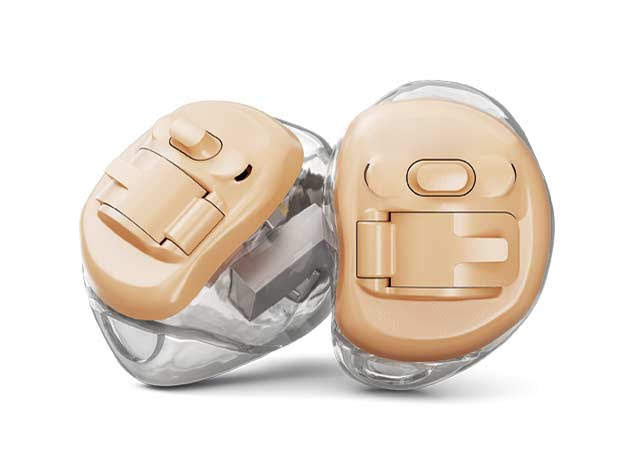
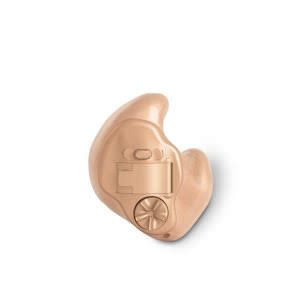
While I, and many others concentrated on the new Made For Any Phone hearing aid introduction yesterday. Phonak also introduced the complete range of Virto B custom hearing aid products. They say that it is the first ever hearing aid to use bio-metric data to increase signal to noise ratio. That’s another new innovation.
They say that they are custom-made to perfectly fit in your ear, Phonak Virto B are the world’s first hearing aids with Biometric Calibration, which take your individual ear anatomy and hearing needs into account. That’s an interesting description.
They say that they will identify over 1600 biometric data points in and on your ear, and the unique calibration settings are calculated for each Virto B hearing aid. In this way, Virto B is able to more reliably sense where sound is coming from, thereby giving you access to better hearing performance.
Using The Outer Ear
What does that all mean? Well, we think that Phonak are the first ever hearing aid manufacturer to carefully map the outer ear to take advantage of its natural abilities. The outer ear naturally heightens some sounds while also helping us to identify where sounds are coming from. They say that the new process will deliver a 2dB signal to noise ratio improvement. Basically means it will make the signal (what you want to listen to) 2dB higher than the noise.
2dB doesn’t sound like much, but combined with all the other strategies that Phonak use it will be a marked improvement. Phonak Virto B is available in six models to match your hearing needs. It is also available in the usual four levels of technology, the 90, 70, 50 and 30. They say that there will also be a Virto B CROS. This pretty much fills out the Belong range, now all of the latest Phonak hearing aids are powered by Belong apart from the Naida. The devices should be available in the US around the end of August and in the UK and the rest of the world early September.
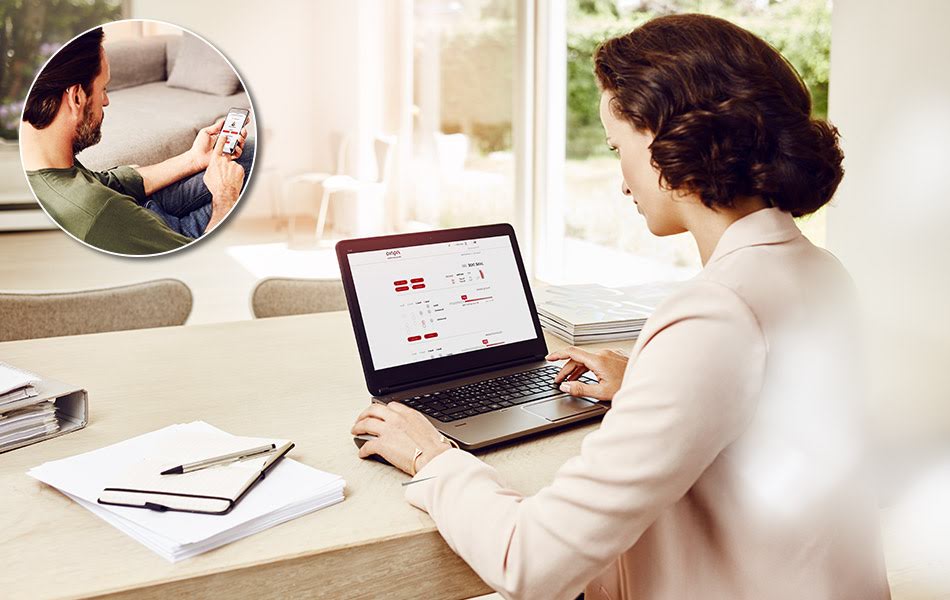
We actually nearly missed this, it was announced on August 15th that Sivantos was expanding the Signia myHearing App to include a new video calling feature. This is the first commercial use of video remote hearing care for the fitting of hearing aids. Basically the professional can schedule a video appointment and then call the wearer on his or her smartphone or smart device at the arranged time. The video option is now being piloted in Canada, Germany, the Netherlands, South Africa, and the United States ahead of a wider roll-out in Fall 2017.
We reported last year that they were introducing the app and we thought it had amazing potential. They obviously decided that the potential could be increased and they updated the app with the introduction of their Pure Made For iPhone hearing aid. They are now introducing video calling as a further update to the functionality.
This can only be a good thing for both users and professionals, it will increase ease of communication and ensure that follow ups don’t have to involve office visits. I have said before that I see a huge market for this type of telehealth approach, it will mean that users can access hearing healthcare on their terms. Like the Patient Insights app from Unitron which we have discussed here, this will allow users to collaborate with their care professionals in a deeper manner. And that can only be a good thing.
One of the Best Beamforming Hearing Aids I have Ever Worn
My everyday experience with the Signia hearing aids has been excellent. They seamlessly meet the needs of different sound situations as you move through them. Always delivering excellent speech understanding even in noisy situations. These are beamforming hearing aids, basically, that means they use differing levels of focus with their directional microphones to deliver a better speech understanding. There are many beamforming hearing aids on the market and I have worn a few of them. I have to say the Signia is at least as good as, if not better than the rest.
Overall Sound
The overall sound quality of the Signia hearing aids is excellent, they are crisp and full. High-frequency sounds have that nice zing I have come to expect. Clarity is excellent. The own voice experience is fantastic, I mean really fantastic. Your sense of your own voice is pretty much natural. As an experienced user, I have to say that is pretty unusual. It should mean that people find it easier to wear the hearing aids.
Streaming audio is fantastic, really good quality. I played more than a few tunes during the week and I have to say I was impressed with the audio reproduction. I didn’t try phone calls, I am not an apple fanboy so I use an Android phone, however, I have an iPhone that I use for music and my audiobooks. There are the usual Bluetooth issues with the streaming (all of the Made For iPhone hearing aids have them) which I will come to later, but overall they don’t suffer any other problems than that.
Everyday Situations
As you move through different sound situations the hearing aids react seamlessly. There is no obvious change or switch, they just seem to work. I found myself in several typical situations during the week, in quiet reading a book, one to one conversations, a noisy shopping centre, a busy urban situation, a noisy cafe, in the car and down the pub.
The aids just did their thing delivering the ability to hear without fuss or fanfare. In quiet situations where there was no speech, they were quiet. That might sound strange, but it isn’t always the case. Sometimes quiet can be louder than you think. As I moved from situation to situation the differing features worked seamlessly without audible changes in the sound. Sometimes as features kick in you can perceive the change. It is a small thing, and it doesn’t cause any issue, it just is. However, there was no sense of it with the Signia devices.
In The Car and Outdoors
I like to have the window open in the car, no matter how cold it is. My wife is probably going to kill me for it one day. What it means is that wind rushes through and across that open window. The many hearing aids I have worn have handled this in different ways, some better than others. The Signia devices seemed to handle it pretty well, the wind sounded no louder than it should and it didn’t intrude upon my ability to hold a conversation.
Overall I have to score them highly for the car experience. In the outdoors, the experience was similar, although I was in the wide open and it was windy, the wind was not overpowering. Nor did it cause me any issues with understanding the conversation.
Confused About The Right Hearing Aid For You?
Our buying guide, easing the confusion with clear easy to understand info, we guarantee it will help you pick the right hearing aid for you.
What About Noisy Situations?
So as I said I was in a fair few noisy situations during the week and the hearing aids performed admirably well. They delivered the ability to understand speech in all of the situations I found myself in. In a particularly busy cafe I could hear the server very clearly, even though she was pretty soft spoken.
The noise in the background was kept there, in the background. Her voice was clear, obviously a little soft, but clear. Speaking about the noise in the background, most of the hearing aids I have worn, with the exception of one, are the same, Steve described it as a wall of noise. I remember thinking to myself, that’s a great description.
The Signias are similar, they keep the noise in the background, but it is like a wall of noise. There is no nuance to it, it’s just blah. Don’t get me wrong, that’s not a bad thing, you get to hear what you need to hear, it just is.
The Pub & The myControl App
I have been bursting to tell you this, hahaha. I think this is what makes this hearing aids different, apart from the own voice feature of course. The addition of the myControl app delivers fantastic power over your experience with the devices. Signia have given you the ability to control the focus of the hearing aids, hey that ain’t special, many brands do it. What is special is the ability they give you to surgically target the focus.
Surgical Focus!
Using the myControl app you can narrow the focus of the directional microphones to a narrow beam. It means that the hearing aids are focused narrowly on what you are pointing them at. Giving you outstanding levels of hearing in even the most complex of situations.
I had to try this out, I was practically bursting with anticipation. So, in the interest of science, and of course you the readers, I went to the pub. See, I even kept a straight face while I wrote that. Anyway, you know the story, busy pub, several drinks in, everyone is loud, at the bar, talking to your companion, and it starts to get difficult to hear.
Whipped out the iPhone, started up the myControl app and got the Spatial Configurator warmed up. So, I placed the emphasis on the front of me and then I narrowed the beam, surgical focus. It rocked, I mean truly rocked! It doesn’t sound natural, in fact, it sounds a little odd, but who cares, I could hear what my companion was saying. Considering I had several drinks on, the whole room was shouting and my companion had begun to slur at that stage “you know I love you right!!!!” I think I was doing okay.
All hilarity aside, the feature is pretty cool, like I said, it doesn’t sound natural, but it gives you the ability to focus on one voice in the maddening crowd. I have to say that this feature rocked.
Streaming Audio
The Signia devices have twin radios onboard, like the Oticon Opn and the Widex Beyond, they are able to deliver all of those amazing ear to ear features while they are receiving streaming audio from an iPhone. It means that the own voice feature continues to work while you stream audio as does the directionality features. Basically, it means the hearing aids aren’t hobbled in any way while you are streaming audio. The audio is pretty good, my tunes were excellent, full and clear, as I said, I didn’t use it for phone calls but music and audio books were excellent.
The Usual Bluetooth Problems
As I said earlier, I had the usual Bluetooth problems, Bluetooth signals don’t pass through water very well. As the body is mostly water, they don’t pass through the body very well. So, from time to time, the audio drops out, usually to one ear only. Oddly enough, it seemed to be the right ear mostly. Shifting position or taking the iPhone out of my pocket usually sorted the problem out. This is just what you need to expect with Bluetooth and iPhone. Bluetooth is a bit hinky, but to be honest I think the iPhone protocol is a bit hinky as well. Which means that this is the small irritation you have to put up with.
Bass Boost & Changing Volume of Streaming Audio
So as I said in the first article, I am wearing the Signia aids with open tips, however, the streamed audio sounds pretty glorious. The devices obviously give an automatic bass boost to streamed audio which means you get a full and pleasant sound. The other thing they do is increase the volume of the streamed audio as the external sound increases. I noticed this several times. That there, is a pretty cool feature for a man that likes to listen to audiobooks. Features like this just make life easier, it means that you have to spend less time trying to hear better, it just happens.
In finishing for this article, pretty good overall sound, easy and solid connection to the phone, great streamed audio, fantastic own voice experience and surgical focus in the boozer, what’s not to like right? The next article will be a round-up of the devices, the features, the apps and why you should consider them as a weapon of choice if you want to hear better.
If you like what you see, share it so others can benefit
Announced today, William Demant (the owners of the Oticon and Bernafon brands among others) say that they may enter the OTC hearing aid market. In an article by Reuters it was stated that CEO Soren Nielsen told Reuters “should sales of products like these become substantial … we will produce some as well,”
The First Hearing Aid Brand To Respond
William Demant is the first mainstream hearing aid brand to make any comment on the introduction of OTCs and possible market activity. In essence, Soren Nielson said that they would keep a watching brief and respond accordingly based on market size and outlook.
Could All The Big Hearing Aid Manufacturers Do Likewise
I would expect if one manufacturer enters the OTC market, or in fact if they even look like they may be entering the market, then all of the big six will follow. In fairness though, they nearly all have responsibility to their shareholders. So if the market for OTC hearing aids explodes, they will all need to respond to it. The outlook for the market appears to be generally pretty good. There certainly seems to be a lot of interest in the States in relation to the devices.
When Can You Expect Them?
While the legislation will pass, there will still be some time before we see OTC devices appear. Regulation will need to be put in place and that could take up to three years. Although, it is expected to be expedited and there are some that expect to see OTC hearing aids available next year.
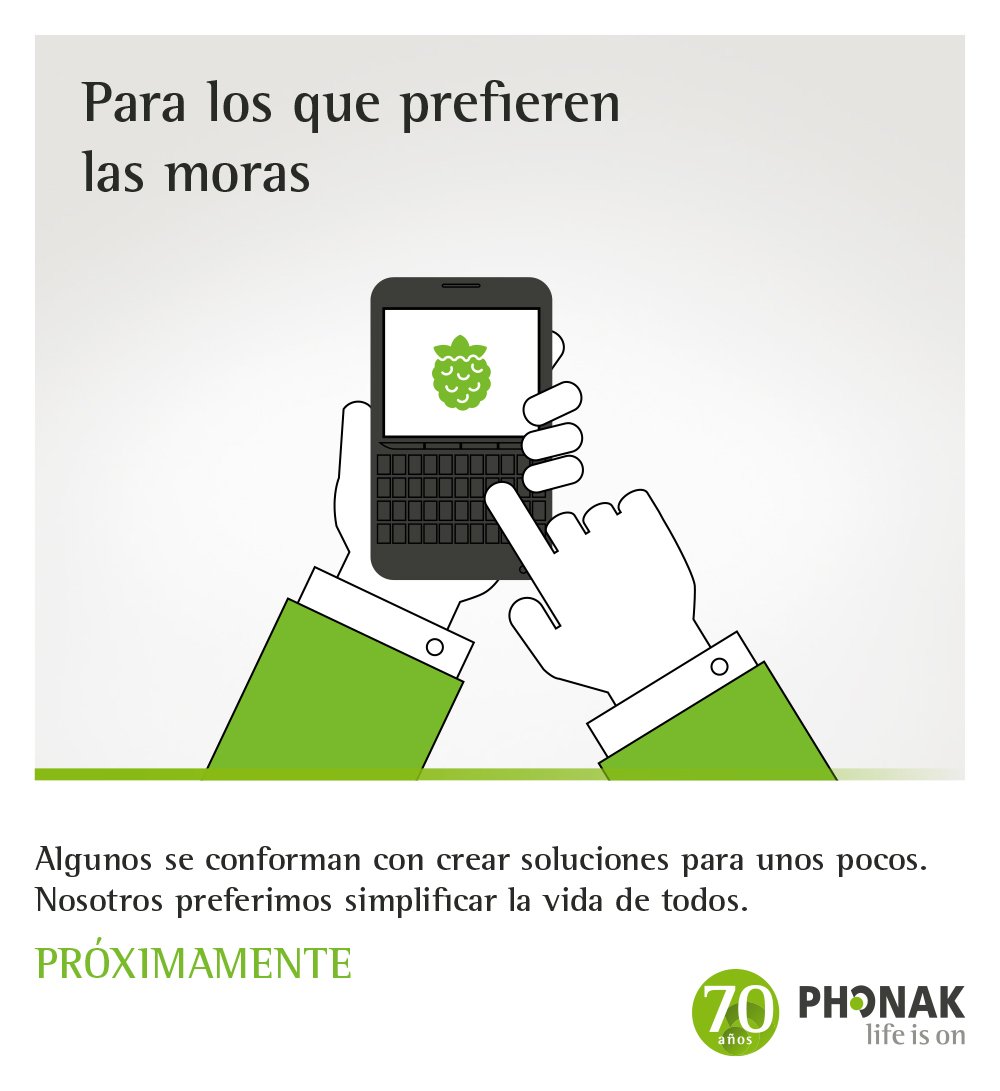
I saw a share from Phonak Spain today and I have a sneaking suspicion that Phonak have done the un-doable. That’s not a phrase we hear often. The image is below and I think it may mean that Phonak may be about to completely change our ideas about Made For, forever. Have they finally cracked the Bluetooth connundrum? I don’t know, but I really hope so!
So basically, are you ready for the change? accompanied with an image of a Blackberry. If that isn’t a hint, I don’t know what is. I mean up to now I was thinking Made For Android, but what if it is made for any phone? Imagine a hearing aid that would stream from any mobile phone without a streamer? I know that many of my Patients would like that, in fact many give out about having to use a streamer.
The innovation would also put Phonak at the leading edge. I mean that Phonak are an innovative company, in fact all of the big brands are. However, recently all the manufacturers have innovated within the space. Apart from Oticon maybe with the internet connection. Not one of them has really delivered something out of left field. If Phonak have cracked Bluetooth, that would be shockingly out of left field. i hope they have, one way or the other, we won’t have to wait too long to find out.
A recent article on NYU.EDU on nursing homes saddened me greatly. The article was about a study undertaken which seemed to suggest that nursing homes ignore their resident’s hearing loss. In essence, it is believed that many people in nursing homes have a hearing loss that is simply ignored. My own take on this would be that the problem isn’t negligence, it is lack of knowledge. While the article was saddening, it didn’t, in fact, shock me. I have had a lot of experience with Patients who are residents of nursing homes. Some of it bad and some of it good. In fact, the article reminded me of one such experience recently.
An Old Friend
Recently a new Patient came to see me looking for new hearing aids, I recognised the face, but the name meant nothing to me (typical really of me, faces not names). Anyway, it soon became obvious that the person was an old Patient of mine from before I went to work at a hearing aid manufacturer. The Patient is now living in a nursing home and was looking for an upgraded solution that would help them hear clearly.
The TV Was Important
As I was speaking to the Patient, it became very obvious that the TV was important. The nursing home that they live in offers what are basically one room ensuite. There is a TV in the room but they very rarely enjoyed watching it because they just could not understand it.
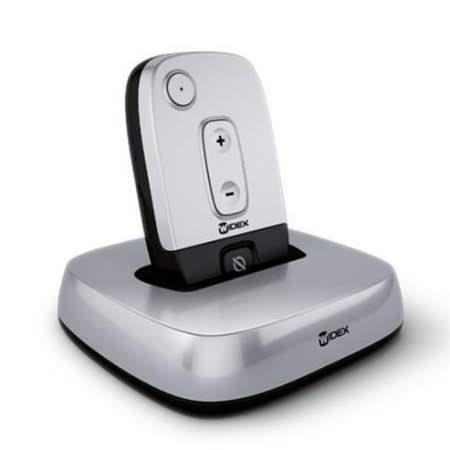
Widex Unique 110 and a TV-DEX
Anyway, I recommended Widex Unique 110s and a TV-DEX. The Patient only needed basic hearing aids for their needs, however, the requirement for the TV meant that a wireless device was a requisite. I chose Widex because their audio streaming using the Widex-Link is the best I have ever experienced.
Pure Delight
The result was pure delight, I attended the nursing home, programmed the hearing aids and set up the TV-DEX. I first checked that everything was okay and that the user could hear well at different levels of speech. Then I turned on the TV-Dex and checked that the audio streaming was working and that they could hear clearly.
The look of pure delight was both a confirmation and a reward in itself. I showed the Patient how to control the audio inputs and the volume of the streamed audio. The Patient was truly delighted, such a simple thing that we take for granted, but the loss of it had affected them greatly. The look of unadulterated joy brought a lump to my throat (I think I am hormonal or something, this is happening a lot lately), in fact, it drove a huge sense of joy and wonder in me.
Sometimes It’s The Simple Things
It reminded me that sometimes it’s the simple things that mean so much. The Patient wasn’t very mobile and interaction with others was difficult enough. While they loved reading, their degraded eyesight made that infuriatingly difficult. The TV was difficult because it was hard to understand. For all intent and purpose, the Patient was experiencing no interaction or very little that was not strained. Isolation is maddening, what stimulation can there be with little or no communication?
The TV Isn’t The Answer
The TV isn’t the answer here, but it’s a damn good start, the hearing aids will allow better one to one interaction during the day as well. The next job for me is to help set up some audiobooks on CD for her. So that the Patient can begin to enjoy books as well.
Training The Staff
One of the most important things that I did that day was to train the staff about the hearing aids. The Patient can’t manage them, so the staff will have to. I showed them the working parts, explained how to change batteries and wax guards and showed them how to get them in the ear. The next time I go, I will refresh them on the subject and give them some handouts.
The staff involved with nursing home care need to be made aware of the communication difficulties that any Patient is having. Not just that, they also need to be made collaborators in the process of hearing better. Because if they don’t understand what is at stake, how can they act?
Our Job
I have begun to think more and more that this will be our job, we in the profession will need to engage with nursing homes and nursing home staff to ensure that they have a rudimentary understanding of hearing aids. That is a matter for another day, but if you have someone in a nursing home with hearing loss there is something that you can do.
The Damned Loneliness of Isolation
If you have a loved one in a nursing home with a hearing loss, make sure the staff understand the vagaries of their hearing aids. Because if they don’t, they can’t help. The one thing that really struck me from my recent experience is the isolation and loneliness forced upon people by hearing loss. It doesn’t need to be that way, especially if they in fact actually have hearing aids. Because life without the simple joy of communication must be intensely hard.
Make sure they are used, make sure they work, make sure the professional is called if they don’t.
If you like what you see, share it so others can benefit



 yourhearingaidknow