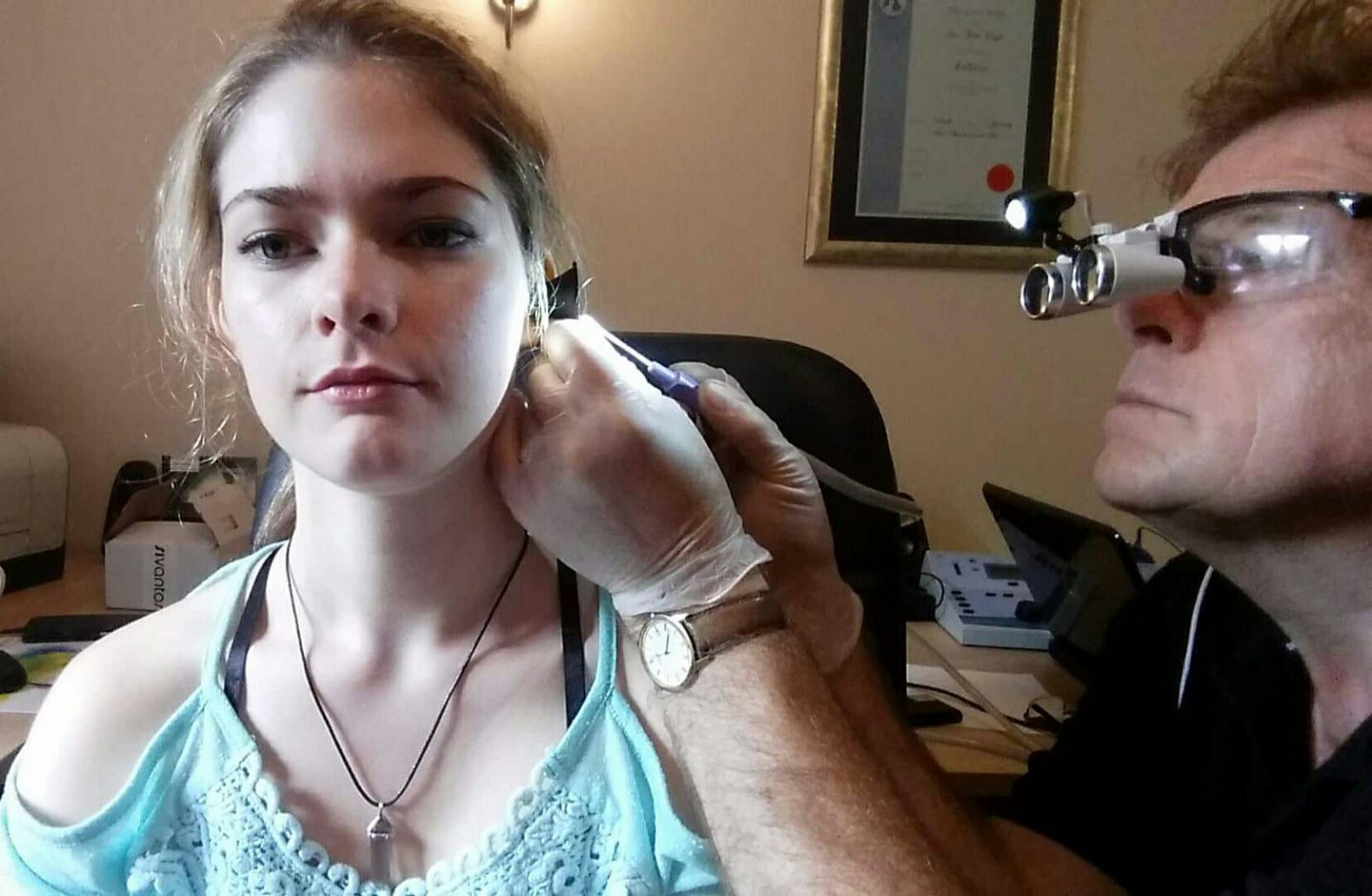
Easi Ear Hearing Care has joined the No Wax Ear Wax Removal Network offering micro suction ear wax removal in Bristol and Chepstow. Ian Croft of Easi Ear has over 25 years experience in the hearing care profession. Ian is passionate about hearing and hearing problems and will give advice freely to any who enquires.
Ear Wax Removal Bristol & Chepstow
He offers instant micro-suction ear wax removal for £60 per session whether he needs to clean one or two ears. Microsuction is probably one of the safest methods of ear cleaning, there are no liquids involved, therefore there is no mess and little fuss. It can usually be done the day we see you with no preparation, however, occasionally, it might need two sessions depending on the hardness of the ear wax.
Price: £60.00 for the session (one or both ears)
I have known Ian for many years and he is committed to providing high levels of care to his patients. He has been involved at the highest levels of our profession, serving on the council of the British Society of Hearing Aid Audiologists and he has consistently lobbied for the use of best practice hearing care across the profession.
The Capabilities, The Missing Features, The Sexy Hands-Free Experience
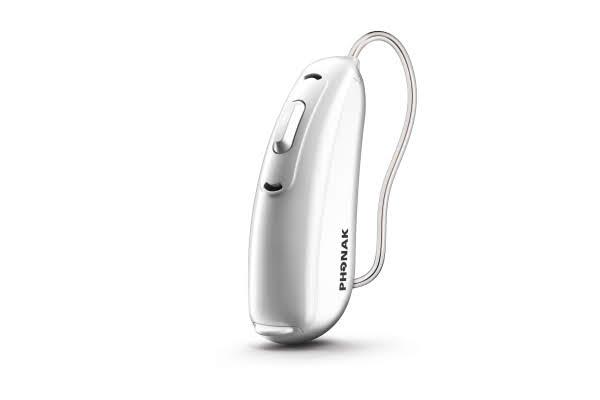
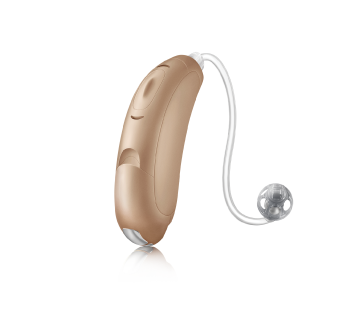
Phonak have now completed the launch of the new and very interesting Audeo B-Direct in the US, UK and Ireland. The concept for the device has been fascinating and it is the very first ever Made For Any Phone hearing aid. That means that the hearing aids will connect directly to any Bluetooth enabled mobile phone, no streamer and no hassle. Let’s talk about the hearing devices, what they offer and some important points you need to consider before you buy them.
As I have said, this is the first ever Made For Any Phone hearing aid, that means it will connect to iPhones, it will connect to Android Phones and it will connect to pretty much any phone that has a Bluetooth connection. So if you refuse to give up your old Nokia 5210 (pry it from my dead hands!!!!!) well then you are in luck. However, there are pros and cons here, caveats to the direct connection that you need to understand, so let’s talk about them.
Complete Freedom
The main pro here apart from the fact that it will connect to any phone is that the devices give you amazing freedom from your phone. They act as a wireless headset, allowing you to both answer and refuse phone calls with a touch of the button on the hearing aids. They also act to stream the call to the aids and to stream your voice back to the caller. Simply put, you don’t need to touch your phone, it could be twenty feet away and you can still take a call and speak to the caller without ever needing to look for it. That is complete freedom.
One Ear Only
Unfortunately, the audio from the call is only streamed to one ear, however, in order to give you the best opportunity to understand, the attenuate the microphones on the opposite ear. I have not tried them, but I have spoken to someone who has. They said that the call is exceptionally clear and presented no issues even in a slightly noisy sound environment.
Confused About The Right Hearing Aid For You?
Our buying guide, easing the confusion with clear easy to understand info, we guarantee it will help you pick the right hearing aid for you.
Environmental Balance
Phonak also has a feature called Environmental Balance which will allow a user to increase the streamed audio volume over and above their surroundings. They have claimed that it can give up to a 30dB advantage in signal to noise improvement, that is a helluva lot.
No Music or Audio Books From The Phone
The second thing to consider is that you can not stream audio other than phone calls from the phone. So no music or audio books, just phone calls. But again, the phone handling feature is outstanding and delivers real benefits as discussed.
Amazing Audio From The TV
In fact pretty amazing audio from any sound source once it is connected to their new TV Connector. I talked to a few people who had got a chance to listen and they were impressed by the clarity and fidelity of the sound. That means that listening to audio at home either while watching the TV or just listening to music will be a pleasurable experience without interrupting anyone.
Three Levels of Technology
The devices are a size 13 battery powered Receiver In Canal that will be available in the top three levels of technology, that’s the B90, the B70 and the B50. They also use the new and updated Autosense OS which brings the tweaks that have ensured the Belong range is superior to the Venture range. The devices will handle three levels of power, the standard receiver, the power receiver and the ultra power receiver which will cover hearing losses from mild to severe.
Missing Some Features
However, in the B90 and B70, they do not have all of the features of the other aids in their technology levels. Because of the chipset that Phonak are using they lack the ability to stream audio in an inter ear manner. Phonak have become famous for the use of inter ear audio to deliver better results in certain sound situations for people with hearing loss.
In essence what they do is when you enter specific situations, they stream the audio being picked up by the best side to the other side. Allowing you a better chance to understand what is being said. While they do use an inter ear data exchange to ensure the most natural cues are delivered to a user, they will not have some automatic or manual sound settings. The sound settings / programmes they are missing out on are:
No Speech in Loud Noise on the Audeo B-Direct
No Speech in 360 on the Audeo B-Direct
No Speech in Wind on the Audeo B-Direct
No Duophone on the Audeo B-Direct
That is a loss of some pretty amazing features for hearing in complex sound situations. So you need to be aware of it when you are making a decision on purchasing. There are no other surprises, nor is there much else that you need to know. Apart from what we have discussed here, the Audeo B-Direct is similar in nature to other Audeo hearing aids at each technology level.
Solid Hearing Aids, Amazing Phone Capability
These are pretty solid hearing aids that offer an outstanding mobile phone capability that is unique. No other hearing aid on the market offers this type of headset connection to mobile phones or the complete hands-free use. However, there are caveats, because of the nature of the devices you will lose out on some pretty excellent features.
That doesn’t mean the hearing aids aren’t pretty good performers, in fact from any of the comments I have heard so far they seem to be excellent. Like I have said before, our job is to tell you the facts, it’s your job to take them and use them to make educated purchase decisions. If the mobile phone is a big part of your life and you don’t want a streamer or the more traditional direct connection possibilities. If freedom of use and sexy hands-free calling is what you really want, then these babies are for you. Here is a comparison chart of features and capabilities between the Audeo B-Direct and a Made For iPhone hearing aid:
Feature Comparison
LiNX 3d
Audeo B-Direct
Direct Wireless Connectivity To iPhone
Yes
Yes
Direct Wireless Connectivity To Android
No
Yes
Stream Phone Conversation
Yes
Yes
Answer Phone With Hearing Aid
No
Yes
Handsfree Calling
No
Yes
Phone Conversation in Both Ears
Yes
No
Streaming of Audio From Phone
Yes
No
Use iPhone as Remote Microphone
Yes
No
Find Lost Hearing Aid Feature
Yes
No
Remote Fine Tuning of Hearing Aids
Yes
No
Tinnitus Therapy Feature
Yes
No
If you like what you see, share it so others can benefit
I was pleasently surprised this morning when I browsed Google (UK version) and saw that their daily Google showed a group of kids finger-spelling Google in British Sign Language (BSL).
For those outside of the UK, click on this link to see the UK version of Google’s homepage.
The actual title Google have used for their doodle is “Celebrating British Sign Language and Braidwood’s Academy”.
Thomas Braidwood
Braidwood (1715 – 1806) founded the first British school for deaf children. He pioneered the use of sign language in learning as opposed to relying on lip reading and trying to get deaf kids to use the spoken word to communicate.
He began teaching at his home in Edinburgh and accepted his first pupil in 1760. As more pupils attended he focused attention solely on teaching the deaf and founded Braidwood’s Academy for the Deaf and Dumb. He developed a system for teaching the students that included a type of sign language, which was the basis of what we know as BSL today.
In 1783 Braidwood moved to Hackney, London and established another Academy there – continuing to teach deaf students using his unique mix of sign language and lip-reading. All there of his daughters followed in his footsteps and became teachers of the deaf.
There’s an interesting article on the history of deaf education here.
This article is not a direct comparison pound for pound as they say. It is focused on the connectivity elements of the respective devices and what they offer. I have chosen the Resound LiNX 3D as a comparison for two reasons, it is an excellent representation of the Made For iPhone (MFI) concept and I wear them, so I know what I am talking about. Phonak were late to the party with direct connection to mobile phones, but they have delivered a fantastic and innovative product, but how does it stack up?
Firstly, I would like to say that both hearing aids offer a fantastic experience. Both of these hearing aid brands have long history and they both offer features and strategies that will deliver better hearing even in the most complex sound environment. As i said, I am focusing on connectivity here, in fact primarily mobile phone connectivity.
Which is Better?
Which is better for you depends on what you want, if you want an easy and fantastic way to take mobile calls with ease no matter how far away from your phone you are, then the Audeo B-Direct is definitely where you should look. If however, mobile calls are important but other audio is as important, well then the Resound LiNX is for you. Let’s take a look at them.
Update September 5th: I read a comment on this article in a professional’s forum, and I have to say, you know they were right. So I am adding this update to make this article much clearer. I have focused here on iPhones and also Android phones, in other words SmartPhones. I stand by my comments here in relation to that. But and it is a big but, not every hearing aid user has a SmartPhone. In fact many hearing aid users have dumb mobile phones. The Audeo B-Direct is the only hearing aid available that will connect to them directly. In fact, with this concept in mind and if you have a dumb mobile phone and don’t plan to change it, the Audeo B-Direct is really the only show in town.
Tired of Listening to Bla? We Got You Covered
Our buying guide, no Bla, just clear easy to understand info, we guarantee it will help you pick the right hearing aid for you.
The Phonak Audeo B-Direct
Phonak got a lot of grief from their shareholders about their lack of a Made For iPhone hearing aid. Made For iPhone really stormed the market back in 2014 when Resound introduced it. It caught many of us by surprise to be honest. I think it was the first hearing aid that caught the imagination of the wider tech community and then consumers.
Within a year, Made For iPhone was big news and many of us expected the other manufacturers to follow quickly. They didn’t and that surprised us, it also made Sonova shareholders a little bit twitchy. So, finally Phonak has introduced a Made For iPhone hearing aid.
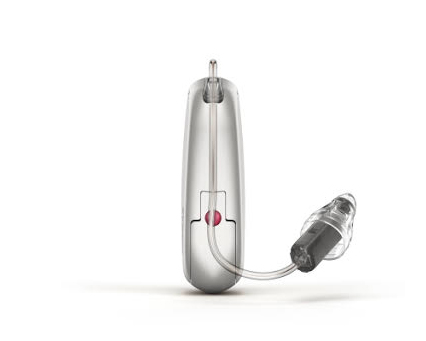
The device is a Receiver in Canal device and it is available in three levels of technology. However, it isn’t really a Made For iPhone hearing aid and while it is also the first ever Made For Android hearing aid, it isn’t really that either. In fact, it is the first ever Made For Any Phone hearing aid.
Made For iPhone, Made For Android, Made For Any Phone!
In essence Phonak has cracked the age old Bluetooth problem, using the traditional Bluetooth connection is exceptionally power hungry. Far too power hugry for hearing aid use, however, Phonak have designed a brand new chipset (Sword!!! Got to love the names right?) which allows direct Bluetooth connection to any phone without sacrificing battery power. That means that the hearing aids will connect to any Bluetooth enabled mobile phone for direct streaming of phone calls. But wait, there is more, because they use this older type connection, they can tap into the “headset protocol” and that is where the magic begins and I do mean magic.
Amazing Headset Functionality
Not only will it connect directly, but as with traditional Bluetooth headsets, you can use the button on your hearing aids to answer the call or bounce it. When you have answered, you don’t even need to pick up your phone. The microphones on the hearing aids will pick up your voice and transmit it to the caller. That is complete freedom for mobile phone calls. No thinking about it, no getting your phone, just answering and talking, no matter what mobile phone you own. That is pretty cool. One addendum here though, it only streams the phone call to one ear, which seems a little odd. However, if I get my hands on a pair I will let you know how it works.
No Music From The Phone Though
Unfortunately, the hearing aids aren’t designed to stream music from your phone. The protocol doesn’t support it and for me, that’s a pity. I like to listen to music from my phone, I also really like to listen to audiobooks. In fact I burn through two or three audiobooks a month on my phone. I would not be able to do it with the Audeo B-Direct. This is the problem for me and if you like to listen to audiobooks or music from your phone, it will be a problem for you too. These are probably one of the best hearing aids available for connecting to a mobile phone so you can simply answer calls with no streamer and no hassle, but they aren’t an all round solution. Phonak do offer a special streamer for your TV or really any audio source, but it isn’t something that you are going to use on the go.
LiNX 3D Hearing Aids
The Resound Linx 3D hearing aids are the latest Made For iPhone hearing aid technology from GN Resound. While the new devices include Resound’s fifth generation of wireless technology. They are in fact their third generation of Made For iPhone hearing aids. Pretty damn good hearing aids as well. Resound’s strategy has been different from everyone elses. While all the other hearing aid brands have introduced a Made For iPhone model, Resound have made all of their premium hearing aid ranges MFI. In the LiNX range alone there are eleven different hearing aid models in three levels of technology. They also have just released a new Super Power MFI for people with severe to profound hearing loss.
Made For iPhone, Not Android
The ReSound LiNX 3D connects directly to the iPhone using Apple’s protocols. However, they will not connect to an Android phone or any other phone without an intermediary streamer. Many people don’t like the idea of a streamer, I don’t really understand that. I suppose that it is another device to look after, more hassle?
When answering calls on your mobile, the audio is directly streamed to the hearing aids. However, in order to talk to the caller, you need to lift the phone to your mouth or hold it to your ear in the usual way. When using the devices with an Android phone, the streamer device is used to talk back to the caller. So it isn’t as free and easy as the Audeo B-Direct for phone calls, however, it comes into its own when you want to stream audio from the phone.
Audio on Demand
Like I said, I listen to a lot of audio, audiobooks, podcasts, music, you name it. The pure joy of lining up my book or music, playing it and then just doing my thing while it streams to my hearing aids just can not be overtsated. I would imagine that I am not the only one. With an iPhone it is direct streaming and the audio quality is excellent and the connection pretty solid. With an Android device it is a case of using the streamer, again, the audio is excellent and the connection is probably even more solid.
Which One is Best, What is Most Important For You?
The key here is that the hearing aids are pretty solid, yes they have different strategies and proprietary technology, but the bottom line is that they will both make a dramatic difference to how well you hear. So essentially, if both of these hearing aids are suitable for you, your lifestyle and your hearing loss the crunch is down to what is most important? Is it the freedom of mobile phone calls with complete ease while using the only hearing aids in the world to offer a headset functionality? Or, is it being able to use the mobile phone with ease while also enjoying streamed music and audio on the go? Here is a complete run down of the headline features and how they stack up:
Feature Comparison
LiNX 3d
Audeo B-Direct
Direct Wireless Connectivity To iPhone
Yes
Yes
Direct Wireless Connectivity To Android
No
Yes
Stream Phone Conversation
Yes
Yes
Answer Phone With Hearing Aid
No
Yes
Handsfree Calling
No
Yes
Phone Conversation in Both Ears
Yes
No
Streaming of Audio From Phone
Yes
No
Use iPhone as Remote Microphone
Yes
No
Find Lost Hearing Aid Feature
Yes
No
Remote Fine Tuning of Hearing Aids
Yes
No
Tinnitus Therapy Feature
Yes
No
Your mission if you see fit to accept it is to choose. If you have any questions, drop us an email on info@hearingaidknow.com
If you like what you see, share it so others can benefit
Geoff and I have been speculating for a while about the future of hearing aids. One of the things that we wrote about was a hearing aid that does more than just help you to hear better, a hearing aid could be a “smart device” that connects to your phone, your iPad, your digital thermostat, your email, your Facebook, your Amazon Echo, Fitbit and all your other stuff.
Well, the first step to that future has arrived! Oticon’s Opn hearing aid is a very smart device, it uses the IFTTT network to connect you to all sorts of things and open up a lot of possibilities. Before I dive into the technical stuff, you may be wondering….why?
Why does a hearing aid need to do more than just help you to hear? Well, as I see it, a hearing aid is something you have on you all the time, it’s no effort to carry around, you are not going to forget it easily (wow, things are quiet today) and it also has a great way of notifying you of things: plays a sound in your ear.
So, for example, it could play a sound when someone presses your doorbell and you are out in the garden. But that’s half of the story, the Oticon Opn can also send out notifications, so if the battery is getting low it can send an email – very useful if the wearer is not able to change their own batteries and they need a friend or relative to do it.
What is IFTTT?
I always have a hell of a time trying to explain IFTTT! It is a service that connects things to other things. It has a website (https://ifttt.com/) where you can browse all of the products and services that are connected to IFTTT – so basically, anything that is connected to this service can send a message to anything else that is also connected. Facebook is connected to IFTTT, as is Gmail, Spotify, Nest (a smart home/thermostat), LG washing machines, Samsung and GE refrigerators, Tesla and BMW cars, Google Calendar, Skype and a ton of other things. This list is just going to continue to grow.
IFTTT gives all of these websites and machines an easy way to “talk” to each other, that is its main function, to act as a go-between for all of these things that can’t usually communicate with each other. For example, you could set up a connection in IFTTT so that your thermostat heats your house to a certain temperature when you write “thermostat on” on your Facebook wall or you could receive an email in Gmail when your favourite band has something new on Spotify.
So basically IFTTT exists so that we can set up connections between things and say: when this happens, do that.
And, of course, your Oticon Opn is now one of the connected things. So it can send you an email when its battery is running out or display a message in your Tesla car as you drive to work to let you know it needs a service. You can see Oticon’s IFTTT page here: https://ifttt.com/oticon
Setting up Opn and IFTTT
It is very simple to get your hearing aids connected to IFTTT, you need to:
1. Install the Oticon On App on your iPhone/iPad/Android. 2. Create an Oticon ON account. 3. Use IFTTT to set up connections between your hearing aids and other things.
Firstly, go to the Play Store (Android) or Apple Store and search for “Oticon ON” and then install the app. Now, open up the New Oticon ON app and create an Oticon account. When the ON app first starts it will try and connect to your hearing aids, so these need to be switched on and connected via Bluetooth to your device.
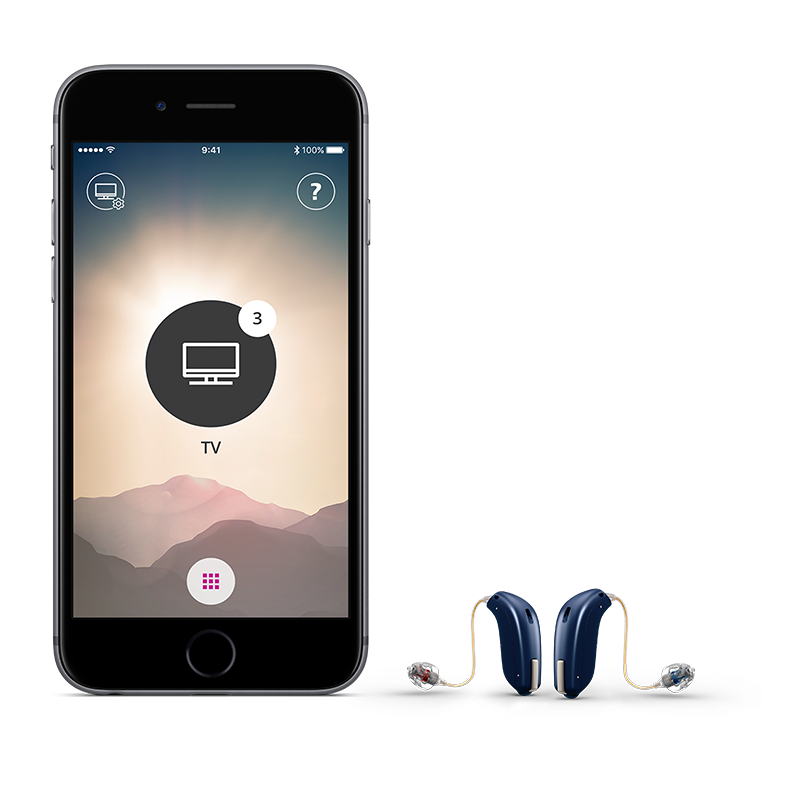
Now, still in the ON app, click on the button centre bottom (shown in the picture) and then click on the “IF” bubble. This opens up the IFTTT page, click on “Oticon at IFTTT” and it takes you to the IFTTT website itself, you need to create a user account on IFTTT as well.
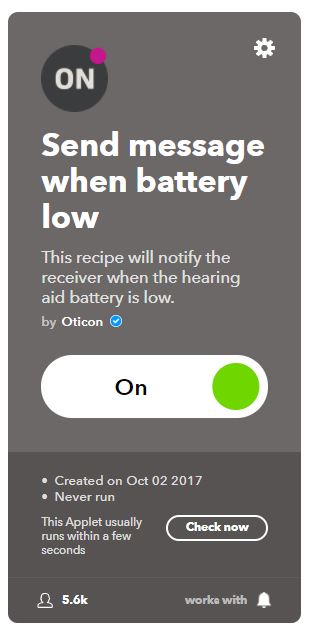
Once registered with IFTTT you can search for “Oticon” on there and you should see the “recipes” that Oticon has available, one of which is “send message when battery low”, click on that and enable it and you are all done.
It is worth mentioning that in order for the Opn device(s) to send or receive information with IFTTT they need to be connected to the Apple device via Bluetooth.
So that is a basic set up to get an email when the hearing aid battery is low, very useful for elderly relatives who aren’t able to change their batteries themselves. I will look at adding new recipes in IFTTT that I can connect to my Opn and update here. This connected technology is not going to be for everyone right now but it is a smart move by Oticon to get onboard with this, this is the future of hearing aids: smart devices that are integrated in to our everyday lives in much the same way as phones are, multi-use applications that connect to anything and make our lives easier.
If you like what you see, share it so others can benefit
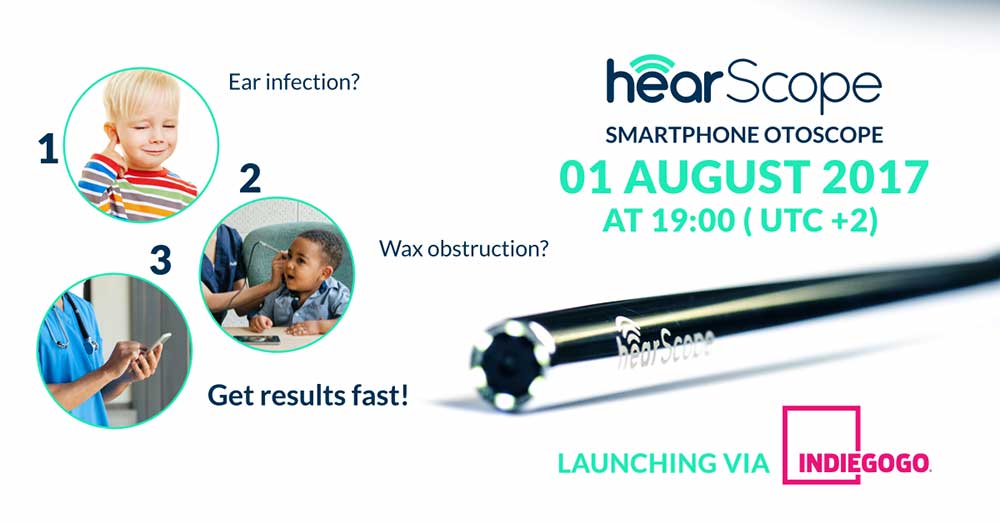
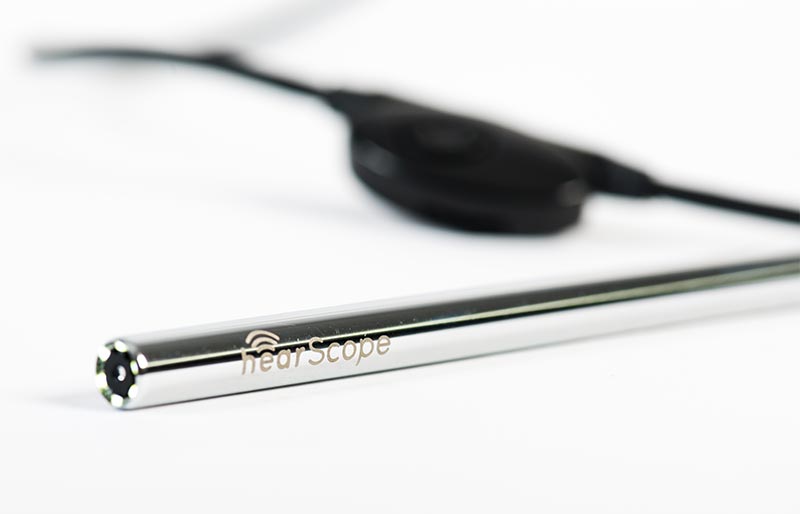
We spoke here a while ago about a fascinating new piece of techonlogy in the article “A New Tool For Early Diagnosis of Mid Ear Infections“. It detailed a new SmartPhone Video Otoscope invention called the hearScope that the HearX Group was hoping to bring to market. Well it completely smashed its crowdfunding target and supporters can expect delivery of their products early next year. With just five days left, they have reached 164% of their target on indiegogo
I for one am looking forward to getting my hands on one and they should be released in February 2018. The online diagnosis part of the equation will take a little longer but it will come later in 2018. So what is it for you who are only catching up?
A Mini USB Video Ear Scope
The device is a thin mini USB video scope which comes with a selection of specula. The zoom ability on the device is reported to be incremental up to a staggering 200x. They say the image quality will be crystal clear. While this in itself would be a boon to professionals, the extended power of the system is what offers parents and consumers the real benefit.
It plugs into a mini usb on your smart phone and the downloaded app allows you to see and capture the image and photos. The details will eventually be able to be uploaded to their servers where they can be assessed and diagnosed.
Innovation in the audiology sphere is really heating up, especially within tele audiology and tools that offer a different experience to consumers. The hearScope is just one example of this, but I think it will be a welcome example for health professionals and parents the world over.
Latest Solution For Severe To Profound Hearing Loss
In a press announcement today in Copenhagen, Resound announced the launch of their updated superpower range. They are bringing the 3D platform to the Enzo range. The release of the Enzo 2 was welcomed and celebrated by many experienced users. We would imagine that the Enzo 3D will be the same if the success of the LiNX 3D is anything to go by. Let’s take a look at the announcement.
So Resound say that the devices which are “based on GN Hearing’s 5th generation 2.4 GHz wireless technology and GN Hearing’s 3rd generation binaural directionality, ReSound ENZO 3D has been proven to allow users to experience 60% more clarity of the sounds around them and 60% better speech understanding in noise“. While we always take manufacturer’s claims with a pinch of salt until we experience the goods. We would have to say based on our experiences of the LiNX 3D, these claims will have more than a little weight.
users to experience 60% more clarity of the sounds around them and 60% better speech understanding in noise
Available Now in The US
The statement said that the Enzo 3D Made For iPhone hearing aids are now available in North America and that availability in all primary world markets would quickly follow. The introduction of the 3D platform to the Enzo will mean the same sound quality and the groundbreaking comprehensive remote fine-tuning feature is now open to users with a severe to profound hearing loss.
All The Features, Improved Clarity, Excellent Localisation
The new ENZO 3D will have their 3rd generation binaural directionality, giving hearing aid users with severe to profound hearing loss pretty excellent sound quality and improved clarity in any environment. Steve has been impressed with this system in the LiNX 3D, he feels it delivers pretty good spatial awareness and is part of his success at hearing speech in noise.
Confused About The Right Hearing Aid For You?
Our buying guide, easing the confusion with clear easy to understand info, we guarantee it will help you pick the right hearing aid for you.
Remote Fine Tuning With Resound Assist
This was a really groundbreaking feature when Resound introduced it. It offers in-depth and comprehensive fine-tuning remotely through the accompanying app. It simply means hearing care wherever you are. Enabled by ReSound Assist, this feature allows Enzo 3D users to stay in touch with their hearing care professional wherever they are. It will allow them to receive on-the-go hearing care and new settings securely via the cloud without having to schedule and travel for a clinic appointment.
ReSound Smart 3D™ App
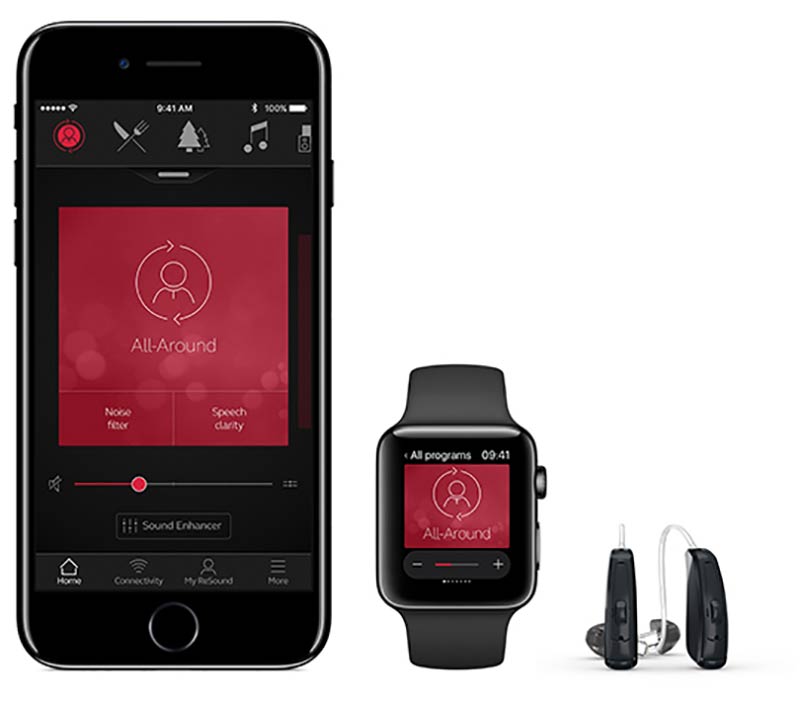
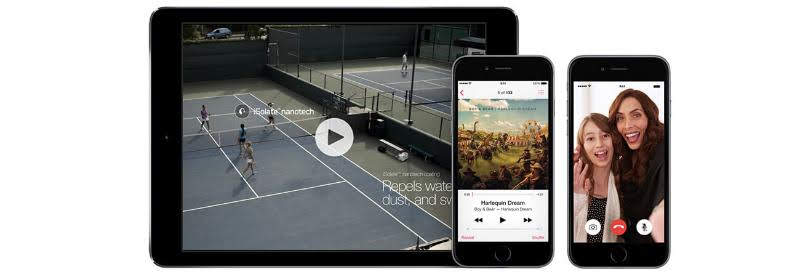
ReSound Assist is accessed via the ReSound Smart 3D™ app, (available on the App Store and Google Play), which was launched with the LiNX 3D. The app allows users to easily personalize and control their sound at anytime on-the-go directly from a smartphone.
Made For iPhone
Users can also stream phone calls and music directly (no streamer) from their Apple smartphone or iPad to their ReSound ENZO 3D hearing aids. They can stream from Android devices but they will need an intermediary streamer. ReSound say that the ENZO 3D is the smallest and most powerful superpower hearing aid available, and also a Made for iPhone Cochlear compatible bimodal hearing solution.
The Enzo 2 was met with real fanfare by users, many experienced super power users were genuinely blown away by the devices. I would imagine the Enzo 3D is probably going to knock their socks off. One lady who has been using the new devices for a while during the R&D period had this to say:
Tara Svensson: “I can hear the waves, I can hear the breeze. It’s a fantastic balance of sound. Everything has a lot more layers now to what I’m hearing. I’m not just hearing traffic – I am hearing layers of traffic. I’m hearing the difference between small cars, trucks and motorcycles, and I can hear things coming from different angles so I have got a lot of directionality,”
They announced and we missed it, on August 22nd Unitron announced the launch of a new custom hearing aid range called the Insera which completes the Tempus platform and a Rechargeable Stride BTE called the M-R.
Meet The Insera Range
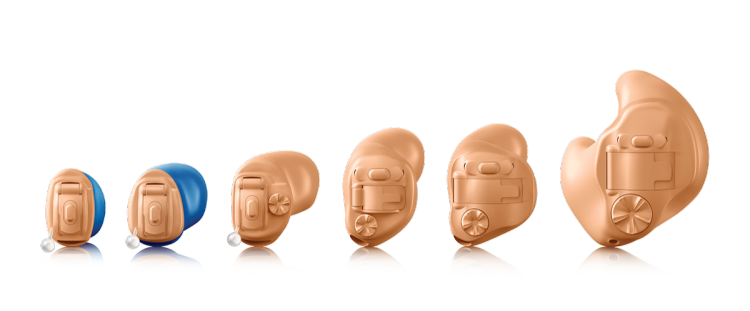
The Insera is the custom in-ear range on their latest Tempus platform. It now means that the Tempus platform will be complete. They are also going to use biometric data from the outer ear to make changes to their directionality. This is a really fascinating idea and the improvement in signal (what you want to hear) to noise (what you don’t want to hear) ratio (SNR) is being quoted at 2dB. That doesn’t sound a lot, but it is when combined with everything else they are doing to increase the SNR. Here is what they said
Addressing the fact that no two ears are built alike, the Insera ITE family’s sophisticated EarMatch process optimizes directional microphone performance by compensating for individual differences in each patient’s ear. The optimal directional performance frees up advanced features in Tempus such as SpeechPro and Spatial Awareness to provide wearers with fantastic speech understanding in conversation.
The improvements in directionality and spatial awareness that the Tempus platform brought were pretty impressive. I remember trying them out at launch and being impressed with the spatial awareness they delivered. It will be interesting to see how this transfers to the custom devices. They are expected to be available in October apparently.
Confused About The Right Hearing Aid For You?
Our buying guide, easing the confusion with clear easy to understand info, we guarantee it will help you pick the right hearing aid for you.
A Rechargeable BTE
Not to be outdone, they have also introduced the Stride M R, their first ever rechargeable behind the ear hearing aid. here is what they said.
With the launch of Stride M R, Unitron expands its choice of rechargeable product options, addressing growing patient demand for flexibility and freedom. Just as patients have become accustomed to charging their smartphones, Stride M R offers similar charge and go capability. Wearers simply charge the hearing instrument overnight, for just 5 – 7 hours, and the hearing instrument is ready to perform for a full 24 hours, including 90 minutes of streaming or 16 hours of continuous streaming. There is no fuss, nor buttons to fiddle with. Patients simply pull out their Stride M R hearing aids, put them on and go. Because hearing happens around the clock, Stride M R offers wearers the flexibility to swap rechargeable battery cells with traditional zinc-air batteries at any time, ensuring patients will never run out of charge.
From what they are saying I would assume that the new rechargeable runs on Silver Zinc rechargeable batteries and a similar charger to their Moxi. It also looks like they have made sure there is an auto on feature when you take the hearing aids out of the charger. Something that many users will welcome. The system that Unitron picked is a pretty good all round rechargeable system. It offers some pretty serious running time and also the benefit of being able to shove disposable batteries in when you forget to charge (we all know we will forget to charge).
If you like what you see, share it so others can benefit
We were interested to see Which talking about National hearing aid retailers and their ownership by big hearing aid brands. We have talked about National Retailers here on Know, but we have never focused on them really. Our job as we see it is to support Independent hearing healthcare. The article caught me a bit by surprise, probably cognitive bias though. I just assumed everyone knew that certain retailers were owned by hearing aid companies?
Lack of Transparency
In essence, Which pointed out that three hearing aid brands owned or part owned by some of the big hearing aid brands. What they were most concerned about was that when you went to visit these retailers, they only carried a few hearing aid brands and pushed you toward their owner company brand.
I think the biggest complaint was in relation to transparency and I get that, I do understand that. However, the three hearing aid brands involved, Oticon, Widex and Phonak actually offer some fantastic hearing aids. In fact I would go so far as to say market leading. Are there better, depends on what you want really. If i was buying Made For iPhone, I would buy Resound. At least for the moment.
Would I be afraid of any hearing aid from the three brands mentioned. I would have to say no. In fact I would be happy to reccomend most of the hearing aids they offer to my Patients depending on their loss and their individual needs. I am not here to defend hearing aid brands, or National Retailers, but you know, you got to be fair and balanced. Although I think Which were. But I think they missed a bigger point.
White Labelling & Missing The Point
I think Which actually missed the point a little, in fact they mentioned it, but didn’t really expand on it. The real issue for me is white labelling. They mentioned white labelling and that certain manufacturers made white label or own brand hearing aids for particular retailers.
White Labelling Hearing Aids Gives No Transparency
I have said here and in my hearing aid book that I don’t like white labelling, white labelling ensures that a hearing aid buyer has no idea what they are buying. How can they? No brand name, no brand technology level, so exactly how do you know what you are getting for the money spent? Absolutely no like for like comparison and the retailer can tell you any old rubbish about provenance. Now that’s a lack of transparency.
I was surprised that Which didn’t look deeper into this, but hey, I was caught by surprise by the article, cognitive bias again maybe. Assuming that everyone knows what I know. Anyway, you all should be going to see Independents, the Nationals can take care of themselves.
Researcher Larry Trussell, a professor of otolaryngology, and Lead author Zheng-Quan Tang, Ph.D., a senior postdoctoral fellow in Trussell’s lab, noted that a review of existing scientific literature indicated that many patients reported an increase in tinnitus soon after they began taking common SSRI anti-depressants (selective serotonin reuptake inhibitors).
Hyperactive brain cells perceived as sound
Tinnitus is most often associated with hearing loss, but there have been reports for many years that people who take anti-depressants that affect serotonin levels develop tinnitus. The study found evidence that nerve cells in the part of the brain called the dorsal cochlear nucleus, or DCN, became hyperactive when exposed to serotonin.
In essence, if Doctors are treating someone with Tinnitus for associated anxiety, the very medicine they give may make the problem worse. For others without pre-existing Tinnitus, they may well develop it. For most though, the sound of their Tinnitus will fade when they stop taking the medication. Researchers hope that they can find a way to deactivate the effect of serotonin on tinnitus, limiting its severity.
Don’t Stop Your Meds!
We talked to our friend Alan Hopkirk, a Tinnitus Expert in Glasgow, he said “Anyone who takes anti-depressants should talk to their doctors before stopping the medication over concerns of tinnitus. The main takeaway here is that you shouldn’t become more anxious if your Tinnitus gets worse or you suddenly develop Tinnitus when taking anti-depressants”.
I have treated Tinnitus many times in my own Practice, it can be a really debilitating problem. More often than not, treating an underlying hearing loss is enough to make the Tinnitus fade. Sometimes though, we need to use aligned therapies like sound therapy and cognitive behavioural therapy.
Tinnitus can be treated
The key thing here is that Tinnitus more often than not can be treated, you can get relief from your Tinnitus. There may not yet be a cure, but there is often effective treatment for Tinnitus.
If you like what you see, share it so others can benefit





 yourhearingaidknow